Get Full Government Meeting Transcripts, Videos, & Alerts Forever!
Get email alerts on the UDO Signage topic
No spam. Unsubscribe anytime.
Lincoln County disapproves UDO amendment to allow feather‑style wind flags after statutory concerns
Summary
The Board of Commissioners voted to disapprove UDO 2025‑2, which would have allowed feather‑style ‘wind‑blown’ temporary signs; commissioners cited recent changes in state planning law and concerns about unintended, irreversible outcomes for local zoning standards.
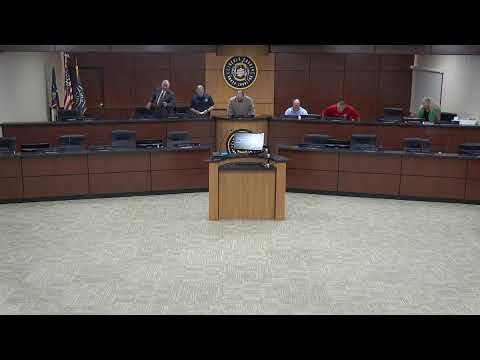
Lincoln County commissioners voted on May 2025 to disapprove a proposed Unified Development Ordinance text amendment (UDO 2025‑2) that would have permitted feather‑style or wind‑blown flags as a form of temporary signage.
Planning staff Jeremiah presented the amendment, explaining it would allow one feather flag per parcel or business (or tenant in multi‑tenant centers) to be counted as the parcel’s temporary sign in lieu of sandwich boards or yard signs. Commissioners asked whether “temporary” carried a time limit; Jeremiah clarified that under the proposed language “temporary” described the nature of the sign rather than a fixed time period and that no definitive timeframe was set in the standard.
Commissioner Cena moved an alternate statement of consistency and unreasonableness and urged denial, citing concerns that a recent change in the North Carolina General Assembly’s planning and development statutes (referenced in the meeting as the statutory change preventing local governments from initiating down‑zoning without written consent of affected property owners) limits a county’s ability to revert zoning standards if unintended outcomes arise. The motion to disapprove UDO 2025‑2 carried and the board formally disapproved the amendment.
The planning board had recommended approval (5–0) before the commissioners’ consideration; commissioners said they wanted to avoid potential sign clutter and litter along corridors and to respect recent statutory constraints on local text and map changes.
Next steps: Staff and planning will factor the statutory constraints into future sign and UDO work and may return with revised language or additional public engagement.