Get Full Government Meeting Transcripts, Videos, & Alerts Forever!
Get email alerts on the Zoning Policy topic
No spam. Unsubscribe anytime.
Planning commission recommends narrower definition of 'unnecessary hardship' for BZA cases after divided debate
Summary
After extended debate the Lawrence Planning Commission voted to recommend a text amendment to the land development code clarifying the definition of 'unnecessary hardship' as applied to area variances, citing Kansas case law; opponents warned the change should be part of a broader code cleanup and raised process concerns.
The Lawrence Planning Commission voted Sept. 24 to recommend a text amendment (AMDT-25-003) that revises the definition of "unnecessary hardship" in the land development code as it applies to area variances reviewed by the Board of Zoning Appeals (BZA). The motion passed after a lengthy, split debate and will be forwarded to the City Commission for final action.
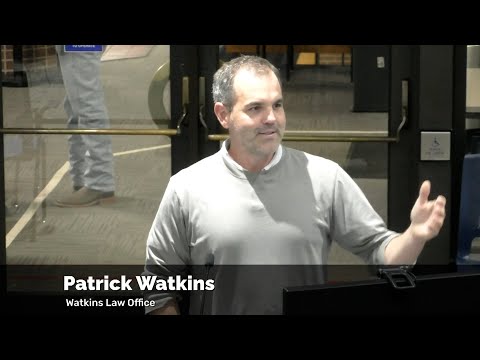
Applicant Patrick Watkins, a land-use attorney, said the change corrects language that historically reflected a 'use variance' standard and that Kansas case law requires a different analysis for area variances. Watkins said the amendment would make the standard clearer for staff, BZA members and applicants.
"Variances are what give some flexibility to the code. They should be more routinely granted," Watkins said, adding the proposed language aligns local practice with relevant case law.
Deputy City Attorney Randy Larkin told commissioners the amendment removes relic language tied to use variances and incorporates case-law language — including the common statement that "mere financial loss or the loss of a potential financial advantage does not constitute unnecessary hardship." Randy said codifying the standard in the local code will save time and provide immediate guidance to the BZA.
Opponents — including some current BZA members and several planning commissioners — urged caution. Dean Palos, who said he serves on the BZA, argued the statutory five‑condition test is sufficient and warned that piecemeal insertion of a specialized definition for the BZA could create confusion because the term appears in multiple places in the new code.
"I question the need for it," Palos said. "My preference is to eliminate the definition as it exists, not to adopt the one that's been proposed."
Commissioners also noted a procedural gap: the packet for the Planning Commission did not include the June 3 City Commission initiation materials, and several members said they would have liked the full packet for context. Staff acknowledged the omission and apologized; staff and the deputy attorney said the amendment can still be refined as it goes back to the City Commission.
The motion approved by the Planning Commission included two editor’s changes requested by commissioners: use the lowercase term 'unnecessary hardship' in subsection 3 and prefatory language clarifying that the inserted definition applies to that section only. The commission vote was taken by voice; several commissioners recorded reservations in the minutes even as the motion carried.
Next steps: the item will return to the City Commission for consideration. Commissioners discussed pursuing a broader code cleanup or a work session to reconcile the term’s multiple uses across the land development code and the subdivision regulations.