Lifetime Citizen Portal Access — AI Briefings, Alerts & Unlimited Follows
Housing Trust Fund Commission weighs shifting Barnes Fund toward loans, proposes 70/27/3 funding split
Loading...
Summary
The Housing Trust Fund Commission reviewed Unified Housing Strategy recommendations including a proposed funding-track split (70% rental, 27% homeownership, 3% owner-occupied rehab), a potential move from grants to a mixed loan-and-grant model to recycle capital, and new underwriting and enforcement measures; stakeholders urged more funding for owner-occupied rehab and clearer unit and cost targets.
The Housing Trust Fund Commission on a recent agenda reviewed recommendations from the Unified Housing Strategy that would change how Metro Nashville deploys Barnes Fund dollars, including a proposed funding breakdown and the possibility of converting part of the fund from grants to loans.
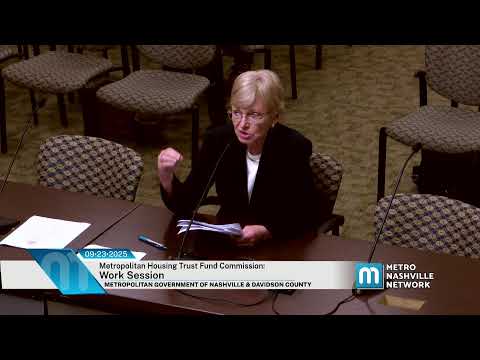
Director Hubbard, leading the staff presentation, said the UHS prioritizes long-term affordability and deeper affordability for households at or below 30% of area median income, and recommends stronger tenant protections and support for vulnerable homeowners and populations such as older adults and people with disabilities. Hubbard summarized the consultant-driven recommendation to shift funding tracks toward 70% rental, 27% homeownership and 3% owner-occupied rehabilitation for the next funding round as one alternative under consideration.
Why it matters: staff data from funding rounds 10, 11, 13 and 15 show applications and awards skew heavily toward rental projects and that dollars requested and awarded have historically prioritized rental production. Hubbard said moving to a loan or mixed loan-and-grant model could generate revolving capital as loans are repaid and reduce the fund's yearly dependence on Metro operating appropriations, but cautioned that legal review, underwriting capacity and loan servicing arrangements would be required before adopting such a structure.
Public and commission reaction: commissioners and members of the public raised concerns about the proposed allocations and the role of for-profit developers. Commissioner comments expressed interest in shifting more toward homeownership in some circumstances, while others supported the deeper-rental focus to address urgent needs for subsidized rental units. Stakeholders urged the commission not to replicate past application patterns when setting percentage allocations.
During public comment, Terry Reffuse of Westminster Strong Connection pleaded for a larger rehab allocation, saying, “I personally would say 30%,” arguing owner-occupied rehab is quick to deploy and has immediate impact for vulnerable homeowners. Andrea Prince of Rebuilding Together Nashville and other nonprofit providers said small organizations have capacity and would use larger, multi-year awards efficiently but warned that a $480,000 total for rehab in round 16 would be insufficient. By contrast, private-sector commenters such as Andy Zhu of MFX Ventures and Josh Hastings of LDG Development supported underwriting work and a loan option as tools to stretch and recycle public dollars over time.
Underwriting, enforcement and timeline: staff proposed creating a subsidy-limit matrix (per unit or per bedroom) and a subsidy-layering review akin to HUD HOME program practices to ensure public subsidy's reasonableness. Hubbard said Metro Finance will procure a contractor to develop underwriting criteria and provide underwriting services until internal capacity is built; that procurement timeline runs through December and underwriting is not expected to be in place before round 16. Staff also recommended adding contractual progress milestones, limiting amendments for delayed projects, and exploring clawbacks with legal counsel to accelerate projects to market.
Next steps: staff previewed a likely February funding-round opening, plans to return with round-16 timeline and proposed underwriting criteria in October for the commissions review, stakeholder refinement work in November, and a December meeting for final votes and direction. Hubbard emphasized the commissions role as a guiding and oversight body that would recommend policy to Metro Council when council action is needed.
The commission adjourned and will reconvene on October 28; staff directed viewers to nashville.gov for materials and a recording of the presentation.