Get Full Government Meeting Transcripts, Videos, & Alerts Forever!
Get email alerts on the Unified Development Ordinance topic
No spam. Unsubscribe anytime.
Peculiar reviews proposed Unified Development Ordinance and debates lot-size trade-offs
Summary
City planning staff presented a proposed rewrite of Chapter 400 into a Unified Development Ordinance (UDO), outlining new zoning district names, placeholders for cross-references and a schedule for later numeric lot-size and setback definitions; commissioners pressed for preserved applicability language and paper copies during the rewrite process.
Planning staff presented a draft rewrite of Chapter 400 on Wednesday, proposing a single ‘‘Unified Development Ordinance’’ or UDO that reworks article-based numbering into chapter-based sections and renames several zoning districts, while commissioners raised questions about missing applicability text and minimum-lot-size details.
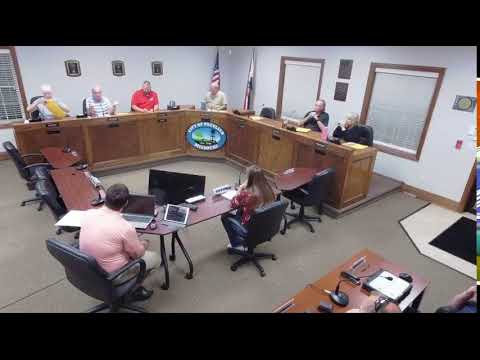
The meeting opened with a roll call and approval of the previous month’s minutes. Planning staff (Speaker 8) said the draft is intended as a working document to ‘‘test’’ how the rewrite process will go and to make subsequent sections of the code easier to adopt. ‘‘This might be a bit more of a synopsis than you’re typically used to, but I’m gonna give it my best shot here,’’ Speaker 8 said, describing the UDO as a foundation for later, more technical chapters.
Why it matters: the rewrite changes how the city references code sections and how zoning districts are named — a shift officials said is intended to make the code easier to navigate and the zoning map easier to manage. Speaker 8 explained that blue text in the markup shows proposed language and struck black text shows current code; placeholders such as chapter 485 indicate sections to be filled later to preserve internal cross-references.
Commissioners repeatedly pressed staff to ensure that key provisions removed or condensed in the draft — notably three sentences formerly in section 400.060 describing applicability ‘‘in general’’ — are preserved elsewhere. Speaker 5 said the deleted text included important limits on lot reductions and building alterations and asked whether that language would appear later; Speaker 8 acknowledged the concern and said the applicability language has been condensed under 400.030 but promised to verify the relocation and to add an explicit code section if necessary.
The meeting also focused on proposed new district names and the practical effects of renaming: staff suggested changing ‘‘AG’’ to ‘‘A’’ and consolidating residential categories with new labels such as RE (Rural Estate), RRD (Rural Residential/Rural Density) and RLL (a less-used category). Commissioners raised concerns that shorthand labels could confuse residents and asked that minimum lot sizes and setbacks — still to be defined in later chapters — be specified when district text is drafted. Speaker 8 said the district names are placeholders and that numeric minimums will be set in the chapter that defines districts: ‘‘the sizes are gonna come when we get to the districts, and I actually establish what those setbacks are gonna be and minimum lot sizes,’’ Speaker 8 said.
On Planned Unit Developments, staff proposed reintroducing a PUD-like tool to allow negotiated agreements that ‘‘run with the land’’ and expire if not acted on; the idea drew mixed reaction because of the community’s past experience. Speaker 8 said the city could use a planned or negotiated overlay to allow flexibility while requiring any substantive change to return to the board for approval.
Housing affordability and density became a central, contentious topic. Several commissioners and residents contrasted current minimum lots (noted in the discussion as 8,400 sq ft) with larger historical minimums (12,500 sq ft) and discussed whether smaller lots would bring more affordable starter homes or erode neighborhood character. ‘‘More restrictions are not gonna be the answer,’’ Speaker 8 said in the course of arguing that the city needs to ‘‘compete with what surrounds us’’ if it expects development and increased tax base; other speakers said smaller lots could invite more rental properties and reduce yard space, harming the city’s aesthetic and maintenance standards.
Practical matters: commissioners asked for page numbers and a clean copy of the markup; staff agreed to add page numbers and correct section headers. Several commissioners also objected to moving fully to an electronic-only distribution for complex rewrite packets, saying they rely on printed materials to mark up drafts. After discussion, staff agreed to print seven paper copies of the full code-rewrite materials for Planning & Zoning meetings during the rewrite process and asked commissioners who want individual copies to notify staff in advance.
Staff also delivered a brief report: 67 new single-family permits were issued in the month of August and the city’s valuation for permitted work is ‘‘nearing $20,000,000,’’ Speaker 8 said, exceeding the budgeted permit forecast for the fiscal year. No ordinance or adoption votes occurred at the meeting; commissioners directed staff to preserve key applicability language, to add clearer references and page numbers to the markup, and to return with district-specific lot sizes and setback proposals in future meetings.
The meeting closed after a motion to adjourn passed by voice vote. The commission will continue the UDO review in subsequent sessions as staff completes the district definitions and clarifies the relocated applicability language.