Get Full Government Meeting Transcripts, Videos, & Alerts Forever!
Get email alerts on the Summer School topic
No spam. Unsubscribe anytime.
District reports summer-school gains but trustees worry accelerated credit recovery may not produce durable learning
Summary
District staff reported high completion rates for summer school and credit-recovery programs but trustees raised concerns that fast-paced courses may not yield long-term learning; presenters said intervention blocks, pretests and supports for ELL and special education students mitigate risks.
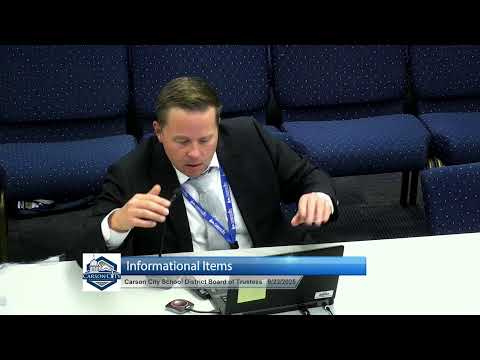
Carson City School District staff told trustees on Sept. 23 that the 2024–25 summer-school program produced high course-completion rates but served fewer students than some prior years after the implementation of fees for some participants.
Shauna Wooldridge and site principals said the district offers roughly 300 high-school seats at the tech center and 100 middle-school seats, and reported completion rates near or above 95% for students who started classes. The district reported hundreds of course enrollments, a decrease in total students served relative to earlier years, and examples of students who used the summer program to recover credits and in some cases graduate.
To offset barriers, the district charged $100 per class (maximum $200) for summer high‑school courses but noted many fees were waived for students who qualify for free/reduced lunch, McKinney‑Vento status, English‑learner services or special-education supports. Principals and counselors described multiple supports — bilingual staff, paraprofessionals, pretests that can waive units, in-class monitoring, and online and after-school tutoring — to help students complete courses.
Several trustees asked whether students who earn multiple credits in brief summer sessions retain the learning. Presenters said credit-recovery courses include pretests, unit assessments and finals, and that some students work on material at home; they emphasized the district’s increased MTSS intervention work and an expanded in-day intervention block intended to reduce reliance on summer recovery.
Trustees urged more parent engagement and earlier outreach so families understand credit pathways and summer supports. District leaders said parent engagement is an internal goal, with plans for monthly parent nights and outreach tied to counseling and MTSS practices.
The presentation was informational; no board action was taken on summer-school staffing or fees at the meeting.