Get Full Government Meeting Transcripts, Videos, & Alerts Forever!
Get email alerts on the Design Guidelines topic
No spam. Unsubscribe anytime.
BAR adopts a package of design‑guideline updates for Old & Historic and Parker Gray districts
Summary
The Board endorsed a set of harmonized guideline chapters — including new rules that make skylights on non‑street facades administratively approvable, require BAR review for solar panels visible from the public right‑of‑way, and move demolition of stoops/railings to board review — while keeping stricter window and siding rules in the Old & Historic District.
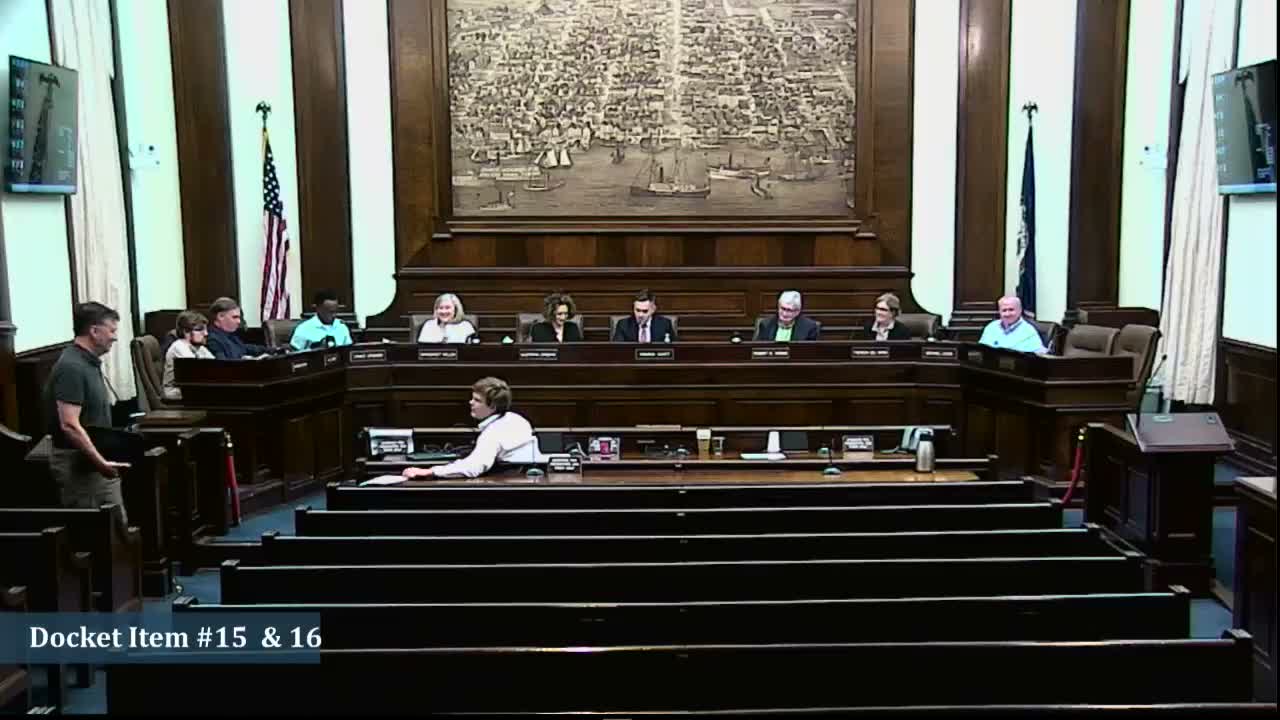
At a regularly scheduled meeting the Alexandria Board of Architectural Review voted to adopt a package of design‑guideline updates intended to harmonize standards between the Parker Gray and Old & Historic districts.
The board endorsed three chapters as identical between districts — fences/gates/walls, masonry and roofing — and then moved through individual chapters with several policy changes.
Skylights: The board adopted the Parker Gray approach for skylights — making skylights on non‑street‑facing elevations eligible for administrative (staff) approval in the Old & Historic District. Members clarified the intent applies to skylights not visible from the public right‑of‑way.
Solar energy systems: The committee proposed and the board adopted a policy change to require BAR review for installation or replacement of solar panels that are visible from the public right‑of‑way in either district. Installations not visible from the public way remain outside BAR jurisdiction and are handled by staff or other agencies.
Windows and shutters: The board preserved stricter Old & Historic rules for early buildings (true divided lights for single‑glazed windows) while acknowledging Parker Gray’s more permissive staff review options for later buildings. The board asked staff to clarify bullet points and to separate 'replication in kind' of architecturally significant windows from ordinary replacement language.
Chimneys and flues: Because Old & Historic previously lacked administrative guidance on chimneys, the board adopted the Parker Gray chimney chapter with a staff‑review pathway for construction and modification and with explicit staff discretion to refer atypical or unusually large chimneys to the board.
Stoops, steps and railings: Staff recommended eliminating a 25‑sq‑ft 'no review' exemption in Parker Gray that could allow demolition of most stoops without review. The board agreed to make demolition of any stoop/steps/railings a board‑level review in both districts while allowing administrative review for replacement‑in‑kind of railings. The board asked staff to add a clear definition of 'stoop' in a follow‑up revision.
Board members emphasized consistency across chapters and asked staff for clearer language distinguishing street‑facing visibility and later (modern) buildings from early, historically significant buildings. The board voted to adopt the chapters and the proposed changes, and directed staff to prepare final language and definitions.
What happens next: Staff will incorporate clarifying edits to the guideline text (definitions of 'stoop,' explicit 'visible from the public right‑of‑way' language for solar rules, and clearer bullets on windows) and present final draft language for administrative implementation and future hearings as needed.
Quote: “These guidelines are intended to be helpful to applicants while allowing staff to handle routine matters and the BAR to address character‑defining changes,” a committee member said during discussion.
The board concluded its guideline session by adopting the chapters and scheduling further refinements through staff work.