Get Full Government Meeting Transcripts, Videos, & Alerts Forever!
Get email alerts on the Superintendent Evaluation topic
No spam. Unsubscribe anytime.
Campbell board outlines rolling superintendent evaluation, assigns review calendar
Summary
At a Feb. 22 special meeting, the Campbell Public Board of Education drafted a rolling evaluation form for the superintendent and treasurer, agreed on five core goal categories and assigned provisional review months; the board will circulate a shared spreadsheet for feedback and aims to finalize wording after a March 3 review.
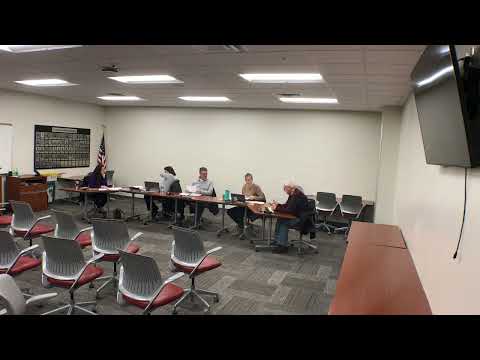
The Campbell Public Board of Education on Feb. 22 convened a special meeting to design a new, rolling evaluation process for the superintendent and treasurer, focusing the assessment on measurable district goals and a data‑driven reporting cycle.
Unidentified Speaker opened the meeting and moved to adopt the agenda; the motion was seconded and passed by roll call. The board then began detailed work on how to convert existing policy and the superintendent’s job description into an evaluation tool the board and superintendent can use throughout the year.
Board members agreed the evaluation should not be a single end‑of‑year checklist but a rolling form with columns for each goal, suggested data sources, superintendent self‑assessment, board assessment (status such as “in progress”/“met”/“unmet”), commendations, recommendations and next steps. “We want a goal, the definition, status, and then feedback — employee feedback and manager feedback,” S3 said during the drafting discussion. Several trustees emphasized that goals must be specific and measurable so the superintendent can collect the supporting data.
The trustees identified a short list of core goal categories to structure the evaluation: achievement, resources (including staffing and facilities), leadership (mission/vision, culture, relationships), safety and communication. For achievement, board members said building‑level, measurable goals such as MAP and state assessment targets would be linked into the district evaluation. On safety, the board noted a district lockdown drill scheduled for March 21, 2025, as a data point the superintendent should report on.
On resources, the board framed its expectations around fiscal stewardship and sustainability, with examples including recruiting and retaining high‑quality staff, facilities maintenance and upgrades, and maintaining materials and equipment. Trustees explicitly discussed moving some outsourced work in‑house for sustainability and named data‑capacity as a priority: the board asked the superintendent to staff or train in‑district personnel to collect and report data currently handled by external consultants.
Trustees also debated items in current policy that place a board self‑assessment inside the superintendent evaluation. Several members said board effectiveness should be handled separately, not as a direct element of the superintendent’s evaluation. “I don’t know why we would have that on Brett’s evaluation,” S6 said, and the group agreed to remove or reframe overlapping language.
After drafting language and examples, the board assigned provisional review months for accountability: achievement (initial review in September/October), resources and related projects (May), safety and communications (April), and leadership/culture (November). Board members instructed staff to place those review items on future agendas so the superintendent and district administrators have clear deadlines.
The board agreed to create a shared spreadsheet of the draft evaluation, upload it to Google Drive and share edit access with board members, the superintendent and district staff. Trustees set an internal deadline for suggested edits (aiming for March 3) and agreed the board president or designee would forward the cleaned draft to the superintendent and to district administration for comment before any formal policy change. Tom (district contact) was asked to let Jason know to add the calendar items to upcoming agendas.
Formal votes recorded in the meeting minutes were limited to procedural items: adoption of the meeting agenda at the start of the session and a final motion to adjourn. The board directed staff to refine the policy language and return a revised draft for the normal policy revision steps (first and second reading) and to route any required notifications to the state (the transcript references the district’s revised code obligations).
Next steps recorded: trustees will review and comment on the shared spreadsheet by March 3; the superintendent and treasurer will be asked to review the draft; staff will place the agreed‑upon review items on the board’s monthly agendas; and the board will return for formal readings and a vote if policy language is changed.
Meeting adjourned following a roll call.