Get Full Government Meeting Transcripts, Videos, & Alerts Forever!
Get email alerts on the Municipal Finance topic
No spam. Unsubscribe anytime.
Audit briefing: capital projects and wastewater show multi‑million shortfalls; auditors urge capital plan and stronger reconciliations
Summary
Auditors told the Finance Committee the city’s 06/30/24 audit shows roughly $2 million in capital-projects shortfalls and an operational wastewater deficit near $2.5 million, and recommended a capital improvement plan, dedicated utility reserves and stronger reconciliation and procurement controls.
City auditors told the Finance Committee during an audit briefing that the city’s 06/30/24 financial statements show significant gaps in capital-project accounting and an operational shortfall in the wastewater enterprise.
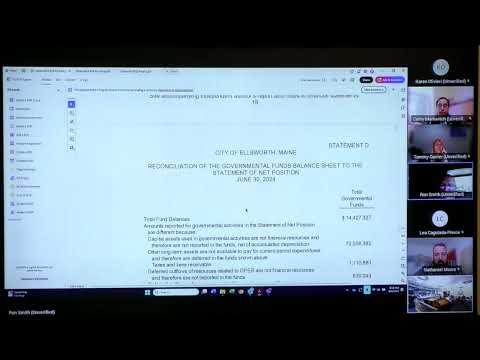
Ron Smith, principal of HR Smith and Company, said the city owned about $10.5 million in assets at June 30, 2024, with roughly $2.2 million in cash and investments and about $6.1 million in funds that had been commingled across schools, capital projects and grants. He said the city’s capital‑projects fund “is in the hole about $2,000,000,” largely because project overruns and timing differences left projects funded before debt or lease proceeds were recognized.
“The wastewater department has about $10,700,000 of equity, but $13,200,000 of it is in infrastructure,” Smith said, adding that the fund showed an operational deficit “of about $2,500,000.” He emphasized that depreciation on the city’s water and wastewater infrastructure is a real, recurring expense — auditors estimated roughly $811,000 in annual depreciation on the city’s $19 million of infrastructure — and recommended creating a dedicated capital reserve and a multi‑year capital plan to fund replacements and required grant matches.
An auditor on the engagement (speaker identified in the briefing as a member of the audit team) described several operational drivers of the problems: a difficult conversion and mapping between multiple financial software packages during the fiscal year, widespread reconciliation gaps, siloed financial responsibilities across departments, and procurement procedures that routed invoices through too many manual steps. The auditor said those factors created mismatches in budget‑to‑actual reporting and limited the administration’s ability to present timely, reconciled figures to the council.
Auditors recommended a three‑part approach: (1) document where each revenue and expense stream lives and who is responsible; (2) perform ‘‘in‑the‑weeds’’ reconciliations (bank reconciliations, tax and utility billing tie‑outs and prior‑year adjustments) to establish an accurate starting point; and (3) implement low‑cost operational fixes, targeted training and role alignment so processes are tied to positions and not individuals. “This is not brain surgery,” one auditor said, urging the city to focus on training and reconciliation procedures.
Staff reported the capital improvement plan kickoff meeting is scheduled for the 16th, with department‑head interviews and an anticipated plan delivery in February; a street‑scan and a finalized GIS layer for sidewalks will continue in parallel. Auditors urged the city to time future projects to coincide with debt retirements and to consider formally setting aside roughly 20% of identified utility capital needs as an annual target for reserve funding so the city is positioned to match grant requirements and avoid future spikes in borrowing.
The briefing underscored that auditors found systemic process and capacity issues rather than evidence of malfeasance. Council and staff committed to near‑term follow up on reconciliations and to working with auditors to implement the recommendations. The audit team said they will continue assisting staff with reconciliation work and training to help the city present reconciled financials in future budget cycles.
Next steps identified at the briefing included a near‑term reconciliation effort with city staff, continued work on the capital improvement plan, and a review of procurement routing and training needs so that reconciled, timely financial information is available to the Finance Committee and the council.