Get Full Government Meeting Transcripts, Videos, & Alerts Forever!
Get email alerts on the School Budget And Growth topic
No spam. Unsubscribe anytime.
Box Elder leaders press for collaboration as district readies budget, cites growth pressures
Summary
Box Elder School District Superintendent Steve Carlson told city and county leaders the district has a proposed budget and will hold an August truth-in-taxation hearing; officials discussed a 3,500-unit planned development, contracting a demographer to study enrollment, and how growth and incentives affect school planning.
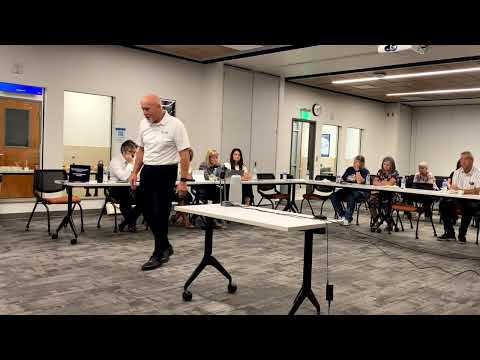
Box Elder School District Superintendent Steve Carlson told a gathering of local mayors and city officials that the district has a proposed budget and will follow the statutory truth-in-taxation schedule this summer, and he urged intergovernmental collaboration as rapid growth and development put pressure on facilities and staffing.
"The school board did not ask the bond," Carlson said, correcting what he described as an erroneous local newspaper headline. Carlson said the district passed a proposed budget two weeks earlier and that the board could keep or change it after a public truth-in-taxation hearing in August. He also described a recent board decision on tax-related measures as an uncomfortable but necessary choice and summarized it by saying the board "ate the worm" with a 6-1 vote.
Why it matters: officials said major new housing and commercial projects, together with incentives such as tax-increment arrangements for designated project areas, can alter the local tax base and the number of students the district must serve. Brigham City and other jurisdictions described strategies intended to steer density toward municipal service areas while preserving agricultural and unincorporated lands.
Carlson flagged funding challenges tied to school choice and voucher programs, saying the district has lost revenue and cited an asserted $100 million movement toward vouchers that he said reduces local dollars available for teachers, aides and counselors. He said those shortfalls are part of the reason the board approved a taxation-related measure earlier this month.
City officials explained how incentives work. One city presenter described an inland-port or project-area approach that lets developers pay full taxes while the public entity returns a tax increment to repay infrastructure investment; the speaker said incentives in Brigham City require employers seeking assistance to pay at least roughly 110% of the county average wage.
Officials also raised the need for clearer, joint planning. The district has contracted a demographer to study enrollment and potential growth; the demographer will "be reaching out to the cities, the towns, and our county in the coming months," one official said, to help forecast school needs. The meeting included discussion of seven acres the district holds near Bear River High School and options for athletic fields, parking or other facilities.
Growth numbers discussed at the meeting include a developer plan described by city staff as creating about 3,500 housing units in a large west-side planned development; speakers said the mix would include higher-density apartments, townhomes and single-family homes and that wetlands and other constraints would shape buildable areas. Board members asked how many students the development might bring and whether additional schools will be needed; officials said the demographer's work and further planning will inform those decisions.
What officials said next: the district will follow the normal statutory timeline for tax-rate submission to the county and hold the truth-in-taxation hearing in August. Staff agreed to distribute meeting minutes and follow-up materials to participants and to continue these cross-jurisdiction conversations.
Accuracy and limits: where specific motion language was not recorded during this joint session, the report describes outcomes as reported in the meeting (for example, a board vote described on the record as "6 to 1"). Details that were not specified in the discussion, such as exact motion text or precise dollar-year budget line items, are reported as "not specified."