Get Full Government Meeting Transcripts, Videos, & Alerts Forever!
Get email alerts on the Sunshine Law topic
No spam. Unsubscribe anytime.
Attorney General—s office briefs Lawrenceburg officials on Sunshine Law updates
Summary
A Missouri Attorney General—s Office presenter reviewed open-meeting rules and recent changes on Sept. 10, 2025, stressing that meetings and records are presumptively public, custodians must respond to records requests within three business days, and agencies may now collect upfront fees for large requests.
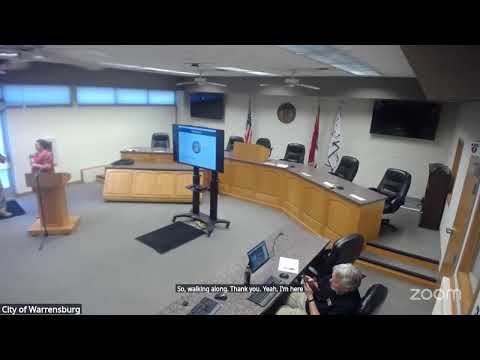
Lawrenceburg city officials were briefed on Missouri—s Sunshine Law on Sept. 10, 2025, in a training led by Victoria of the Missouri Attorney General—s Office. Jody Schneider, the city clerk for the City of Lawrenceburg, opened the session and introduced the presenters.
Victoria told attendees the Sunshine Law begins from a presumption of openness: "If you—re conducting any type of public business, kind of be under the assumption that it's the public's business," she said, explaining that meetings, agendas, minutes and most subcommittees are covered. She cautioned the Attorney General—s Office provides guidance but not legal advice: "I'm not an attorney, so I definitely can't give you any legal advice, but I can help direct you in what best practices are for the Sunshine Law," she said.
Key procedural requirements highlighted included posting notice at least 24 hours before public meetings, documenting time, date and location, and making meeting locations ADA accessible. Victoria recommended detailed agenda language (for example, "city budget proposals for the police department" rather than a single word like "budget") to reduce confusion about what was discussed.
On records, the presenter explained that a custodian of records must acknowledge and act on a records request "as soon as possible, so no later than three business days after the custodian receives it." She said the initial response may request more time and should include any fee estimates. Under changes taking effect after an Aug. 28 law update, agencies may require upfront fees for labor-intensive requests; Victoria suggested providing a reasonable upfront estimate and issuing refunds if actual costs are lower.
Victoria also discussed electronic communications and meeting formats: emails, texts or virtual platforms where a quorum discusses public business count as meetings and records. She warned that votes taken by electronic means must still be recorded in the public record and advised copying the custodian on government business conducted by email to ensure preservation.
The training reviewed when a body may close a meeting and the standards it must cite in the statute when doing so (topics such as personnel matters, litigation or sealed bids). Victoria advised closing meetings only when a statutory exemption applies and urged officials to consult the clerk or city attorney if uncertain, saying improper closure creates liability. She noted certain new privacy exemptions in the law expand protections for minors and other categories.
The Attorney General—s Office offered printed and electronic materials and added Lawrenceburg contacts to its mailing list for updated booklets and forms. Jody Schneider said the city clerk—s office will distribute materials to staff liaisons and meeting chairs.
There were no formal votes or actions recorded at the training. The session concluded with an offer for follow-up questions and copies of the presentation materials.