Get Full Government Meeting Transcripts, Videos, & Alerts Forever!
Get email alerts on the Public Safety topic
No spam. Unsubscribe anytime.
Hudson council weighs cost of moving from hybrid to full‑time fire, staff forecast $4.7M annual increase
Summary
Council members discussed a possible conversion from the approved 24/7 hybrid fire/EMS model to a fully staffed fire department; staff estimated a $4.1M–$4.7M annual cost that could require a property tax increase or income tax change. No vote was taken; hybrid rollout will proceed.
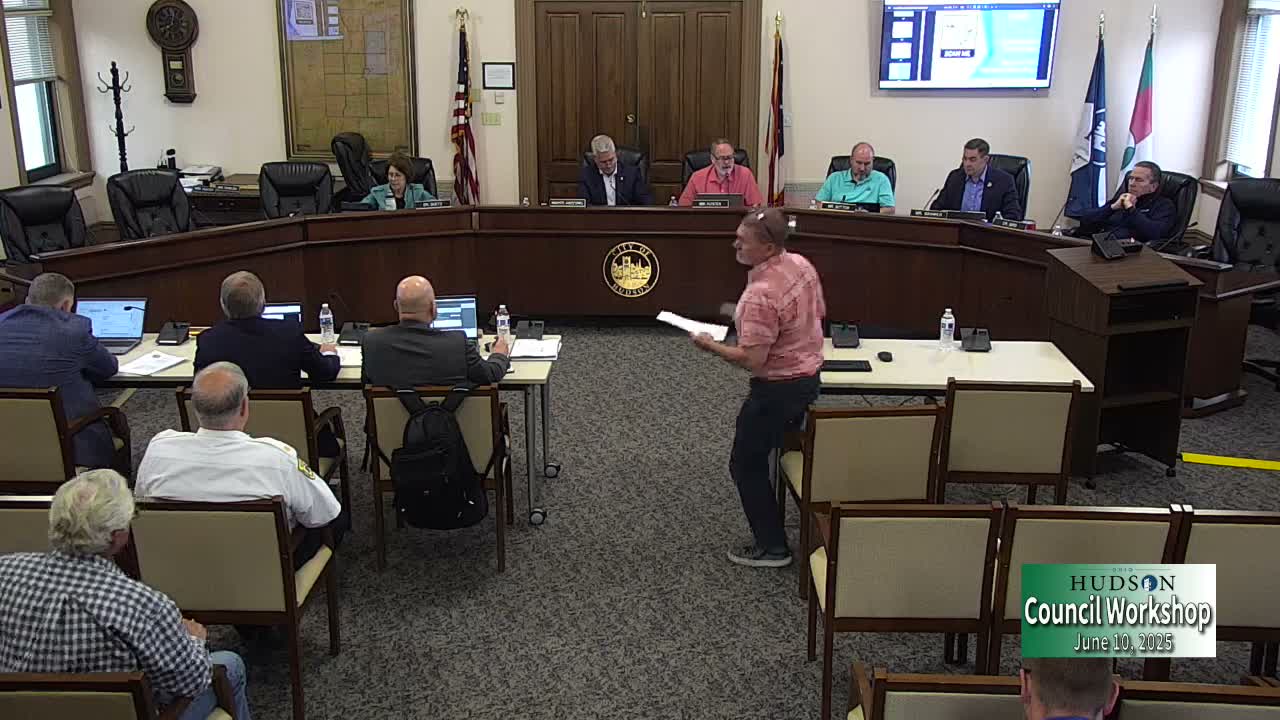
Hudson City Council on June 10 heard detailed cost estimates and policy options after a council member asked staff to attach numbers to the question of a full‑time fire and EMS department.
Council member Mister Bandwig presented staff forecasts that converting from the planned 24/7 hybrid model to a fully staffed, full‑time fire department would cost roughly $4.1 million to $4.7 million more per year. "It would be...dollars 4,700,000.0 more a year," Bandwig said during the discussion, and staff translated the estimate into tax impacts — about 2.76 mills in property tax or roughly a 0.25 percentage‑point increase in the municipal income tax, with an example cost of about $512 a year for a median $530,000 home.
Why it matters: the additional cost would represent a substantial share of the city's general fund. Council members pushed for clarity on what residents are being asked to fund and emphasized that the city already operates 24/7 emergency medical services. "We have 24/7 EMS — two vehicles that can leave at any time," the Mayor noted to clarify existing services and to correct public misunderstandings about current EMS capacity.
Supporters of remaining with the hybrid plan argued the near‑term hybrid approach will provide data on response times and system performance before asking taxpayers to fund a far larger, permanent staffing change. "We have already made a decision to create a hybrid department," Council President Foster said; the council reiterated that it will proceed with hybrid implementation and collect multi‑year data to inform any later decision on full‑time staffing.
Fire leadership cautioned that the planned remodel of the existing station will make it suitable for the hybrid model but not for a full‑time, combined fire and EMS workforce. "The planned upgrades will support the hybrid model; they would not upgrade that facility to make it capable for use with a full time combined fire and EMS," Chief Farrant said, explaining a full‑time model would likely require an additional station and roughly 40 personnel.
City finances and grants: staff noted the city’s fire fund has significant reserve capacity but is finite; council discussed options including drawing from the fire fund and postponing capital projects to bridge early shortfalls. The city has applied for a FEMA staffing grant intended to help fund the first three years of increased staffing if pursued.
Next steps: no action or ordinance was introduced at the workshop. Council indicated it will proceed with the hybrid staffing transition, provide annual budget updates on fire and EMS performance, and consider a future non‑binding referendum or other public engagement if a move to full‑time staffing is pursued.