Get Full Government Meeting Transcripts, Videos, & Alerts Forever!
Get email alerts on the Comprehensive Plan topic
No spam. Unsubscribe anytime.
Raytown planners postpone adoption of comprehensive plan after attorney says public hearing notice was required
Summary
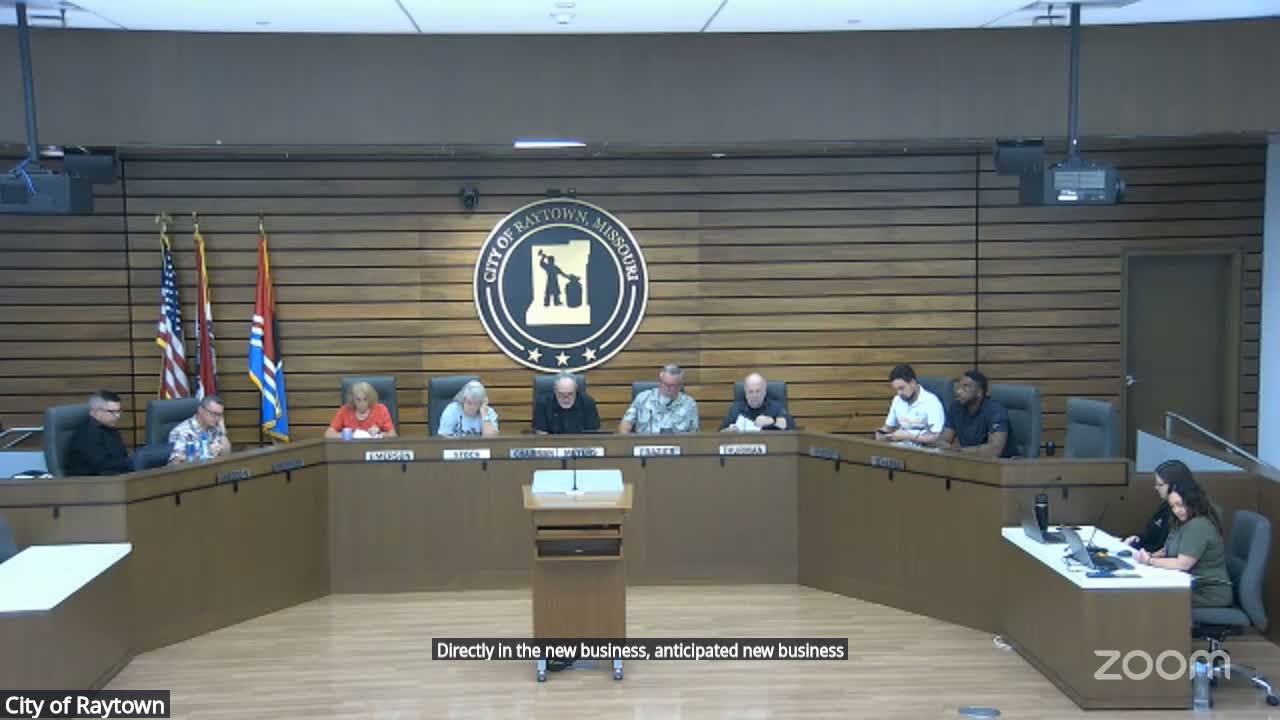
Consultant Josh Bloom presented the final draft comprehensive plan to the Raytown Planning and Zoning Commission, but adoption was postponed after a staff attorney said the adoption requires a public hearing advertised in the newspaper; the commission set consideration for Aug. 7 and the Board of Aldermen for Aug. 12.
Josh Bloom of the Lakota Group presented the final draft of Raytown’s comprehensive plan at the Planning and Zoning Commission meeting on July 10, laying out a three‑phase process of research, idea development and plan writing, community workshops and an implementation matrix intended to guide the city’s work over the next 10–20 years.
Bloom said the plan centers on six pillars including economic development, green space, housing and neighborhoods, mobility, parks and recreation, and operational excellence. He described downtown priorities—preserving open space, broadening housing types, enhancing the tax base and improving downtown connectivity—and presented three green‑space concepts that the community had favored in workshops. Bloom also noted a recent ULI TAP visit produced a somewhat different configuration for one parcel that did not include housing, illustrating there are multiple approaches to developing the site.
Commissioners and consultants discussed implementation details and funding. Bloom showed an implementation matrix that pairs strategies with time frames and suggested leads; he recommended creating a citizens advisory group to help track progress. Commissioners pressed staff about financing and cadence for review. A finance representative summarized the city budget calendar and said personnel costs typically account for roughly two‑thirds of ongoing operating budgets, leaving limited discretionary funds for new projects without external grants or subsidies.
During the question-and-answer period, a commission member told the group the city attorney had advised that adoption of the comprehensive plan requires a formal public hearing that must be advertised in the newspaper. Because that notice was not published, the commission agreed not to adopt the plan that night. The commission set consideration for the next Planning Commission meeting on Aug. 7 and noted the Board of Aldermen is scheduled to consider the plan on Aug. 12; Bloom said he would participate virtually at the August 12 meeting.
Commissioners praised the plan’s clarity and the implementation matrix and discussed downtown identity, including reuse of the Fox Drugs sign as a landmark and options such as secondary street names or placemaking to strengthen downtown identity. They also clarified that the comprehensive plan guides future land use but is not itself a zoning code rewrite; a subsequent zoning update would be required to align zoning with the plan’s future land‑use designations.
The commission did not take a final vote on the plan. With the hearing‑notice issue identified, the procedural next step is a noticed public hearing and a reconsideration of adoption at the commission’s Aug. 7 meeting; the Board of Aldermen’s agenda currently shows Aug. 12 as the next hearing date for consideration.