Get Full Government Meeting Transcripts, Videos, & Alerts Forever!
Get email alerts on the Municipal Finance topic
No spam. Unsubscribe anytime.
Raytown finance director presents unaudited FY24 results and ARPA commitments as board eyes spending plans
Summary
Finance Director Michael Graham presented an unaudited fourth-quarter report showing roughly $27.8 million in combined fund balances, strong sales-tax growth and ARPA project commitments of about $5.2—$5.3 million. Board members pressed staff on franchise fees, utility impacts and project timing.
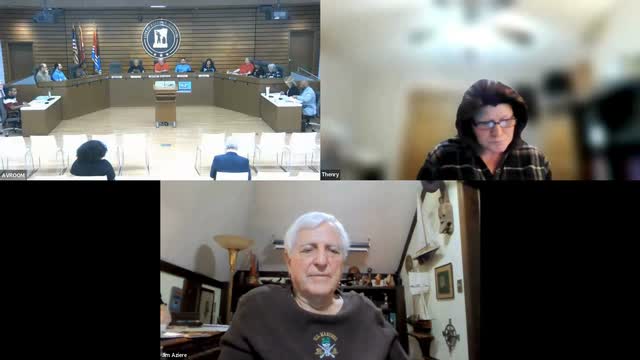
Michael Graham, Raytown's finance director, told the Board of Aldermen April 1 that the city's unaudited fourth-quarter financial report shows total fund balances of roughly $27.8 million and that sales tax and grant receipts were major drivers of the year's income.
"This is unaudited, meaning that it doesn't include numbers that may be adjusted on our financial statements when the auditors are done with their field work," Graham said as he opened his presentation, stressing the numbers are preliminary.
Graham told the board sales tax was up roughly 17% year over year and franchise fees rose about 6%. He noted the general fund's collection rate moved toward an expected 90% as the year progressed and highlighted fund balances for parks, transportation, capital sales tax and public-safety accounts.
The presentation focused heavily on federal ARPA funding and how it has been programmed. "Main thing I wanted to show you here is that down at the very bottom, all the funds have been committed. We've got everything in place by December 31 under contract and each amount, identified to a project is in place," Graham said, adding that roughly $607,000 of ARPA spending appeared in FY24 and the remaining committed amounts were budgeted in FY25. Graham described the total ARPA commitments at presentation as about $5.2—$5.3 million and reminded the board that ARPA expenditures must be used by Dec. 31, 2026.
Aldermen pressed staff for detail. Alderman Walters asked whether the franchise-fee increase included utilities such as natural gas and electricity; Graham answered franchise fees include cable, gas, electric, telecommunications and a small Google Fiber component and said usage is the main driver. Members also questioned why court receipts had fallen and were told caseload and the number of items issued drove reductions in court-related revenue.
Graham reviewed other fund conditions: a park fund balance of about $1.0 million, a transportation fund that benefitted from an 11% sales-tax increase, and sewer-fund totals that include large fixed-asset investments; when removed, Graham said about $5.5 million of the sewer ledger is available for use. He also described the city's investment posture, with roughly $5.2 million in liquid funds, CDs placed under FDIC limits and term funds yielding near 4.5%.
Why it matters: The unaudited report frames the board's near-term spending choices and helps prioritize capital and ARPA projects that staff expect to ramp up in the spring and summer. Several aldermen asked for project-level transparency; Graham said staff can produce a report showing each project's dollar-to-date and remaining allocations.
The board took no formal action on the report itself; the presentation preceded a brief recess and then routine agenda items.