Get Full Government Meeting Transcripts, Videos, & Alerts Forever!
Get email alerts on the Transportation topic
No spam. Unsubscribe anytime.
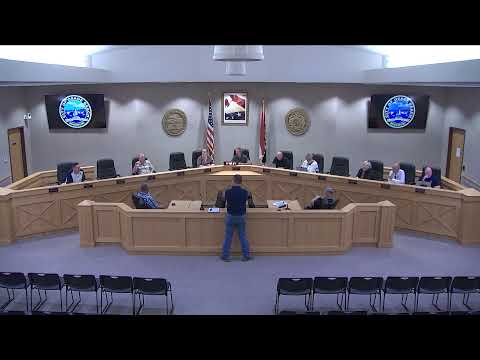
Osage Beach aldermen direct staff to restripe parkway "as is" after debate over bike lanes
Summary
After debate about protected bike lanes, enforcement issues and nearby development, the Osage Beach Board of Aldermen voted by voice to direct staff to restripe Osage Beach Parkway "as is" rather than install the protected bike lane envisioned in a Safe Streets for All grant.
OSAGE BEACH, Mo. — The Osage Beach Board of Aldermen voted to direct staff to restripe Osage Beach Parkway “as is,” choosing not to commit to the protected bike lane concept included in a Safe Streets for All grant application.
Jeff Fisher, the city’s public works director, told the board the grant had proposed a demonstration protected bike lane between Nichols and KK but that staff had questioned whether that design matched community priorities and whether the city was ready for the long-term commitment it requires. “It just so happens though, it sort of requires a decision pretty quickly because … we’re getting ready to resurface and stripe OB Parkway,” Fisher said, describing the narrow window before sealing the pavement would make re‑striping impractical for roughly six years without substantial cost.
Why it matters: The board’s decision locks in striping for the corridor for years and forgoes a grant-funded demonstration of a protected bike lane unless the city amends the grant. Fisher estimated full resurfacing and restriping for the leg under discussion would cost about $500,000, saying the work requires grinding old markings and treating the surface to avoid uneven stripes.
Board members and staff raised safety, enforcement and operational concerns. A participant identified as chief warned against mixing golf carts, utility terrain vehicles and bicycles in the same lane: “If you’re trying to put golf cart motorized and non motorized traffic together … I’m not sure we can do it legally,” the speaker said, adding safety concerns about UTVs and bicycles sharing a lane. Carrie Patterson, who helped contact business owners along the corridor, said development tied to the upcoming Oasis and other parcels is likely to increase traffic: “We have somewhere to the tune of 16 properties that are plus 1 acre properties along the expressway or along the parkway that are going to develop in the near future,” she said, arguing that growth counsels caution about removing driving capacity.
Fisher said the grant’s demonstration concept called for a protected bike lane with delineators, which would require moving lane lines and losing driving space. He suggested lower-impact alternatives such as a single-side facility or shared-lane markings (“sharrows”) could be considered. He also noted that changing a demonstration project would require amending the grant application and selecting another demonstration within city limits.
Motion and vote: A motion to instruct staff to restripe the parkway as it currently exists was made and seconded by Alderman Rucker. The board voted by voice; multiple members responded “Aye,” and the motion was declared carried. The transcript records a voice vote and does not provide a roll-call tally.
What’s next: Staff will proceed with restriping the corridor according to the board’s direction. Fisher and others indicated the decision does not preclude future consideration of bike facilities, but that any change would be a multi‑year operational commitment and might require future resurfacing expense or grant amendments.