Get Full Government Meeting Transcripts, Videos, & Alerts Forever!
Get email alerts on the Public Hearing Procedures topic
No spam. Unsubscribe anytime.
Planning commission unanimously sends redline of Ordinance 25-21 on public-hearing rules to City Council
Summary
The commission voted 6–0 to forward a redlined version of proposed Ordinance 25-21 (codifying public-hearing order and time limits) and requested staff include a memo of specific textual suggestions and concerns about definitions and due process.
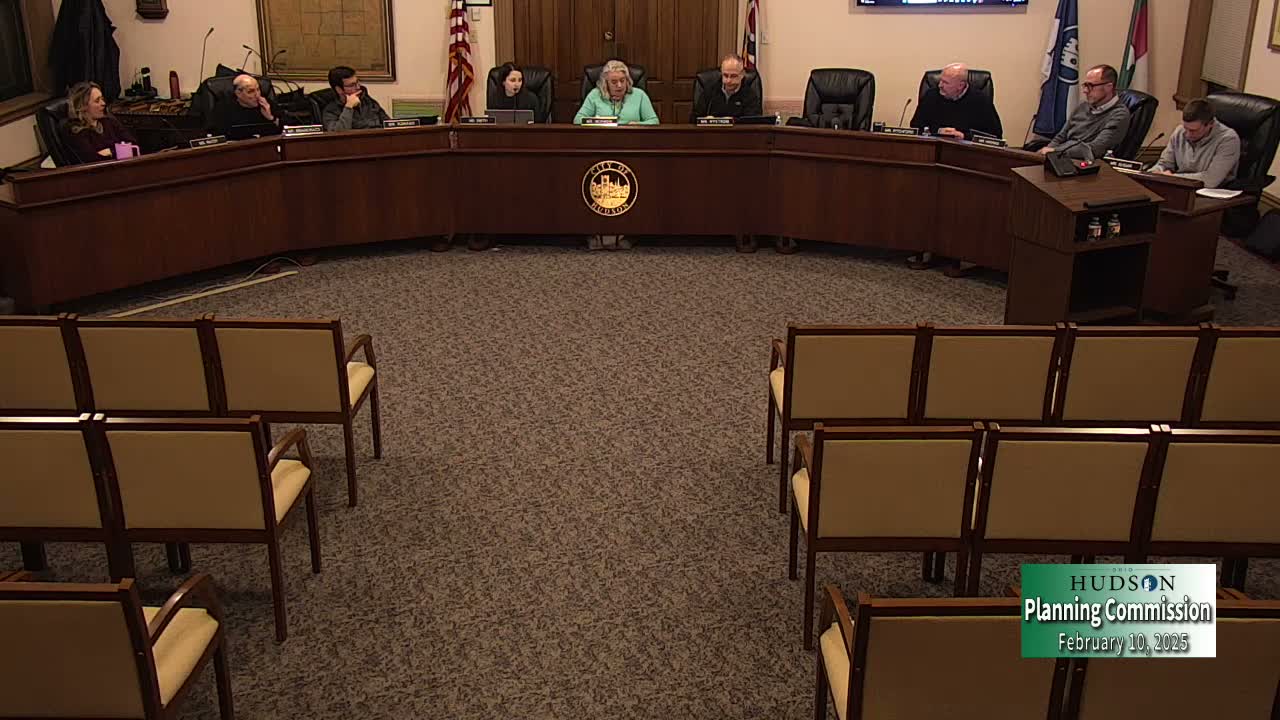
The Hudson Planning Commission voted unanimously on Feb. 10 to send a redlined draft and memo to City Council with comments on proposed Ordinance 25-21, which would codify procedures for public hearings in chapter 206 of the codified ordinances.
Staff summary and key provisions: Staff explained that the ordinance would define a public hearing and prescribe parts of the hearing sequence. Mr. Sugar told commissioners that the proposal sets limits on initial applicant comments ("capped at 15 minutes"), grants parties of interest (people within 300 feet) up to 15 minutes, and limits other members of the public to 5 minutes each.
Commission concerns and requested changes: Commissioners raised definitional and due-process questions, including how 'public hearing' differs from an open meeting or an appeal record, whether applicants have adequate time to present evidence, and who controls and documents timekeeping. Chair Norman recommended better definitions distinguishing public hearing, open meeting and appeal, and suggested limiting editorial comments from the public in favor of testimony relevant to fact-finding.
Formal action: Ms. Smith moved "to provide a red line document to counsel for review with the assistance of [the chair] sending it to our chairperson," a motion seconded by Mr. Romano. The commission approved the motion on a recorded roll call, 6–0. Chair Norman said staff would assemble the redline and memo for transmission to council.
Why it matters: The ordinance would standardize hearing order and time limits across boards (Planning Commission, Board of Zoning Appeals). Commissioners said the change could improve predictability for hearings but flagged potential due-process trade-offs if limits are too restrictive or if definitions permit re-presentation of evidence on appeal.
Next steps: Staff will prepare a redline and memo reflecting the commission’s edits and transmit them to City Council for its consideration.