Get Full Government Meeting Transcripts, Videos, & Alerts Forever!
Get email alerts on the Fire And Ems topic
No spam. Unsubscribe anytime.
Hudson Council backs rapid move to hybrid fire staffing, seeks firm long-term funding
Summary
Hudson City Council heard a plan to shift the city’s fire and EMS operations from a paid-volunteer model to a hybrid daytime model this summer and full 24-hour staffing in 2026, with staff proposing $600,000 annual transfers from existing reserves while warning the approach is not a permanent funding solution.
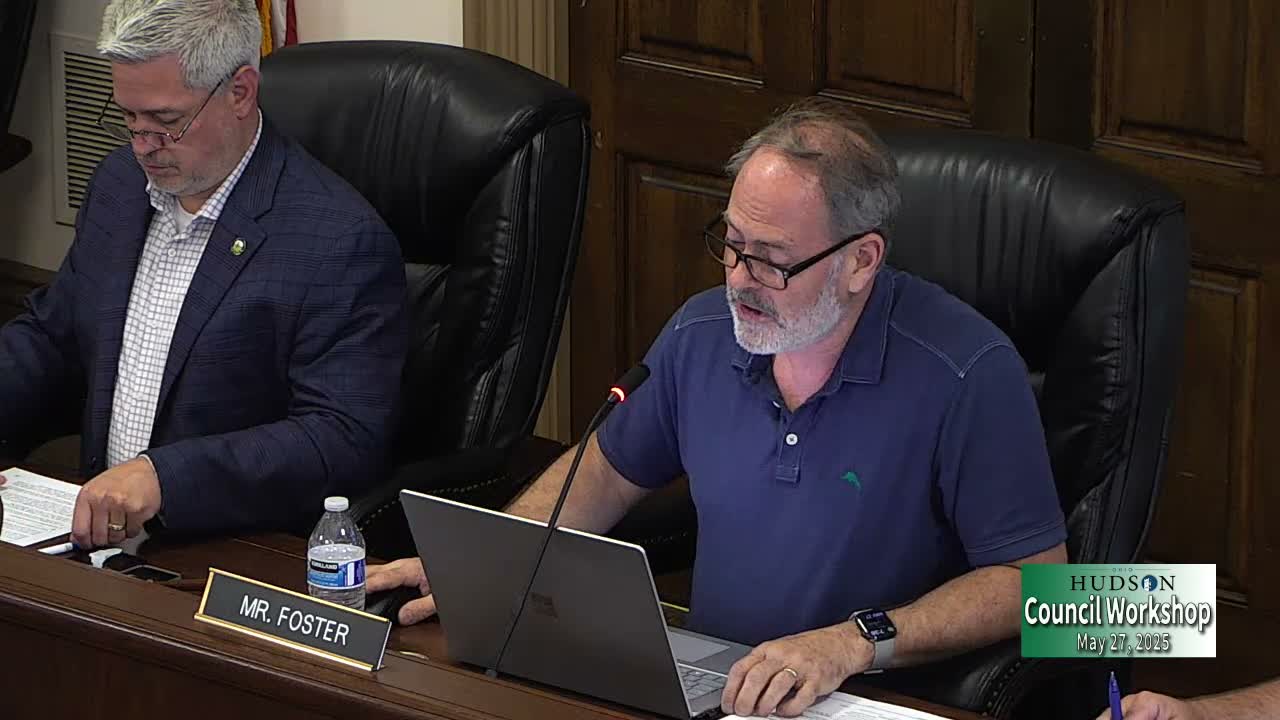
Council President Chris Foster and city staff on Tuesday reviewed a plan to shift Hudson’s Fire & EMS from a paid-volunteer model to a hybrid daytime staffing model this summer and to move to full 24-hour staffing in 2026.
City staff and the Fire & EMS subcommittee presented cost estimates and funding options and asked council to authorize work on an initial July staffing schedule. The chief told council “This strategic shift aims to significantly reduce the response times, align them with national standards and enhance public safety for our residents.” Staff estimated the additional personnel cost at roughly $850,000 (all figures shown for 2026) and identified station renovations and related capital work as further needs.
The administration recommended a near-term funding package that would avoid new taxes by drawing about $600,000 annually from the city’s fire fund balance (which staff said currently holds about $8,000,000 in reserve) and by considering a general-fund transfer to smooth the impact. “We would utilize and allocate about 600,000 annually from the existing fire fund balance,” staff said during the presentation. Officials framed the measure as a multi-year bridge—not a permanent fix—and said the council would review the plan annually as part of the city’s five-year financial planning.
Council members generally supported moving quickly to daytime staffing and to begin preparing a July schedule, but several voiced concern about long-term sustainability. Mr. Sutton warned the current approach only postpones the structural funding question, saying the city would otherwise be “effectively bankrupt in 8 years” under some scenarios and urging a firmer long-term funding commitment rather than repeated short-term fixes. Other members and finance staff acknowledged those concerns and said the administration would bring a detailed budget discussion and options in the fall, including whether to pursue a ballot measure or to codify a permanent transfer.
Staff emphasized financial guardrails in the proposal: the city would not cut capital programs wholesale but would defer selected projects, review actual year-end carryover each January, and continue regular five-year-plan updates. Finance staff described a separate capital apparatus replacement fund that is intended to set aside money specifically for large vehicle replacements so apparatus purchases would not be funded from operating reserves.
Council also asked whether the RFP for related services could proceed; staff confirmed the RFP is included and may be issued promptly. Before moving on, council gave consensus direction to proceed with the July scheduling and to bring a more detailed budget-level discussion back during fall budget work sessions.
Next steps: staff will post the RFP work and return to council during budget deliberations with a longer-term funding proposal and updated five-year projections.