Get Full Government Meeting Transcripts, Videos, & Alerts Forever!
Get email alerts on the Traffic Safety topic
No spam. Unsubscribe anytime.
Hudson council considers landscaper registration and peak-time parking restrictions
Summary
City staff proposed a landscaper registration program and ordinance updates to prohibit landscaper parking on five streets during peak times; council debated time windows versus full arterial bans and asked staff to consider a pilot approach.
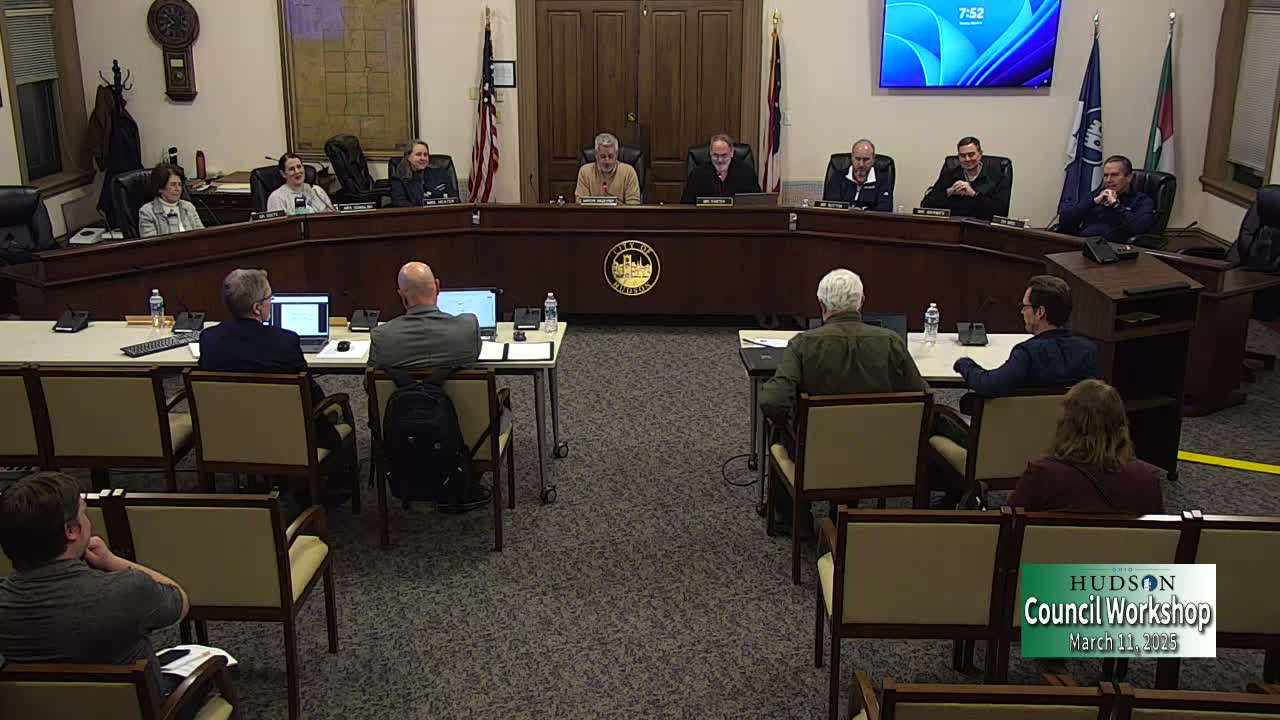
Hudson City staff presented a proposed landscaper registration program and targeted parking restrictions at the March 11 workshop, saying the measures would reduce safety and congestion issues caused when multiple landscaping trucks park on narrow streets during school-bus and peak commute times.
Staff identified five streets where the problem is worst (Aurora Street, Middleton Road, North Oviatt Street in North Hayden, Franklin Street and one additional hot spot) and proposed piggybacking registration on an existing snowplow registration program. As staff described the enforcement flow: police would photograph violations, log license-plate information and community development staff would follow up with warning letters; the ordinance would be strengthened with higher penalties as needed.
Councilors debated whether time-window restrictions (to cover school-bus and rush hours) are preferable to an outright ban on arterial roads. One councilor suggested extending restrictions to more arterial and secondary streets (Norton Road, Stowe Road, Prospect Valley View) while others warned that a total ban could be difficult to police and suggested starting with a pilot on the five worst streets and expanding if needed.
Council discussed related concerns including construction vehicles (addressed separately through site-plan review and engineering checklists) and the need to coordinate public notification with landscapers and residents. Staff said they will work with police to identify problem locations and will return with recommended ordinance language and public-notification plans.
The proposal was presented for direction; no formal ordinance or vote occurred at the workshop.