Get Full Government Meeting Transcripts, Videos, & Alerts Forever!
Get email alerts on the Marijuana Moratorium topic
No spam. Unsubscribe anytime.
Hudson council weighs permanent ban after resident survey; temporary moratorium may be extended
Summary
Council heard results of a city engagement showing 61% support for a permanent ban on marijuana dispensaries in District 9 and debated whether to let the temporary moratorium expire April 2 or extend/change it while staff and solicitor research zoning and legal vulnerability.
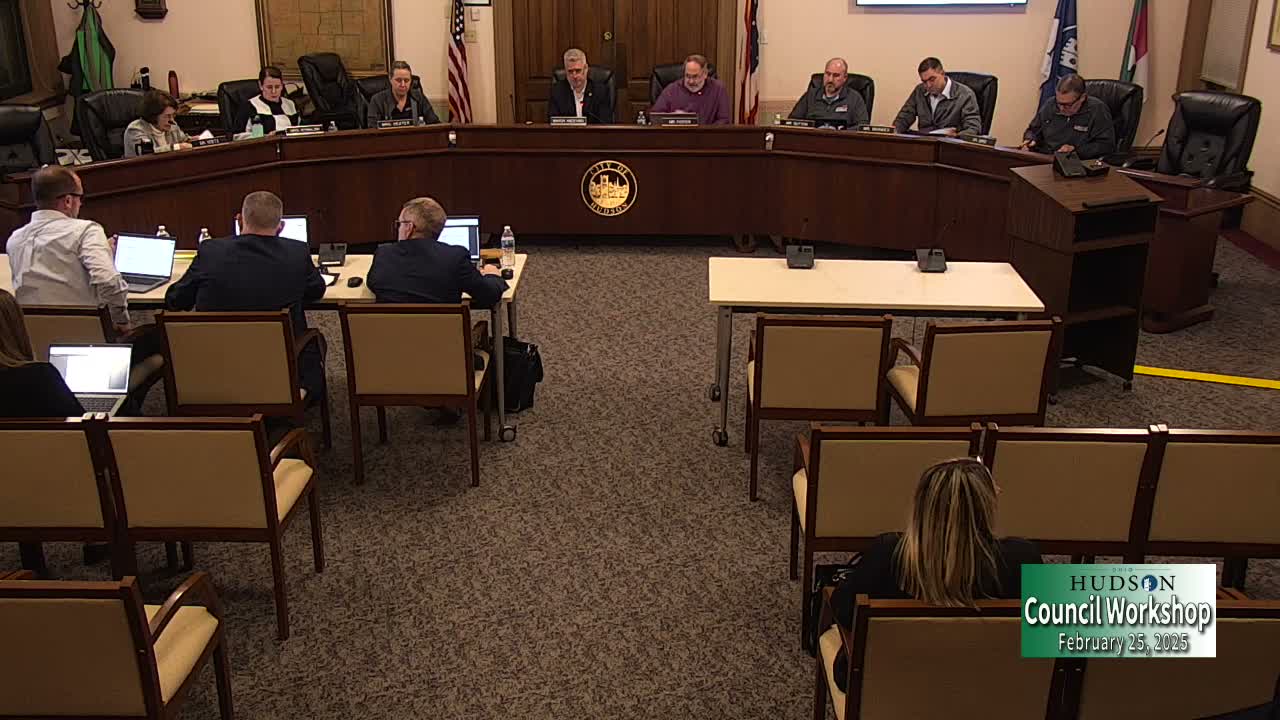
City staff presented the results of a four‑week Let's Talk Hudson engagement on Feb. 25 showing more than 500 resident responses: 61% supported a permanent ban on marijuana dispensaries in District 9 and 39% favored allowing the current temporary moratorium to expire. The temporary moratorium is set to expire April 2, staff said.
Council members split over next steps. Councilmember Sutton warned of legal risk from an outright ban and said zoning that permits a use in a narrowly defined district can offer stronger defense than a blanket prohibition: “If you ban a business outright, there is court precedent ... that they can come back at you and say, well, I should be allowed in your city,” he said. Other members, citing the Let's Talk Hudson feedback and adolescent‑health concerns raised by Dr. Byrd, supported pursuing a permanent ban.
Staff recommended two parallel paths for the March 4 agenda: (1) place an extension of the temporary moratorium (three months, or six months if council prefers more study time) and (2) introduce legislation to consider a permanent ban so council can vote it up or down. Staff also committed to returning memos addressing (a) whether state law and Ohio case law permit municipal bans and (b) information from police and EMS on calls and public‑safety issues observed in other jurisdictions. A staff member cautioned that even with emergency language, an ordinance passed March 4 may not take effect immediately and could leave a short window for applications during the moratorium expiration.
Council asked the solicitor to research prior zoning‑challenge outcomes in Ohio and requested that law enforcement provide operational observations about dispensary‑related incidents elsewhere. The council did not vote at the workshop; staff said the March 4 meeting will include both an extension and the option of a permanent ban for formal action.