Get Full Government Meeting Transcripts, Videos, & Alerts Forever!
Get email alerts on the Planning topic
No spam. Unsubscribe anytime.
Planning Commission chair outlines code rewrite priorities, proposes tighter growth-management accounting
Summary
The Planning Commission reported 2024 work and urged council guidance on a targeted rewrite of the land-development code, Appendix A application automation, and a rethink of growth-management allocations to account for institutional residential developments and finite buildable land.
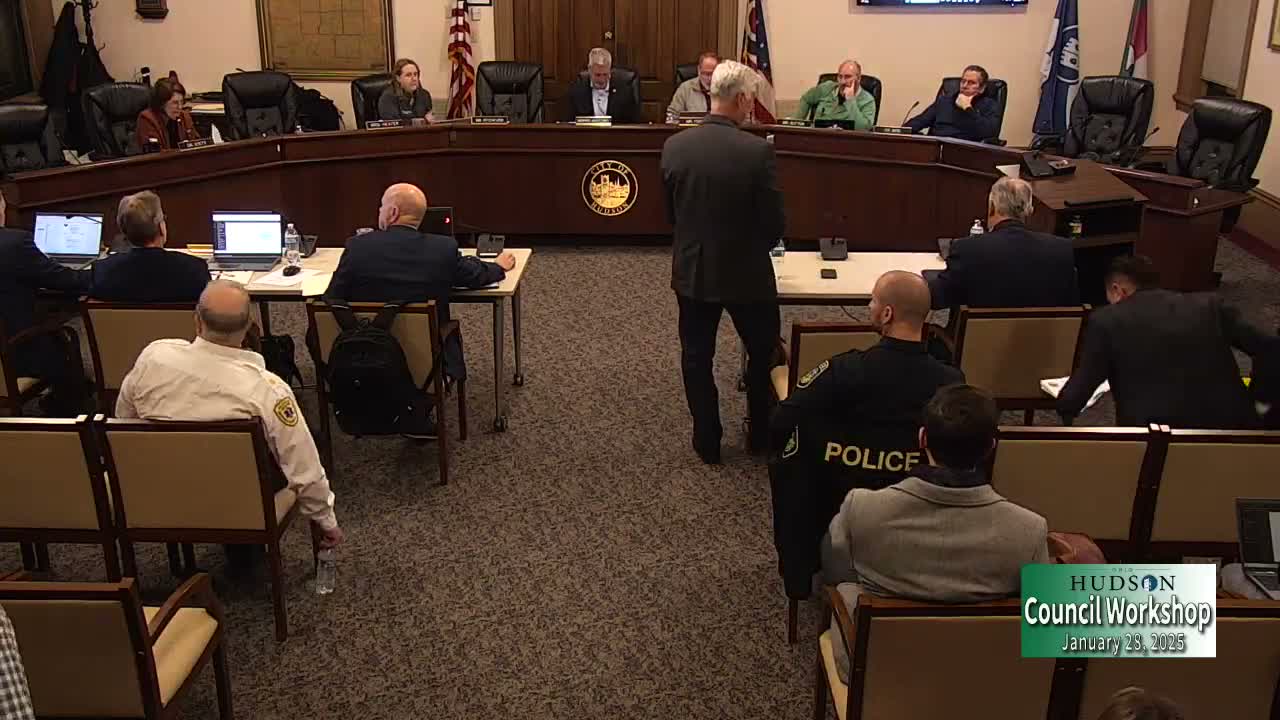
Sarah Norman, chair of Hudson’s Planning Commission, told the City Council on Jan. 28 that the commission will prioritize updating application requirements (Appendix A) and preparing a course of work toward a land-development-code rewrite while seeking council guidance on timing and scope.
“Appendix A is just the list of things, the site plan, the tree plan, the stormwater plan… it’s written in very antiquated terminology,” Norman said, describing a push to modernize submission requirements and to examine an online, self‑validating application platform that would prevent incomplete submittals.
The commission also flagged the growth-management residential allocation language as “mathematically unsustainable” because it can exclude institutional residential developments from counting against allocations, producing undercounts of utility and infrastructure loads. Norman suggested the city consider making the growth-management system prospective rather than retrospective so staff can quantify buildable capacity and set an upper limit the city would not exceed.
Commission vice chair Angela Smith said a full code rewrite is a large undertaking that will likely require outside consulting expertise and staged work, and urged council to invest in that capacity if council wants a wholesale rewrite. Norman said the planning commission will pursue “low-hanging fruit” first and deliver recommendations for incremental changes that can be prioritized by council.
What happens next: Council and the commission agreed to continue discussions at future meetings; the commission offered to return with prioritized tasks or a scope for consultant support as requested by council.