Get Full Government Meeting Transcripts, Videos, & Alerts Forever!
Get email alerts on the Boarding Kennels topic
No spam. Unsubscribe anytime.
Residents urge larger setbacks, caps and soundproofing in Hudson kennel zoning hearing
Summary
During a public hearing on ordinance 25-92, Hudson residents urged council to restrict boarding kennels to commercial zones and to increase the proposed 500-foot setback, citing noise, traffic and property-value concerns; councilors said the draft preserves existing kennels as nonconforming uses while moving to limit new kennels near homes.
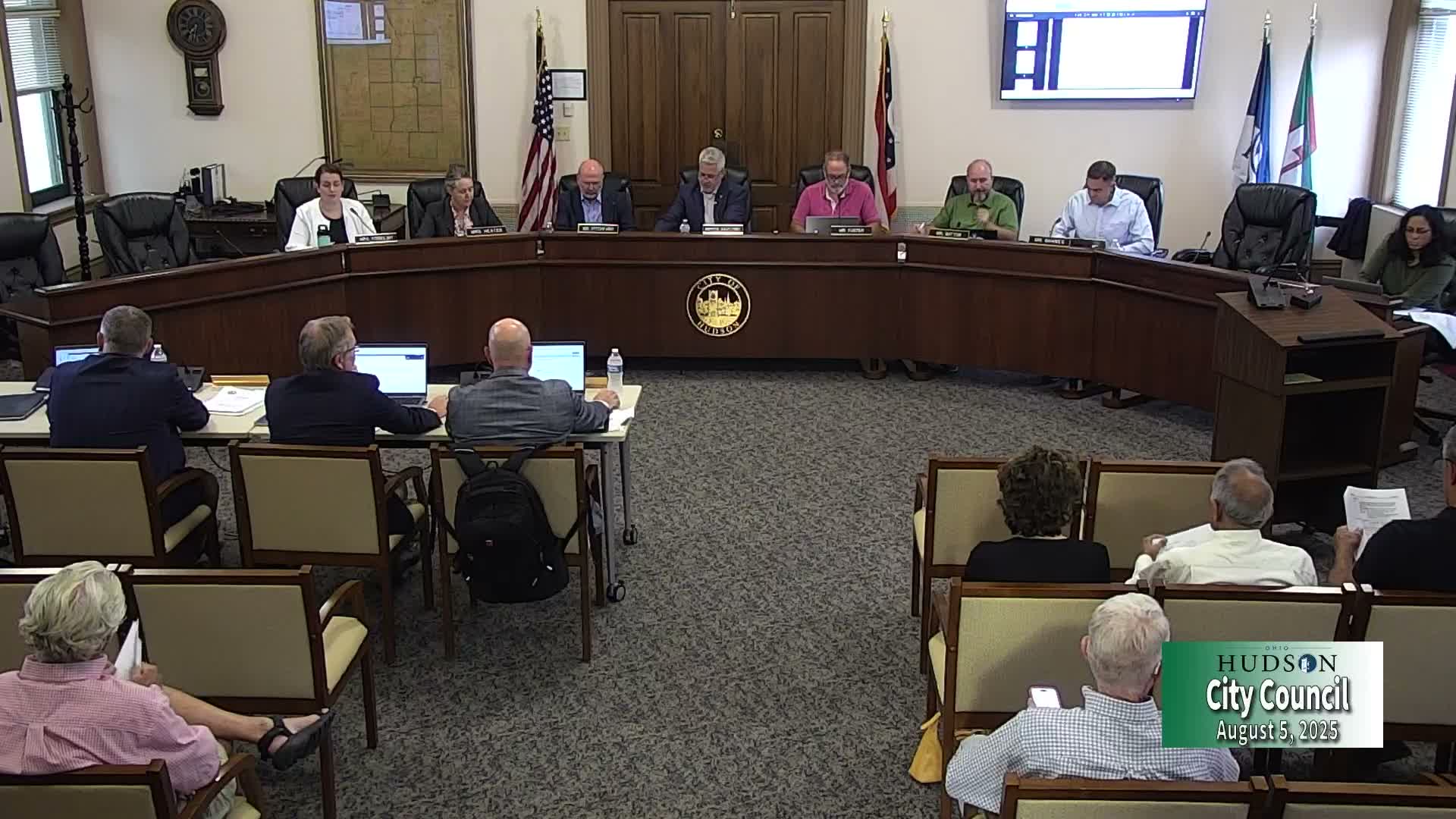
Hudson residents on Aug. 5 urged stricter limits on boarding kennels and veterinary facilities during a public hearing on an amendment to the land development code.
Alisa Poggi, who testified first, said she supports the planning commission’s recommendation to restrict kennels to business zones (Districts 6 or 8) and remove kennels from residential districts. Poggi questioned the basis for a proposed 500‑foot buffer, noting the planning commissioner referenced commercial uses (like vehicle repair and self‑storage) that do not generate the same noise or traffic patterns as kennels. She recommended council members visit local kennels during peak drop‑off times to observe traffic impact.
Jamie Dalton told council that reasonable upfront restrictions would help businesses and residents coexist, and she asked council to consider caps on the number of dogs permitted and mandatory reinspection or noise‑abatement requirements if complaints arise. Dalton cited research and an online source she said showed property values near boarding facilities can fall as much as about 10%, and offered a larger setback for bigger facilities (1,000–2,000 feet) and requirements such as sound insulation.
Dr. Dante, a nearby resident and physician, echoed concerns about noise levels (citing OSHA thresholds), contagious canine respiratory disease in dense boarding operations and potential taxpayer costs for enforcement and emergency responses if dogs escape.
Council response: Council President Foster and other members responded that the draft aims to keep kennels away from residential neighborhoods while allowing existing kennels to remain as nonconforming uses in District 2 (grandfathered). Foster said existing businesses are not being targeted for removal but that council seeks a balance that preserves residential character.
What’s next: Item 25-92 was described as the second of three readings; council scheduled a third reading for Aug. 19. Staff committed to clarifying the zoning summary tables and ensuring the draft ordinance reflects the planning commission’s recommendations about which districts permit kennel or veterinary uses.
Provenance: Testimony and discussion appear in the transcript beginning at SEG 067 (public hearing announcement) with public comments starting SEG 086; council follow-up and zoning clarifications run through SEG 304.