Get Full Government Meeting Transcripts, Videos, & Alerts Forever!
Get email alerts on the Infrastructure topic
No spam. Unsubscribe anytime.
Smyth County board recommends property-owner survey and $5,000 PER to assess McCready sewer expansion
Summary
The board unanimously approved a water-and-sewer committee recommendation to survey property owners near the McCready sewer station and to commission a $5,000 preliminary engineering report to evaluate septic failures, community interest and grant opportunities for a project estimated at about $675,000.
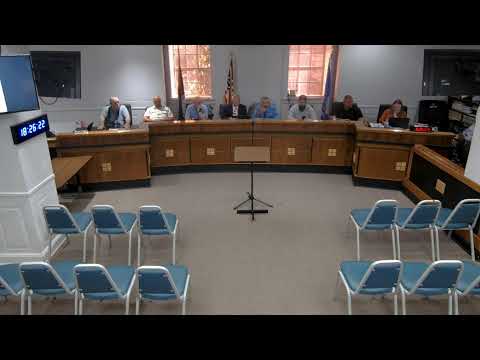
The Smyth County Board of Supervisors voted Sept. 11 to authorize a property-owner survey and to pursue a preliminary engineering report (PER) costing $5,000 to assess need and interest for an extension of the McCready sewer station.
Committee members said a regional study was available but no project-specific PER could be located. Staff told supervisors the proposed project cost is roughly $675,000; at county-only funding the committee’s materials projected a return on investment of 52 years, while a 50% grant match would shorten the ROI to about 25 years. Committee members and supervisors emphasized the importance of confirming whether septic systems in the neighborhood are failing before proceeding and urged staff to check with the health department.
The committee’s final recommendation—an authorized county-conducted property-owner survey to gauge interest and a $5,000 PER to inform design and grant applications—was made by the committee and approved unanimously by the board. Staff also said the Mount Rogers Planning District Commission will check past grant records for prior studies that may be relevant.
Supervisors discussed mandatory hookup ordinances and noted that the project's financial model depends on expected participation; staff said mandatory-hookup enforcement would affect revenue assumptions. Staff also noted the potential to expand service beyond the initial 17 manufactured-home sites if future demand materializes.
What happens next: staff will mail the proposed letter to property owners, consult the health department on septic failures, and, if interest and need are confirmed, return with a PER language/proposal for formal authorization and subsequent grant pursuit.