Get Full Government Meeting Transcripts, Videos, & Alerts Forever!
Get email alerts on the Economic Development topic
No spam. Unsubscribe anytime.
Powhatan EDA briefs supervisors on site readiness, bonds and strategic plan
Summary
The county Economic Development Authority told the Board of Supervisors it is advancing a 19.5‑acre Route 60 site from tier 2 toward shovel‑ready status, highlighted past bond issuances used for schools and facilities, and said a 4–5 year strategic plan will be adopted in July.
The Powhatan County Economic Development Authority told the Board of Supervisors on June 23 that it is preparing county‑owned sites and a new strategic plan to attract business and expand the local tax base. Frank Rennie, chairman of the EDA, described the authority's statutory powers to acquire and sell property, issue bonds and accept grants to promote development.
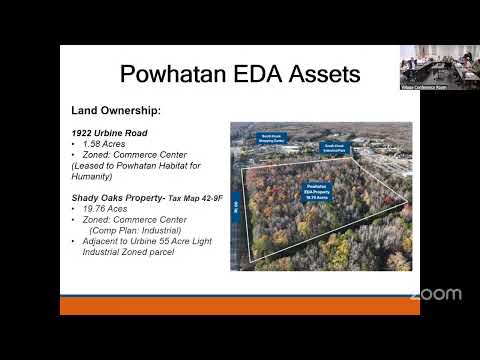
Rennie said the EDA owns an approximately 1.5‑acre commercial parcel leased to Habitat for Humanity and a recently acquired Shady Oaks parcel that adjoins a 55‑acre light industrial zone along Route 60. “We are empowered to identify, promote, and to support new development projects and expand existing areas of development for the purpose of increasing economic productivity for the county,” Rennie said. He also noted three recent bond issuances the EDA administered: a roughly $50 million bond in 2016 that supported construction of the new middle school; a $10 million bond in 2018 funding convenience‑center and parking projects; and an approximately $11.5 million issue last year for HVAC and school facility work.
Roxanne Salerno, the county's economic development director, and EDA members said the authority is focusing on advancing a 19.5‑acre parcel from a tier 2 site to tier 4 under the Virginia Economic Development Partnership site‑readiness program. The tier upgrade would make the parcel more marketable to employers that expect “shovel‑ready” sites and can shorten lead times for locating firms. EDA members also discussed aggregation strategies and legal instruments to assemble private parcels into larger sites for state grant programs and prospects that often require larger acreage.
Board members asked about the number and size of privately owned commercial parcels that might be candidates for aggregation. Salerno estimated 15–20 larger parcels and up to 20–30 additional smaller parcels that could be considered for marketing; she and EDA members said state grant programs often favor larger, 10‑acre+ tracts. The EDA reported it has prepared due‑diligence budget estimates and will continue work in July to advance the route‑60 property toward higher readiness tiers.
The EDA said it is finalizing a 4–5 year strategic plan, created with outside consultants, and expects to adopt it in July; the group offered to brief the Board of Supervisors on the plan and return quarterly for updates. Rennie emphasized the body's volunteer status and asked for continued board support and collaboration to expand the county's economic options.
The Board received the presentation and reappointed two EDA members later in the meeting; the EDA representatives adjourned after offering to return with more detailed briefings.