Get Full Government Meeting Transcripts, Videos, & Alerts Forever!
Get email alerts on the Licensing And Regulation topic
No spam. Unsubscribe anytime.
DHS describes licensing changes, new sober-living definition and inspection practices
Summary
The Department of Health Services told legislators it expanded licensing tools, moved to electronic licensing and revised the legal definition of sober-living homes; DHS said it focuses on health-and-safety oversight, not billing, and pointed to AZ CareCheck as a public transparency tool.
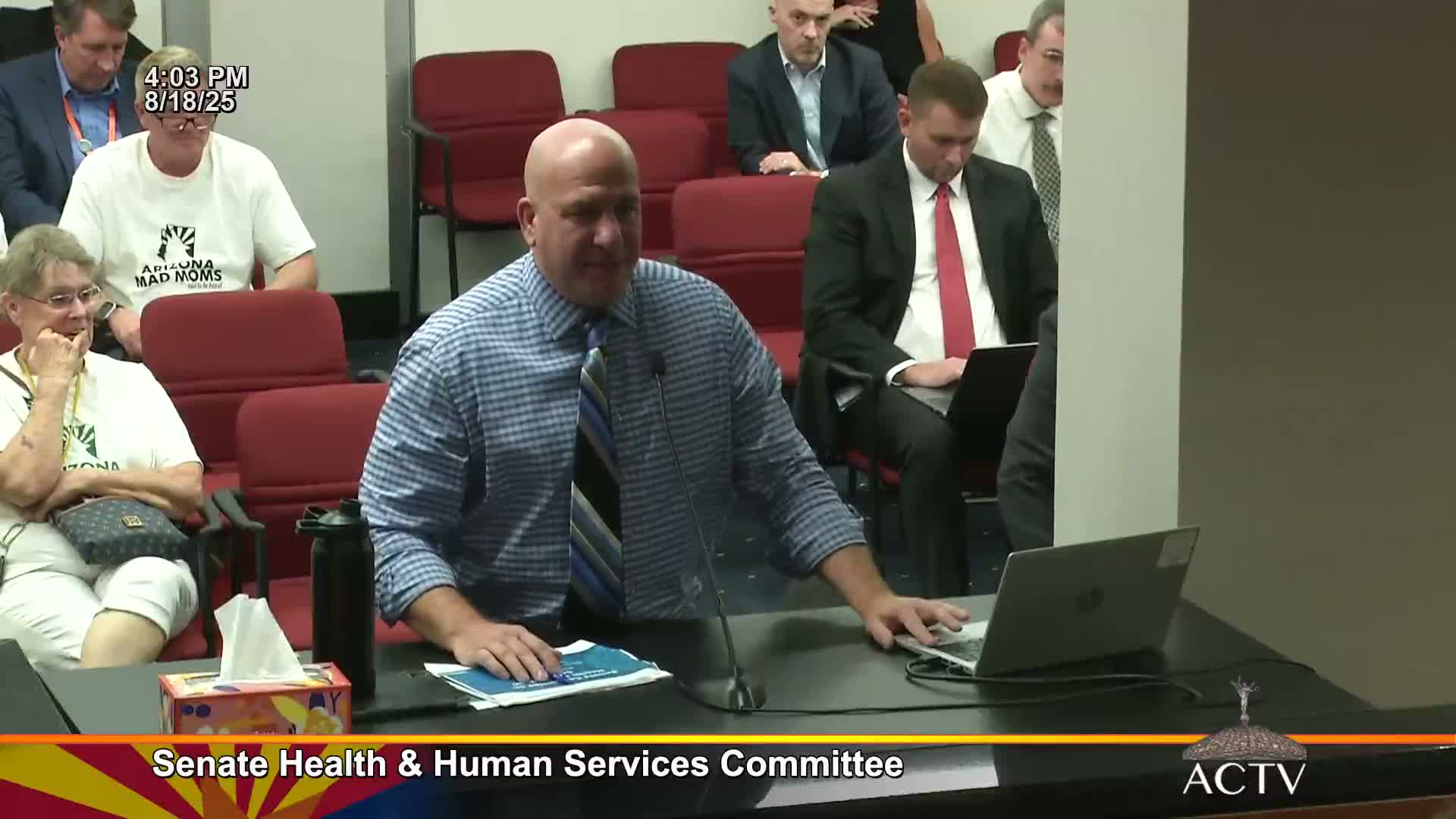
Tom Salo, assistant director in the Arizona Department of Health Services'division of licensing, told the committee that DHS has strengthened licensing tools and is moving more regulatory activities online to speed application processing and increase transparency.
Salo said DHS now manages about 132,000 individual licensees and roughly 21,000 facilities and operates with a headcount of roughly 270 staff. He described a recent move to electronic licensing that reduced average application-processing times and introduced 60'90 day touchpoints for new licensees to provide earlier technical assistance.
On sober-living homes, Salo said the statutory definition will expand soon (he cited the statutory reference shown on the slide as "13 o 8") to bring that class of facilities closer to the health-care institution framework, increase civil-penalty authority and require fingerprinting in some cases. He noted that about 300 licensed sober-living homes exist, roughly half accredited, and emphasized that DHS'inspections focus on health-and-safety issues, not billing or fraud investigations.
Salo described the complaint-intake and triage matrix posted on AZ CareCheck, the department's public portal of inspection and enforcement records, and walked through the department's enforcement options, including informal settlement conferences, civil money penalties and notices of intent to revoke. He told the panel that most enforcement is handled through provider agreements and informal settlements when possible.
Committee members asked DHS about regional surveyor staffing levels, background checks and whether DHS had performed a root-cause analysis of how bad actors evaded licensing controls. Salo said DHS has some satellite staff in Tucson and Flagstaff, described an 8' to 12'week training for compliance officers and agreed to provide the committee with training materials and additional follow-up on specific rulemaking outcomes.
Lawmakers requested more documentation on licensing appeals, enforcement outcomes and the department's post-GURC actions; DHS offered to return with updated materials.