Get Full Government Meeting Transcripts, Videos, & Alerts Forever!
Get email alerts on the Fraud And Agency Response topic
No spam. Unsubscribe anytime.
Arizona committee hears agency account of widespread behavioral-health billing fraud and state response
Summary
State Medicaid officials told legislators that a large-scale "sober living" billing fraud inflated spending in the American Indian Health Program and prompted hundreds of payment suspensions, while the Attorney General's office described criminal prosecutions and asset seizures. Lawmakers pressed agencies for data and follow-up.
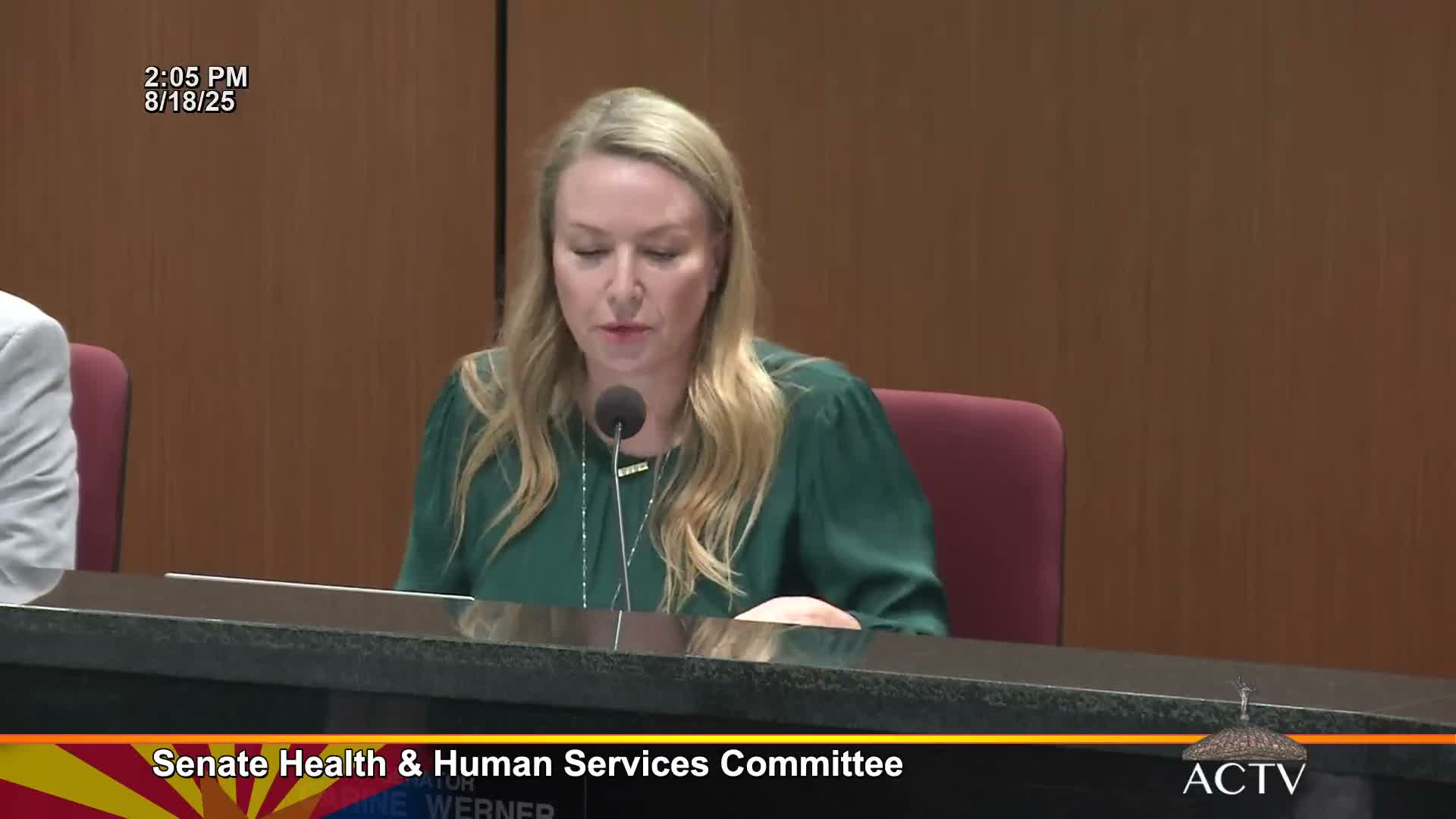
Chairwoman Warner convened the Senate Health and Human Services Committee to examine what witnesses called a large, multi-year fraud scheme that funneled Medicaid dollars through behavioral-health providers and unlicensed facilities.
Marcus Johnson, deputy director at Access, told the committee that fraudulent activity produced dramatic spikes in spending and enrollment in the program often referred to in testimony as the American Indian Health Program (AIHP). "The fraud we have seen right through the behavioral health landscape is staggering," Johnson said, and he described examples he said his agency saw: ghost billing, duplicate claims, patient brokering and providers moving members into AIHP without authorization.
Johnson said the agency is the payer for roughly 2,000,000 Arizonans, with roughly 110,000 members in the AIHP. He told the committee that between April 2020 and March 2023 AIHP paid amounts rose sharply and that per-member-per-month payments that had been measured in single dollars climbed to thousands of dollars at the height of the activity. In response, Access enacted what Johnson described as an array of reforms: targeted provider payment suspensions when credible indicia of fraud exist, a temporary enrollment moratorium for several provider types, increased documentation requirements, prepayment-review protocols, and a verification process for AIHP enrollment developed with tribal leaders.
Vanessa Templeman, inspector general for Access, detailed investigative findings from site visits and audits: members living in substandard conditions, coerced transport to facilities, missing or forged clinical records and billing for services that were never provided. Templeman described the agency's credible-allegation-of-fraud (CAF) process, including notice with appeal rights and options for informal settlement conferences and state fair hearings. "If we determine the allegation is credible," she told the committee, "we refer it to law enforcement and we can impose payment suspension while investigations proceed."
Johnson and Templeman provided several operational metrics in response to committee questions. Johnson said Access had imposed payment suspensions "327 times" since May 2023 and has required more prepayment review for specific provider types; Templeman said the OIG had rescinded roughly 104 CAF suspensions and had reactivated 32 providers after corrective action or documentation. Both witnesses said the agency still intends to strengthen data analysis and to deploy a pre- and post-pay claims review system in 2026.
Nick Klingerman, who leads the attorney general's health care fraud and abuse work, described the criminal response to referrals from Access's OIG and other sources. Klingerman said his unit has pursued large-scale billing fraud prosecutions, including patient-brokering cases, and has obtained indictments and seizure orders. "We have charged 158 people," he said, and reported seizures and forfeitures on the order of tens of millions of dollars returned to taxpayers.
Committee members pressed Access and the AG's office for follow-up information: who signed disbursement checks, exact weekly cash-disbursement figures, denial and payment-timeliness data, and the number and disposition of provider appeals. Access leaders said some specifics are constrained by ongoing litigation but committed to providing the committee with organizational charts, detailed claims metrics and other follow-up material.
The hearing closed with lawmakers saying they expected additional documents and a follow-up session to review outstanding data and next steps. The committee did not take any formal votes during the hearing.