Get Full Government Meeting Transcripts, Videos, & Alerts Forever!
Get email alerts on the Dcs Operations topic
No spam. Unsubscribe anytime.
Arizona DCS director defends hotline screening and safety model as survivors and attorneys press for accountability
Summary
Arizona Department of Child Safety director described hotline volume, screening criteria, training and safety thresholds; survivors and lawyers told the committee DCS and family courts have missed warning signs in high‑profile cases and urged audits, oversight and reforms.
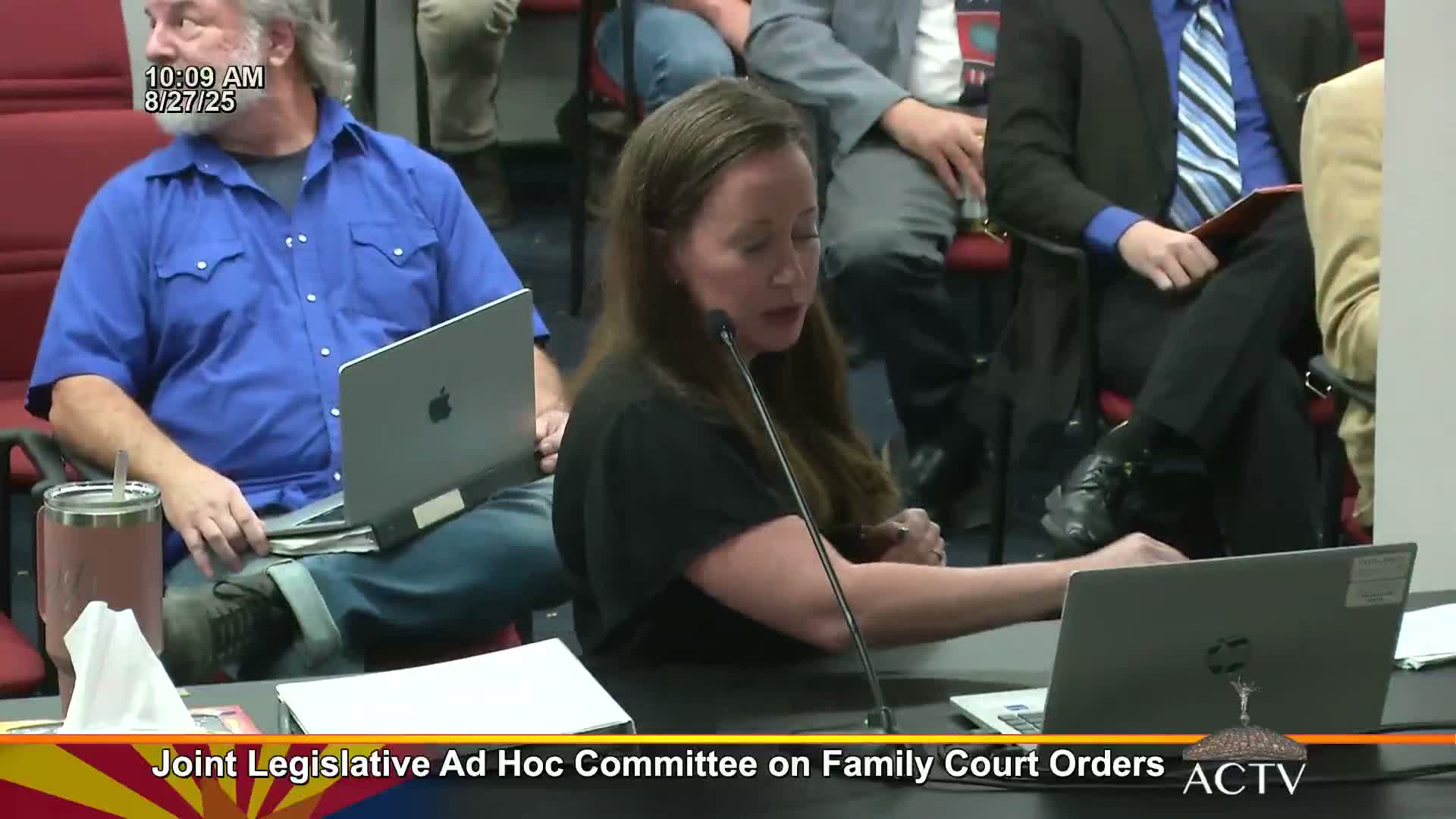
Catherine Ptak, director of the Arizona Department of Child Safety, told a joint legislative ad hoc committee that DCS receives about 160,000 hotline calls a year and that roughly half of those reports meet statutory criteria for abuse or neglect. "We receive about 160,000 calls every year to our hotline," Ptak said, adding that about half do not meet the statutory threshold for an investigation and that the department investigates between roughly 2,000 and 4,000 cases a month.
Ptak described the agency’s safety‑decision model, distinguishing "present danger" (immediate, observable threats requiring removal) from "impending danger" (conditions that suggest a child may become unsafe) and said removal is a last resort. She said initial investigator training is 22 weeks in total — four weeks in classroom curriculum followed by field apprenticeship — and said most placements aim to keep children with kinship caregivers when out‑of‑home care is necessary.
Committee members raised specific cases. The chair asked how many of 12 hotline reports involving a child named Rebecca were open when she died; Ptak said one report was open at the time of death and 11 had been closed and offered to provide further detail after review. Multiple public commenters, including trial lawyer Michael Moore and parents who described lengthy custody disputes, urged legislative audits and more aggressive oversight; Moore cited past settlements and asked the committee to request Ombudsman complaint statistics.
Ptak acknowledged past backlog problems — at one point the agency had approximately 36,000 uninvestigated reports — and said the backlog had been reduced to about 7,200 in August. She described multidisciplinary reviews for troubling outcomes that use outside contractors, pediatricians and law‑enforcement partners to evaluate decisions and identify whether errors stem from policy, training or individual judgment.
Members asked for more detail about training designers, how often experts used by courts are licensed and paid, and whether DCS staff receive continuing education on constitutional and parental rights. Ptak said she would provide additional information about training curricula and court contract experts.
The committee did not adopt any formal actions at the hearing but the chair said the auditor general would be asked to review DCS in an upcoming audit cycle. Several legislators signaled interest in drafting statute or rule changes to improve record sharing between DCS and family courts and to tighten oversight of court‑appointed experts.