Get Full Government Meeting Transcripts, Videos, & Alerts Forever!
Get email alerts on the Sober Living Fraud topic
No spam. Unsubscribe anytime.
Native families and advocates tell Arizona panel: fraudulent sober-living schemes left loved ones dead
Summary
Survivors and tribal advocates told the Senate Health and Human Services Committee that so-called sober-living homes recruited Native Americans, left some residents unattended or on streets and produced billing while care failed; witnesses urged confidentiality protections for reporters and immediate action from state agencies.
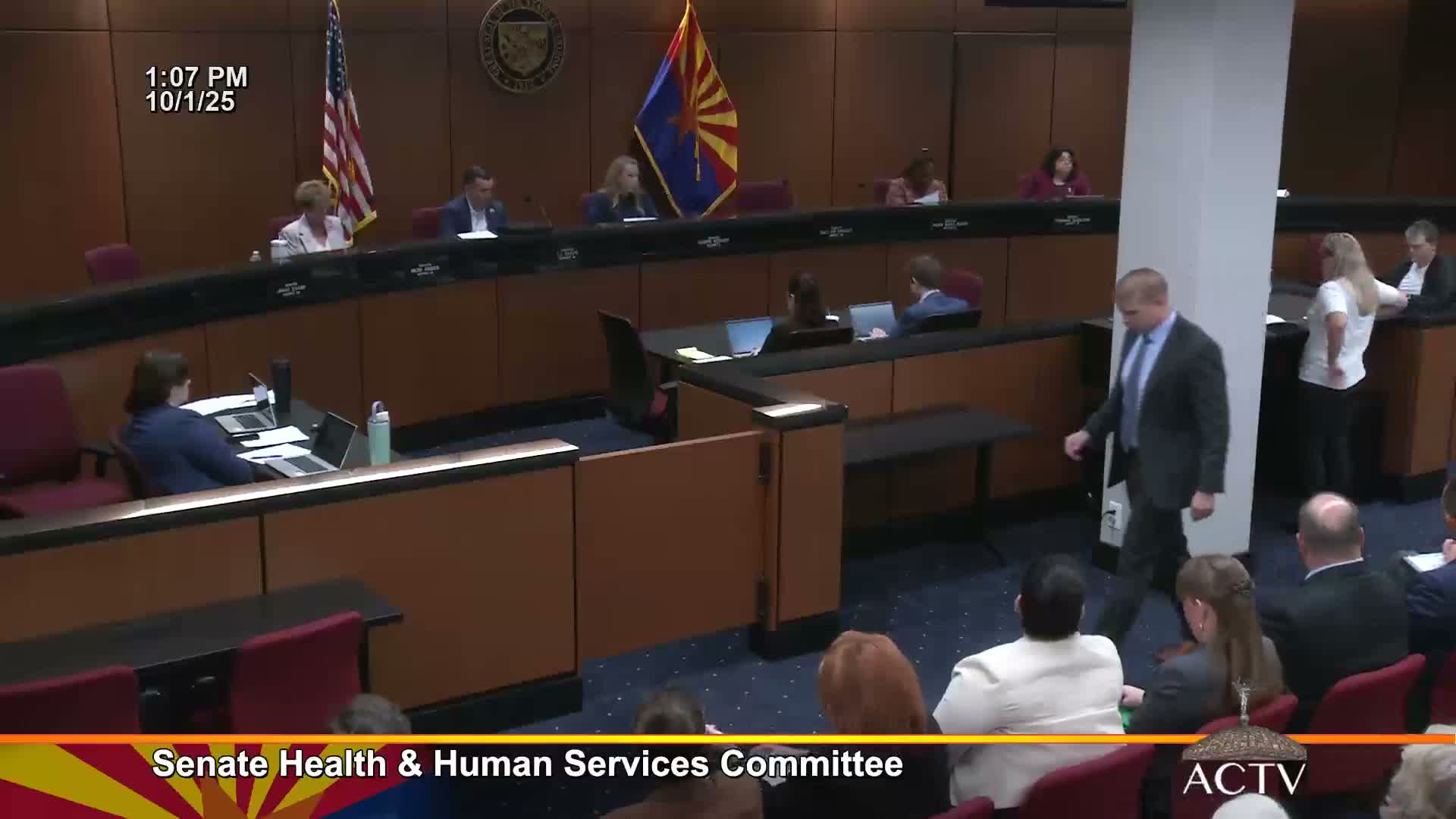
Survivors and tribal advocates told the Arizona Senate Health and Human Services Committee on Sept. 18 that fraudulent sober-living operations preyed on Native American people, produced billing to public programs while failing to provide care, and in at least one case left a man, Larry Bootsma, dead.
"This is waste, fraud, abuse, and neglect in real time," Rachel Strife, cofounder of Arizona Mad Moms, said, describing Bootsma’s treatment plan, court-ordered services and the family’s loss. She told senators that state appropriations meant for secure residential treatment were sharply cut: "A 25,000,000 appropriation turned into 5,000,000 turned into 3,500,000 after borrowing 1,500,000," she said.
Tribal advocates said the harms were broad and ongoing. "We have reported hundreds of traffickers and recruiters," said Rita Stewart of Turtle Island Women Warriors, who told the committee her organization had compiled seven banker boxes of complaints and evidence and said the federal Office of Inspector General acknowledged receipt only after March 2024. Stewart urged the committee to demand stronger confidentiality protections and an independent reporting mechanism so grassroots groups can submit evidence without risking retaliation.
Other witnesses detailed personal losses and patterns of exploitation. Raquel Moody, who identified herself as White Mountain Apache, described being placed in homes where staff "allowed drinking," and said her brother died after being shuttled through facilities. Casey Atkinson and Heath Wright described pregnancies, evictions, and being shuffled among houses while staff and managers prioritized billing.
Committee members repeatedly asked witnesses for documentary evidence; several speakers said they had provided materials or would deliver boxes and records to the chair's office. The session also referenced the Arnold v. Sarn consent-era reforms and the loss of state hospital capacity, which witnesses said contributed to gaps in oversight and secure beds.
The committee did not adopt formal remedies during the hearing. The chair asked Access and law-enforcement partners to provide data and pledged a follow-up meeting; she also requested that advocates furnish documentation to staff. The panel scheduled a special meeting in 45 days to review deliverables from Access.
Ending: Senators closed the hearing by asking Access and law-enforcement partners to supply requested data and by pledging continued oversight; the committee set a follow-up special meeting to review agency deliverables.