Get Full Government Meeting Transcripts, Videos, & Alerts Forever!
Get email alerts on the Rulemaking topic
No spam. Unsubscribe anytime.
PELSB updates major licensure rule package: arts, ethnic studies and computer science among top changes
Summary
Board staff briefed members on the large '4863' rule package and arts rulemaking, proposing structural changes to arts licenses, narrowing ethnic-studies licensure to grades 5–12 with a K–6 endorsement option, and splitting computer-science licensure; staff proposed stakeholder surveys and submission to the reviser's office for consolidated language.
Staff and members of the arts steering committee reported progress on two interlocking rulemaking efforts at the Professional Educator Licensing and Standards Board meeting on Aug. 15.
Steve Rollin, the board's rulemaking attorney, summarized the large rule package (referred to in the meeting as '4863') that implements recent legislative changes and several technical corrections. Among the staff-recommended items: follow legislative changes expanding bachelor-degree exemptions to certain licensure areas; add required renewal components for American Indian history and culture; streamline portfolio requirements and fix drafting errors; and revise the definition of "meaningful progress" used to determine renewals for tier 2 license holders.
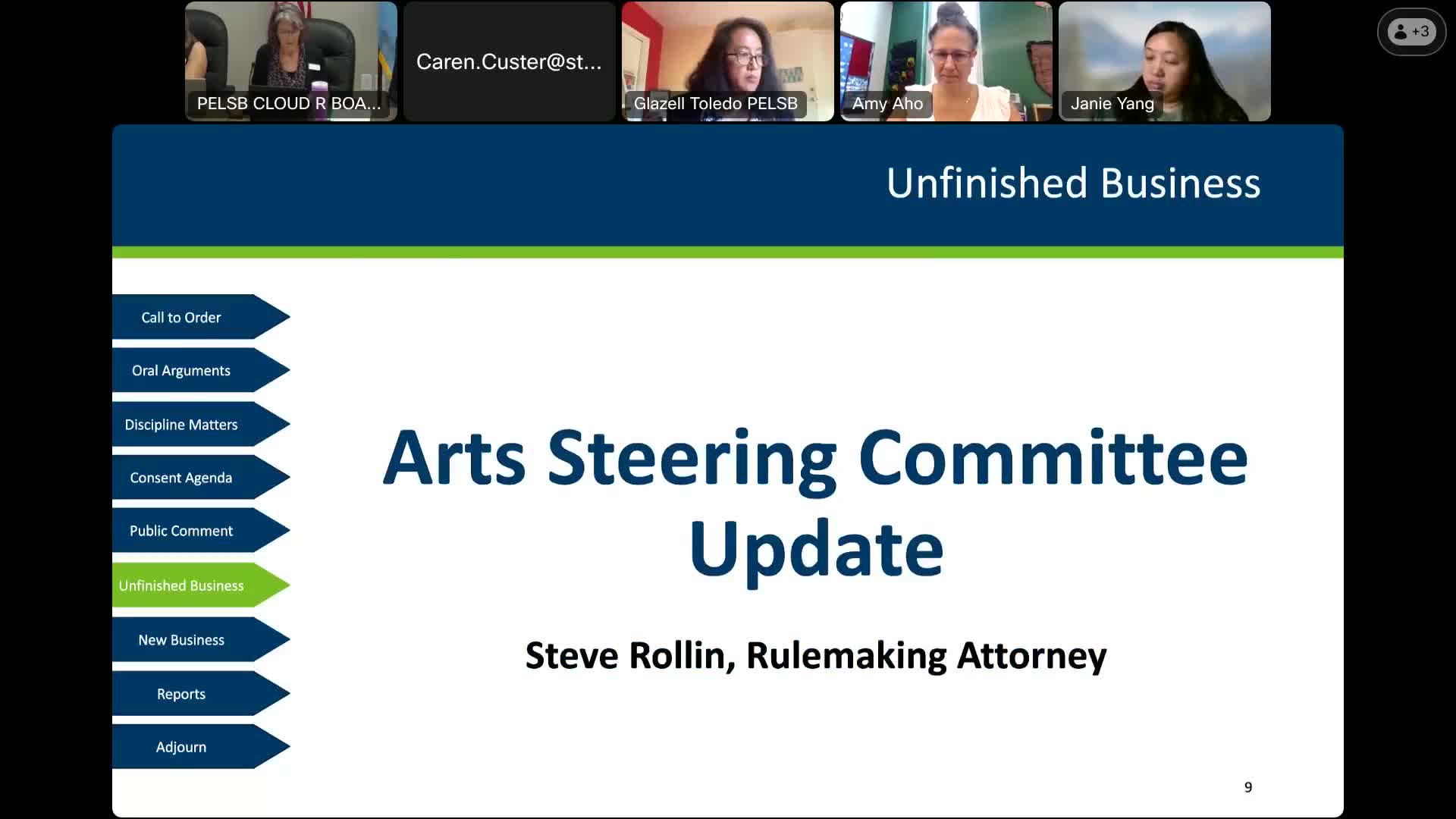
On arts licensure, Rollin said the steering committee proposed creating a K–12 media arts license, consolidating separate vocal and instrumental music licenses into a single K–12 music license (retaining separate dance and theater licenses), and conducting broad outreach including a survey and listening sessions. "We're drafting a survey... go live with the survey in September and host listening sessions," Rollin said.
On ethnic studies, staff proposed narrowing the new ethnic-studies license to grades 5–12 while creating a K–6 elementary endorsement to allow districts to identify K–6 teachers with additional ethnic-studies training. Rollin also described proposed social-studies reading-standard technical edits and recommended removing scope-and-sequence language that MDE staff said does not belong in licensure subject-matter standards.
Board members raised substantive questions about alignment between K–12 standards and teacher-preparation standards, program capacity in higher education, and whether an endorsement or a standalone K–6 license best serves elementary classrooms. Ms. Dyer, a member of the subcommittee, stressed the interdisciplinary nature of ethnic studies and warned that limiting pathways only through social studies could place an unfair burden on districts and reduce access outside metropolitan areas.
Staff proposed submitting the consolidated proposed language to the reviser's office to produce a single revised draft for board review; the board discussed timing with the goal of further discussion in September and possible action in October.
Staff said no immediate board action was required on the arts update and recommended further outreach to practitioners, higher-education providers and school administrators to inform final rule language.