Get Full Government Meeting Transcripts, Videos, & Alerts Forever!
Get email alerts on the School Safety topic
No spam. Unsubscribe anytime.
School board debates concealed-carry role, training standards as state repeal nears
Summary
With a statewide repeal allowing concealed carry on school grounds effective July 1, the board heard divergent views on whether to adopt a district role requiring training, biometric storage and identification; a vote on whether to adopt a role is scheduled for the next meeting.
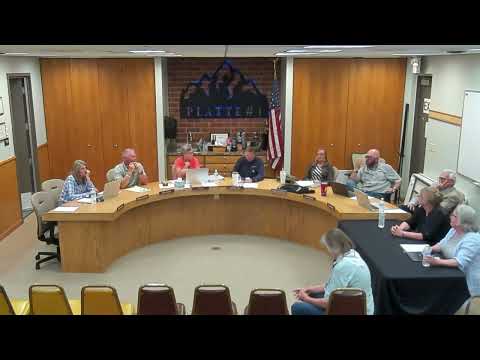
The Platte County School District #1 board opened extended discussion and public comment on a proposed district role for concealed carry after a state-law change will allow individuals with lawful concealed-carry permits to bring firearms onto school property unless the district adopts a role specifying training requirements.
Board members read statements from state legislators urging balance between rights and safety. Representative statements read into the record encouraged training and recommended using available state funds for voluntary training opportunities.
Several board members, parents and law enforcement expressed sharp disagreement about how the district should respond. Board member (Speaker 11) said: "The box has been opened. Can't be shut." He pressed for significant scenario-based training if the district allows on-campus concealed carry, and raised concerns about secure storage and students finding lockboxes. Local law enforcement (Speaker 13) described academy-style simulations and said scenario-based training and joint exercises with school staff would be required to reduce risk and ensure responders and staff can work together.
The meeting surfaced a range of proposed training standards. Speakers proposed initial training packages ranging from the model policy's example (about 16 hours of live-fire and 8 hours of scenario training) to more extensive options: one board member suggested a 30-hour initial standard with recurring annual refreshers; another suggested 20 hours of live-fire plus scenario hours and 16 hours annually as a minimum. Several speakers warned that raising the bar too high could make it difficult for some community members to participate and could create inconsistent coverage across districts.
Practical logistics were central to discussion: whether the district would require biometric lockboxes, whether every classroom should have a box to avoid "singling out" carriers, how law enforcement would identify qualified carriers during an incident (vests, bands or other identifiers were debated), and whether the district or individuals should pay for training. Speakers also noted legal constraints: the district cannot require psychological evaluations under current statute and is limited largely to specifying training requirements if it adopts a role.
Parents in the audience said they were worried about children noticing lockboxes and the anxiety that could cause. One commenter suggested equipping every classroom with an identical box so no individual would be singled out. Supporters of a role argued standards would give law enforcement greater confidence when working with staff and volunteers who choose to carry.
No formal policy was adopted tonight. The board scheduled a vote as the first item for its next meeting (Monday); until that meeting, the state law's change will take effect as written on July 1 unless the district adopts a role beforehand.