Get Full Government Meeting Transcripts, Videos, & Alerts Forever!
Get email alerts on the Rural Service Zoning topic
No spam. Unsubscribe anytime.
Orange County considers rural-service zoning to legitimize small rural businesses
Summary
At an Orange County work session, staff and board members discussed a proposed 'Rural Service' zoning classification intended to recognize long-standing nonconforming rural businesses, limit large retail in rural areas, and add an intermediate option between agricultural and commercial zoning. Staff will return with performance standards and design exhibits.
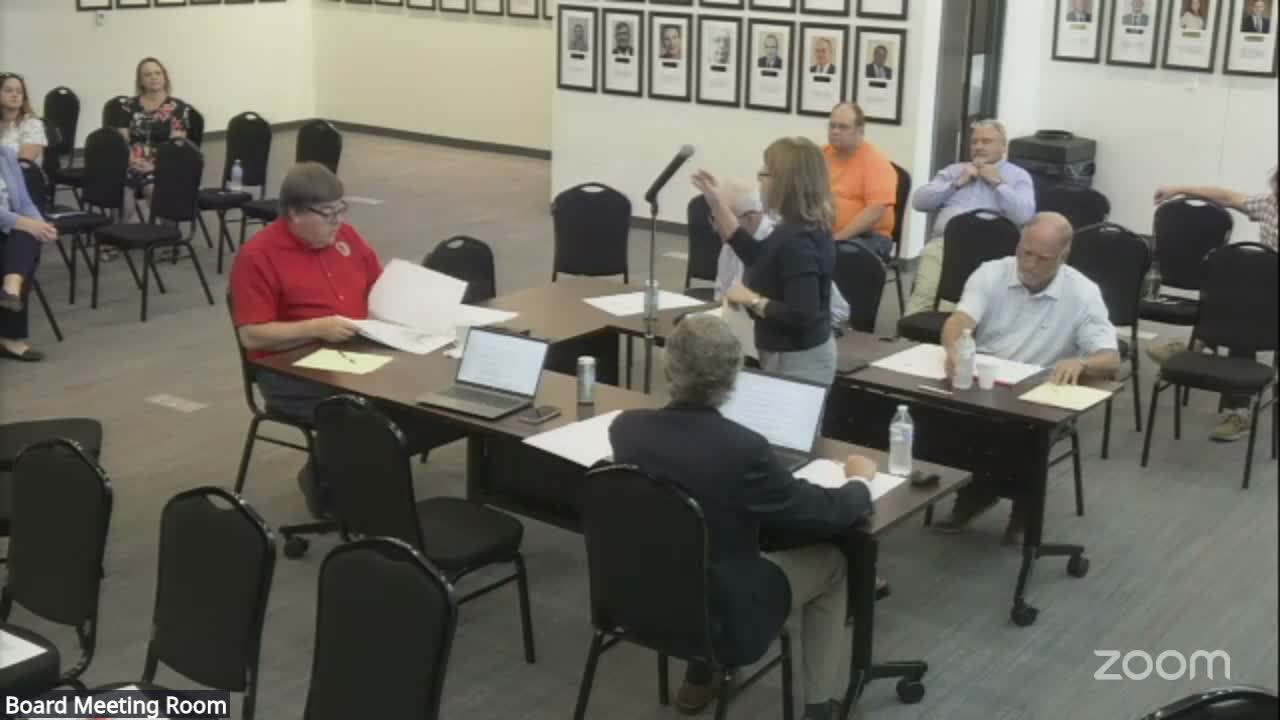
Orange County officials spent the bulk of a work session reviewing a proposed Rural Service zoning classification intended to recognize longstanding small businesses in rural areas and provide an intermediate option between agricultural and full commercial zoning.
Speaker 3, presenting the draft language compiled by the Berkeley Group and county staff, said, "This district is designed to encourage and legitimize long standing rural businesses such as service stations, small general stores, feed stores, veterinary clinics, antique shops," and emphasized that the draft seeks to preserve rural character through limits on building size, architectural treatments, minimal outdoor lighting and strict noise controls.
Supporters said the classification is meant to capture businesses that currently exist as nonconforming uses and to offer property owners more realistic options than applying for a special use permit (SUP) or pursuing full commercial rezoning. "It's another tool in the toolbox," Speaker 1 said, describing rural service as an intermediate zoning option that would reduce the need for heavy-lift commercial rezonings for small, site-appropriate businesses.
Board members and participants debated how to define "limited in scale and scope." Speaker 2 said he "didn't have an issue generally with 4,000 square foot," while other participants warned that absolute numeric caps can be problematic and noted that some context-appropriate facilities could be much larger. Staff and board members agreed to address that tension by developing performance standards and showing visual exhibits (for example, photos of what 4,000- and 25,000-square-foot buildings look like) at a future meeting.
Speakers also discussed how the Rural Service classification would interact with existing nonconforming or "grandfathered" uses. Staff clarified that the new classification would not remove existing grandfathered rights but would give owners an option to seek RS zoning rather than an SUP or full commercial rezoning. Speakers noted that state rules on discontinuance (the period a use can be inactive before grandfathering is lost) remain applicable.
Traffic and safety questions surfaced in the conversation about minimum lot frontage and curb cuts. Staff recommended considering minimum frontage or curb-cut spacing—citing typical spacing practices such as requiring a single access or shared drive on primary highways—as a tool to reduce traffic conflicts.
Board members asked staff to bring back more detailed performance standards, use definitions, and visual exhibits before any final ordinance language is adopted. Staff said the Berkeley Group would incorporate the planning commission’s and board’s comments into a user chart and a revised draft, and staff would return with a clearer body of permitted uses and SUP options.
The work session did not include any formal vote or final action; staff will prepare the performance standards and illustrative exhibits and return the item to a future work session or meeting for further consideration.