Get Full Government Meeting Transcripts, Videos, & Alerts Forever!
Get email alerts on the District Academic Strategy topic
No spam. Unsubscribe anytime.
Pulaski presenters outline 3D Vision and 100-day plans aiming to grow every student
Summary
District presenters described a long-running "3D Vision" (Discover, Decipher, Deliver), presented building results and targets (including aims to have "100% of our students to show growth"), and outlined follow-up 100-day action plans and reporting dates. Board members pressed on gender gaps and how targets treat high-performing students.
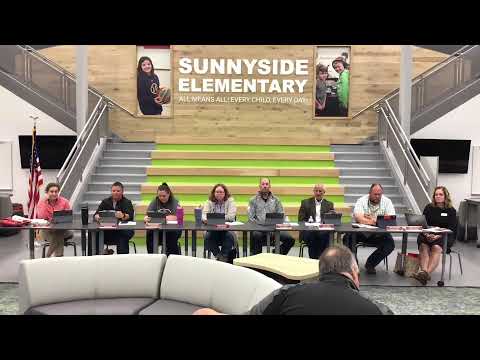
Pulaski Community School District staff presented the district's 3D Vision framework Wednesday evening, saying the model is designed to ‘‘discover, decipher and deliver''data-driven strategies that raise student learning across schools. Speaker 3, the session's lead presenter, said the district brought roughly 100 staff together to develop building-level goals and action steps tied to 100-day cycles.
The presentation emphasized evidence-based practices and collaborative professional learning communities (PLCs). "All of our students matter," Speaker 3 said while describing the district mission and common themes across schools. The district described a shift from a single nine-hour retreat to a day-and-a-half format to give teams more work time. Staff said grade-level teams will identify action steps on September 26 and the district will report first 100-day plans in early December.
Why it matters: District leaders tied the 3D Vision to measurable goals. Presenters stated ambitious growth targets (transcript language): "we want a 100% of our students to show growth," and cited specific student-growth measures used to set expectations (student growth percentiles/indicators and benchmark screeners). Officials said high-risk students will be targets for accelerated gains (examples in the presentation: 1.5 years of growth for some cohorts).
What the data showed: Presenters reviewed building-level celebrations and areas for growth. Fairview reported that 81% of K-5 students demonstrated sufficient math growth, kindergarteners posted results above the 25th percentile in language arts (yielding no personalized reading plans), and the school reduced behavior incidents "by almost 300" year-over-year (all figures reported by Speaker 12). Middle-school cohort analyses showed AIMSweb reading improvements (example given: from 53% to 59% typical/aggressive roles) and math gains of roughly 5 percentage points in some comparisons. Speaker 2 reported Pulaski High School exceeded its growth goal for high-risk students in math (+11%) and showed a +10% gain in reading for that subgroup.
Board questions and concerns: Several board members asked technical and policy questions during the Q&A. Speaker 13 cautioned that labeling a gender gap could be misleading if the intent is to focus on behavior rather than demographic targeting; Speaker 13 later asked how the district accounts for students already near the top of growth percentiles. In response, Speaker 10 explained that percentile-based measures compare a student against peers at the same percentile and therefore set different "expected growth" benchmarks for high-performing students. Staff also noted staffing turnover can hinder intervention consistency and described steps to strengthen tier 2 and tier 3 supports.
Next steps: District staff said they will continue implementing hundred-day cycles, refine tiered interventions, and return with first 100-day plans in early December. They also said the DPR school reports are expected to be released in November and will be discussed with the board in December.
The board closed the public portion of the meeting after the presentations and moved to consider a personnel matter in closed session later in the agenda.