Get Full Government Meeting Transcripts, Videos, & Alerts Forever!
Get email alerts on the Water Resources topic
No spam. Unsubscribe anytime.
Sheridan County Conservation District reports USDA-funded watershed projects, water monitoring and mitigation work
Summary
At the July 28 meeting, the Sheridan County Conservation District reported completion of a Soldier Creek diversion, pending Small Water Project contracts, additional water-quality sampling tied to recent fires and debris flows, and that a USDA readiness-phase approval earmarked about $2.6 million for sub-watershed projects near Dayton and Rochester.
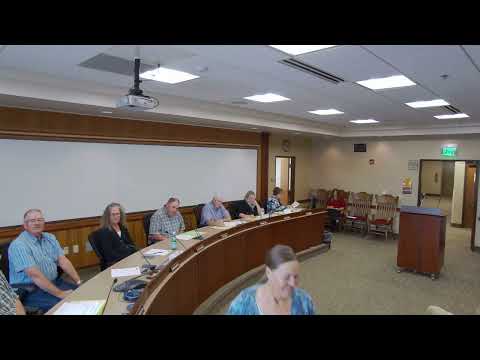
The Sheridan County Conservation District gave a quarterly update July 28 detailing water-quality, erosion-control and hazard-mitigation work funded largely by federal and state grants.
Carrie, speaking for the district, said a large Soldier Creek diversion was completed during the quarter and several septic, irrigation and stabilization projects are underway. She said the district is awaiting notice to proceed on some Wyoming Water Development Small Water Project Program contracts and had modified short-term mitigation contracts after recent debris flows to include rock, cobble and woody debris removal.
Carrie said the district's readiness-phase report for the Tucker National Water Quality Initiative program through the U.S. Department of Agriculture was approved, and that approval effectively earmarks about $2,600,000 in USDA program funds over the next five to six years for projects in sub-watersheds near the towns of Dayton and Rochester. She also said a prior application for a level-2 feasibility study to the water development office was not funded and that the district had submitted alternate applications to the USDA's Watershed Protection Program.
On fire recovery and monitoring, Carrie said the district added sampling parameters at select sites tied to fire recovery and that results from July sampling were pending. She described three active short-term mitigation contracts with landowners for hazard removal and said district staff are working on watershed-assessment work to identify long-term risks to infrastructure.
Carrie noted asbestos-removal work tied to an ACFI project paused over winter has not fully resumed because of demolition complications and that district staff have begun preliminary conversations with EPA about potential grant extensions and next steps for soil hot-spot cleanup.
What happens next: the district will prioritize project applications after an Aug. 1 sign-up deadline and bring requests to the board in September. Several funding streams cited are administered by USDA and other agencies and would come to local projects through those programs.