Get Full Government Meeting Transcripts, Videos, & Alerts Forever!
Get email alerts on the Criminal History Ban The Box topic
No spam. Unsubscribe anytime.
Senators hear first testimony on private-sector 'ban the box' bill to bar criminal-history questions on initial applications
Summary
Sponsors told the Senate Workforce Development Committee SB 143 would prohibit private employers from asking about criminal convictions on initial job applications while allowing later background checks and exemptions; proponents argued it expands hiring opportunities and reduces recidivism, while members asked about employer burdens and enforcement through the Ohio Civil Rights Commission.
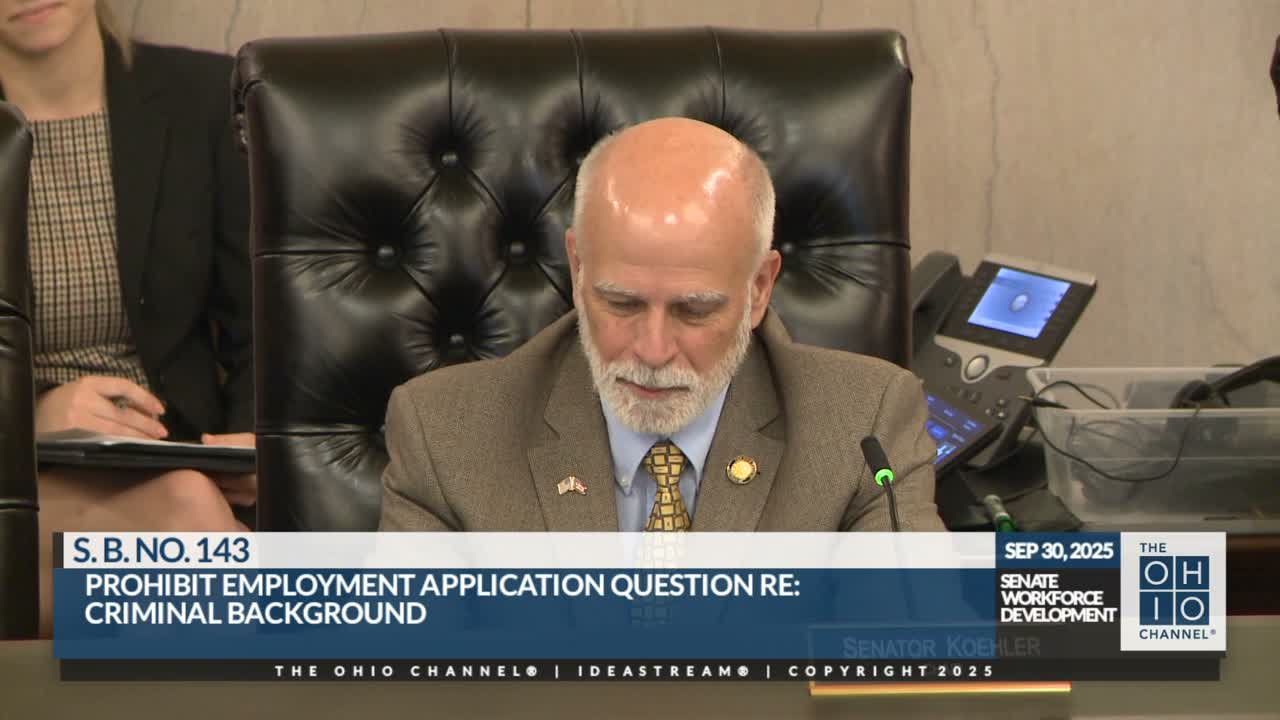
Senate sponsors presented the first hearing on Senate Bill 143 on Sept. 30, telling the Senate Workforce Development Committee the proposal would prohibit private employers from asking about an applicant’s criminal background on the initial employment application while preserving the right to conduct background checks later in the hiring process.
"This approach, often called a ban the box, does not prevent employers from conducting background checks nor does it remove their right to make employment decisions based on legitimate concerns about safety," Senator Craig said during his sponsor testimony, adding the bill ensures applicants can have qualifications and rehabilitation considered before being disqualified.
Proponents argued the change would help reduce recidivism and expand the pool of qualified applicants. Senator Blessing said the bill establishes a procedure for employers to notify applicants when a conviction is the reason for denial, allows applicants to correct inaccuracies and present evidence of rehabilitation, and explicitly exempts roles where law requires background checks, such as child care and law enforcement.
Committee members raised practical and enforcement questions. Sponsors said an applicant would have limited administrative recourse: an alleged injured applicant may file a complaint with the Ohio Civil Rights Commission, which the bill gives authority to seek remedies including cease-and-desist orders; the sponsor noted a two-year statute of limitations for such complaints. Vice Chair Ingram pressed on timelines and whether employers would face an undue burden in evaluating post-application claims; proponents said the bill is intentionally narrow to avoid heavy new bureaucracy.
Members also debated the balance between employer discretion and public interest. Senators cited workforce-development concerns and state fiscal context, with some members pointing to public-sector precedents (House Bill 56 in 2016) and national comparisons. Proponents referenced that many states have enacted similar reforms: "37 states have banned the box for the public sector while 15 have done so for the private sector," Blessing said, adding the landscape continues to change.
The committee took no vote at the Sept. 30 meeting. Chair Kaler closed the first hearing and moved to the next agenda item; sponsors were not asked to submit amendments during the session.