Get Full Government Meeting Transcripts, Videos, & Alerts Forever!
Get email alerts on the Budget Compensation topic
No spam. Unsubscribe anytime.
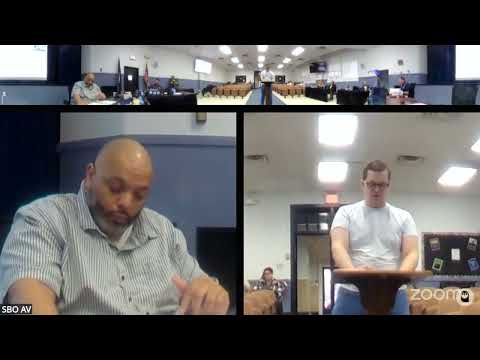
Fluvanna board hears budget briefing as members warn low pay and high insurance threaten staff retention
Summary
Board members reviewed a staff budget presentation showing Fluvanna County Public Schools lags comparator divisions on pay while shouldering comparatively high insurance costs; the board discussed options for distributing a state $1,000 bonus and asked staff for detailed scenarios before formal action.
The Fluvanna County School Board on Tuesday heard a detailed budget briefing that underscored a persistent pay-and-benefits gap for district employees and prompted members to press staff for clear options on distributing a state $1,000 bonus.
Board members and staff examined a comparison of salaries and health-insurance rates across neighboring divisions and the county, with presenters noting that Fluvanna's total premiums and some employee contributions are higher than nearby districts. The presentation also showed school staffing ratios over several years and a planned, staggered Chromebook replacement cycle.
Why it matters: Board members said the combined effect of lower pay and higher insurance makes it harder to retain and recruit teachers and support staff. Several members said the division's relatively high employer costs are especially harmful to mid-career employees and could prompt departures to neighboring systems with higher pay or lower premiums.
During the discussion, staff described one-time amounts available from the state: a $1,000 bonus program and the board's estimate of the district's share. "We're getting a little over $300,000 from the state to fund that," a staff presenter said; board members asked the finance team to model alternative distributions, including (a) passing the state funds through exactly as received and (b) combining the state funds with varying local shares so a larger portion of employees receive an amount closer to $1,000. A board member urged two simple scenario calculations: the shares for full-time and part-time employees if the district spends only state funds, and the district cost to reach larger, set-dollar bonuses (for example $500/$250 or $1,000 across the board).
Board members also questioned why Fluvanna's insurance costs appear higher than neighboring divisions. Presenters cautioned that plan design and claims experience both matter; they said the division is self-insured and that a disproportionate share of costly claims (cancer and other high-dollar claims) can drive premiums up. The chief finance presenter offered to return with a vendor-and-plan comparison and to assess the cost of joining a county-linked insurance program, a move that staff said in the past had increased costs substantially when modeled.
"Highest caseload for the lowest pay with the highest insurance," one board member said during the discussion, summarizing the combined pressure that the division's staffing and compensation picture places on employees and the budget.
What the board decided: Members asked staff to provide detailed scenario analyses (distribution by full-time/part-time shares and the district-dollar cost to match larger bonus amounts), to re-run the county-join cost model, and to bring additional claims and premium breakdowns to a future meeting. No final salary or benefits decisions were made at the meeting.
Next steps: Staff will return with the requested calculations and additional health-insurance comparisons during budget season. The board emphasized coordinated advocacy with the county and asked staff to provide hard numbers so the school board and board of supervisors can align discussions during the county's budget process.