Montgomery County Land Bank details Welcome Home Ohio results, procurement and financing challenges
Loading...
Summary
A Montgomery County Land Bank representative described using approximately $6.96 million in Welcome Home Ohio funds to target 64 housing units (40 new construction), discussed procurement strategies, lender participation limits, neighborhood selection and timelines for first completions.
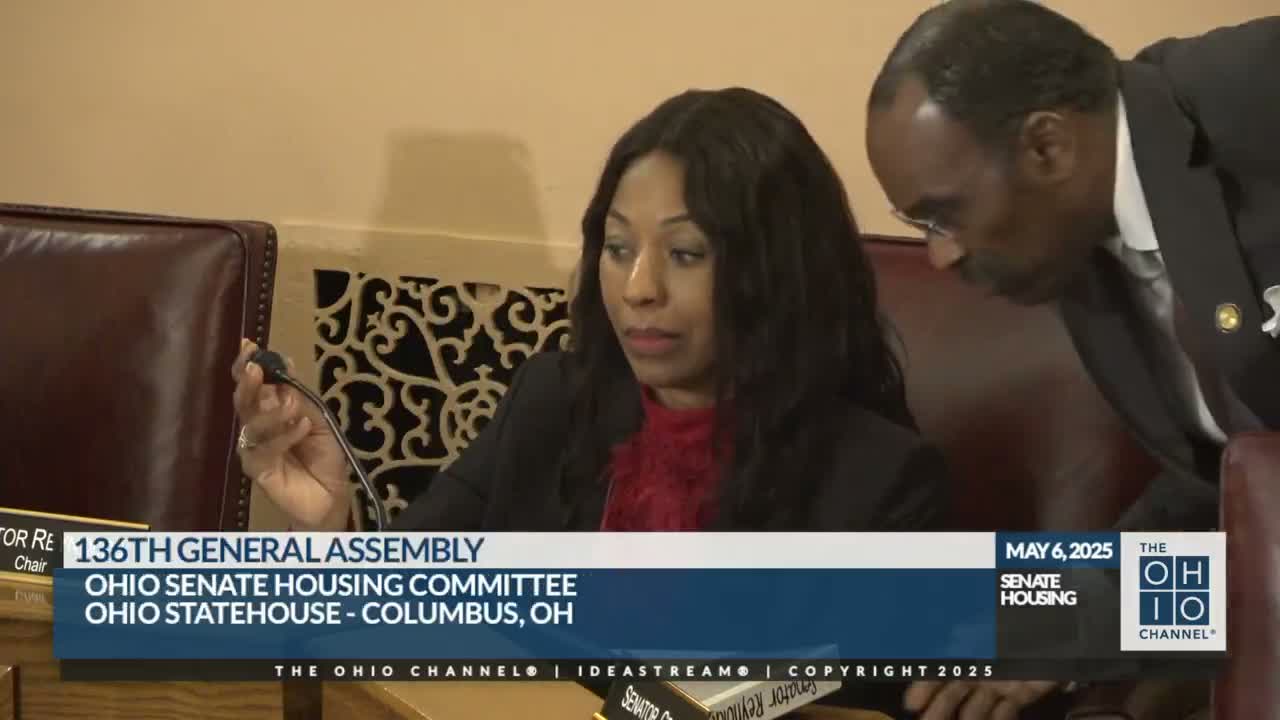
An unnamed senior advisor to the Montgomery County Land Bank told the Senate Committee on Housing that the land bank was the largest recipient of Welcome Home Ohio (WHO) funds in the program's first round and described how the agency used those funds to pursue neighborhood-scale housing redevelopment.
The speaker said Montgomery County received a total grant award of $6,960,000 (roughly $7 million) with a goal of creating 64 housing units, 40 of which are new construction. The land bank's approach prioritized neighborhood selection, resident engagement and leveraging existing parcels and infrastructure. The speaker named four target neighborhoods on Dayton's west side: Madden Hills, Wolf Creek, Fairview and Dayton View Triangle.
To reduce per-unit costs and accelerate timelines, the land bank designed procurements that favored existing production builders with a minimum contract scale (typically 10 units) and encouraged off-the-shelf designs and neighborhood-appropriate styles. The land bank reported receiving eight proposals from midsized local builders, noted wide per-square-foot cost variability (roughly $190 to $280 per square foot), and said first contracts were awarded to two builders with five units each; additional awards would follow as the market absorbed the homes. The land bank expects about three sales per month with the first completions slated for September.
The representative described financing and lender participation challenges: deed restrictions and an 80% area median income (AMI) target narrowed lender interest; some lenders sell mortgages on the secondary market and have concerns about deed restrictions and foreclosure timelines. The land bank said it had four financing partners (including credit unions and banks) but sought ways to attract more and described using receivership and nuisance actions under the Ohio Revised Code to address abandoned properties. The speaker also discussed the potential role of land-trust models to retain land ownership and preserve long-term affordability.
The presentation closed with an invitation to committee members to attend a local groundbreaking and with an offer to share the slide deck and other materials with the committee.