Get Full Government Meeting Transcripts, Videos, & Alerts Forever!
Get email alerts on the Insurance Prudent Layperson topic
No spam. Unsubscribe anytime.
Ohio sponsor seeks to bar insurer 'downcoding,' strengthen prudent-layperson rule
Summary
Sen. Manchester testified on SB165 to clarify and strengthen Ohio's prudent-layperson emergency-care standard and to ban insurers from retroactively 'downcoding' emergency claims based solely on diagnosis codes, appointment length or procedure codes, citing hospital surveys and provider losses.
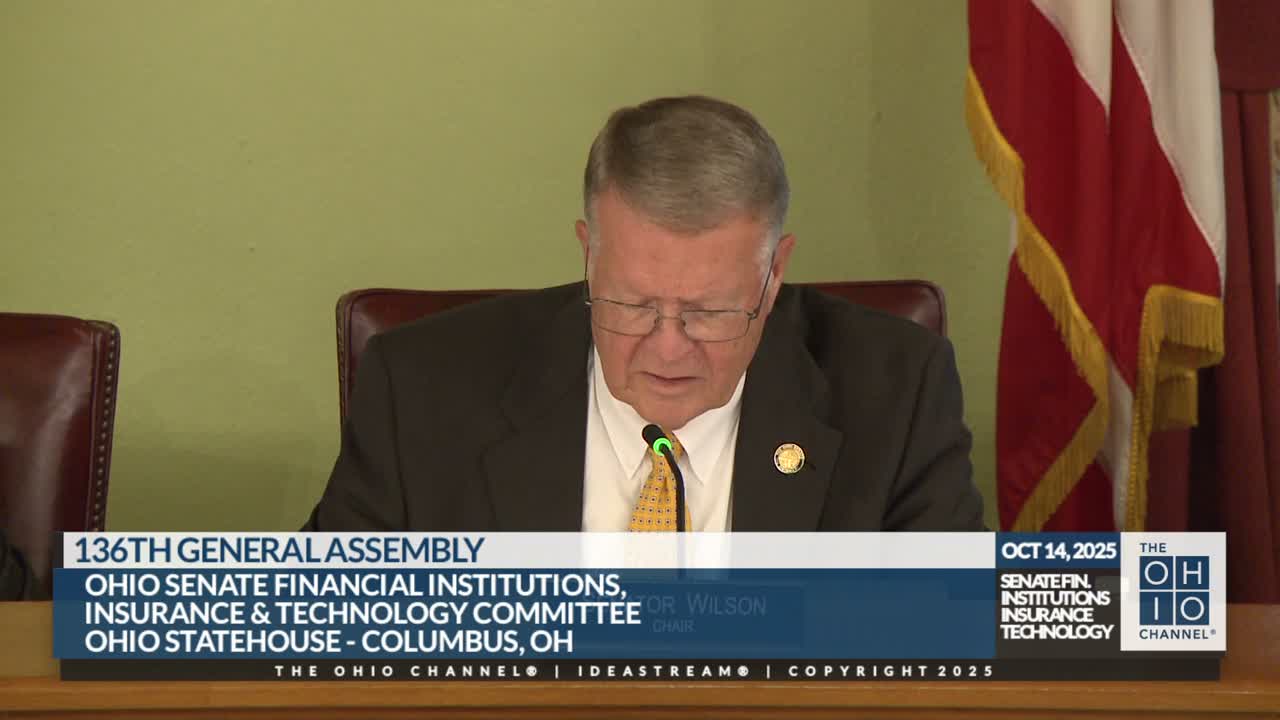
Senator Manchester (sponsor) told the Senate Financial Institutions, Insurance and Technology Committee that Senate Bill 165 would strengthen Ohio’s prudent-layperson standard and ban insurers from denying emergency coverage or reducing payments based solely on diagnosis codes, appointment duration, procedure codes or automated "downcoding" practices. She said the bill would require insurers to thoroughly review each claim before issuing a coverage determination and would prohibit plan practices that retroactively recategorize emergency visits as nonemergent.
The sponsor argued the change is necessary because some payers currently change claims to a lower-cost service after the fact, leaving patients with unexpected bills and hospitals and clinicians with reduced revenue. Manchester cited national reporting and trade research to illustrate the scope: she referenced an American Hospital Association white paper that found a large majority of hospitals reported increased denials and a published news investigation documenting downcoding conflicts between clinicians and insurers. She described a provider example in which repeated downcoding of office and mental-health claims reduced reimbursements by roughly $45 per claim and resulted in multiple-thousand-dollar revenue losses for a practice.
Supporters framed the bill as a patient-protection measure tied to the existing prudent-layperson legal standard: under that standard, a visit to an emergency department that a person with average medical knowledge reasonably believes to be an emergency should be treated as such for coverage purposes regardless of the final diagnosis. Manchester told the committee that symptoms such as sudden severe headache or chest pain can indicate time-sensitive conditions and that patients should not face retroactive denials when they sought care in good faith.
Committee members asked clarifying questions and shared personal experiences about emergency visits; Manchester answered and closed by saying the bill will ensure claims receive proper review before insurers make final coverage determinations. The committee held a first hearing; no committee vote on the bill’s merits was taken that day.
Next steps: SB165 received sponsor testimony and committee questions at its first hearing; the committee adjourned the SB165 portion of the agenda without a final vote.