Get Full Government Meeting Transcripts, Videos, & Alerts Forever!
Get email alerts on the HB144 topic
No spam. Unsubscribe anytime.
Lawmakers describe voluntary statewide special-needs registry to help first responders
Summary
Sponsors said House Bill 144 would create a voluntary statewide registry maintained by DPS to flag disability or communication needs to dispatch and first responders; sponsors emphasized the program is voluntary and LSC estimated de minimis costs.
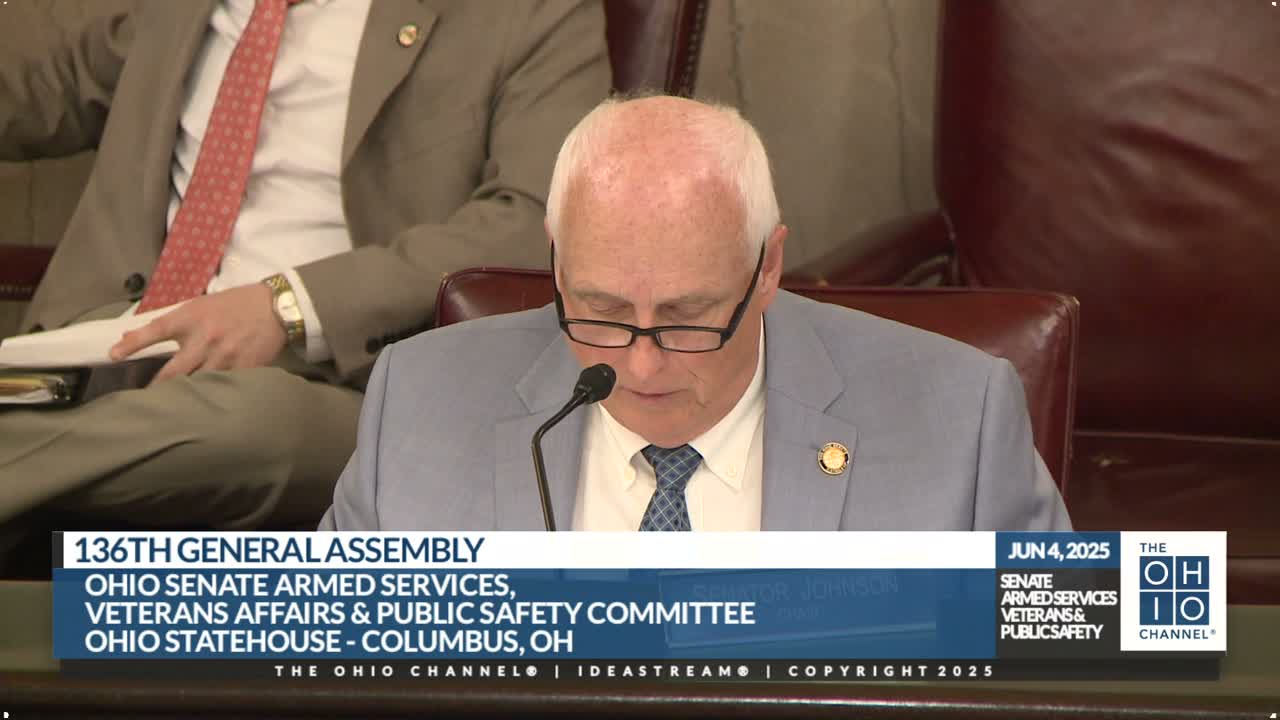
Representatives who sponsored House Bill 144 told the Senate Armed Services, Veterans Affairs and Public Safety Committee the bill would establish a voluntary statewide registry to provide first responders with basic information about residents’ communication or disability needs. Representative Klick framed the bill around a constituent, "Keith," who has panic attacks and other needs; Klick and joint sponsor Representative Lorenz said local county registries exist but a statewide system would ensure consistency and help avoid tragic outcomes when dispatchers and officers lack context.
Sponsors described the proposal as voluntary and administrable through the Department of Public Safety (DPS) in cooperation with advocacy groups for Ohioans with disabilities. Representative Lorenz described county examples (Delaware County) and said the registry could be accessed by 911 dispatch and first responders so officers encountering a person who is nonverbal, slow to respond, or otherwise atypical would have relevant, voluntary information available.
Senator Wilson asked about fiscal impact; sponsors said the Legislative Service Commission (LSC) found costs would be de minimis because existing personnel would be used. Senators asked about existing training such as Crisis Intervention Team (CIT) training offered through NAMI; sponsors acknowledged such training exists but noted it is not mandatory and said outreach and education would accompany the registry if enacted. Sponsors also said recent suggested amendments had not been fully vetted by implementing agencies and left their consideration to the Senate committee.
Sponsors urged the committee to consider the bill as a practical measure to improve outcomes for first responders and people with disabilities. No committee vote on HB144 occurred during this meeting.