Get Full Government Meeting Transcripts, Videos, & Alerts Forever!
Get email alerts on the Etms Ptsd Sud topic
No spam. Unsubscribe anytime.
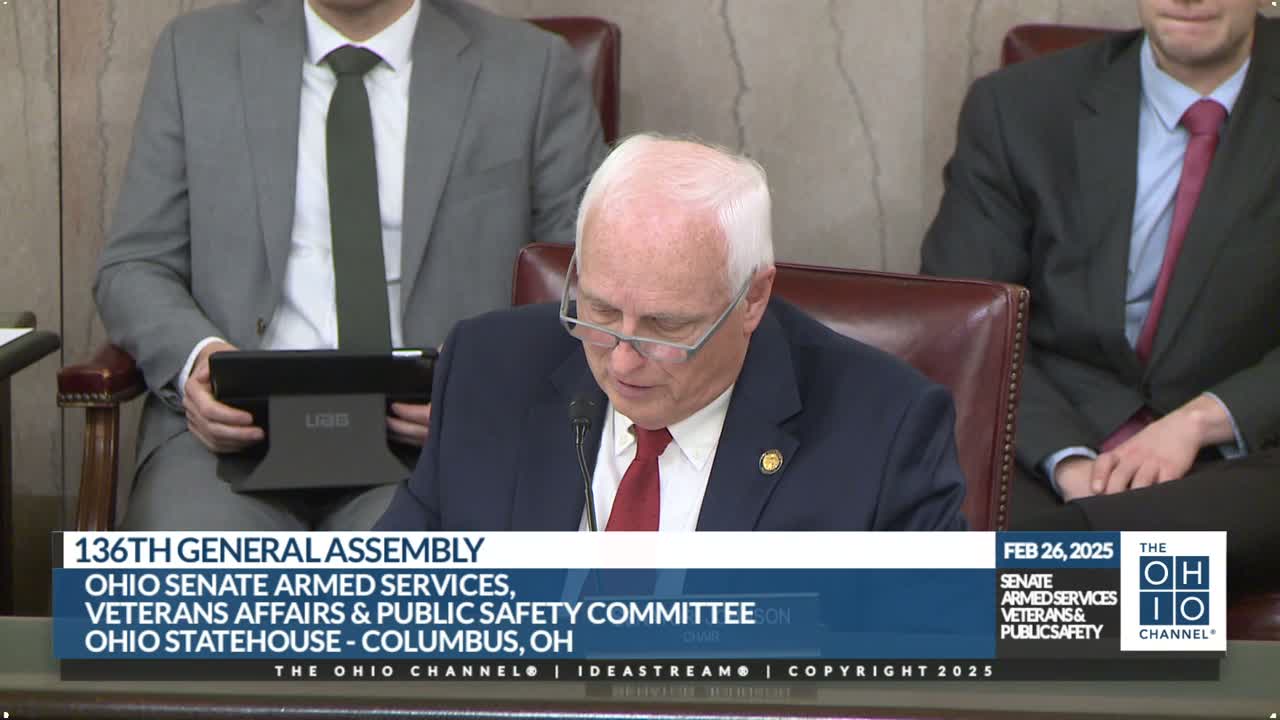
Wave Neuroscience tells Senate committee ETMS pilots show large symptom reductions for PTSD and substance use
Summary
Wave Neuroscience and local providers told the Senate Armed Services, Veterans Affairs and Public Safety Committee that EEG‑guided transcranial magnetic stimulation (ETMS) produced substantial symptom reductions in pilot patients with PTSD and substance use disorder, and requested state support to expand access.
Dr. Juan of Wave Neuroscience told the Senate Armed Services, Veterans Affairs and Public Safety Committee that EEG‑guided transcranial magnetic stimulation (ETMS) has produced striking clinical signals in pilots for post‑traumatic stress disorder and substance use disorders. He said the company received an FDA Breakthrough Device designation in November 2024 and presented program figures and pilot outcomes for committee members.
The company representative said the ETMS workflow combines an EEG brain map with targeted transcranial magnetic stimulation and reported program‑level outcomes of roughly 835 patients treated, more than 4,000 clinical scales collected and over 2,600 EEGs performed. "Our ETMS data show a 63 percent improvement in PCL‑5 scores," Dr. Juan said, referring to a commonly used PTSD symptom scale, and described reductions in opioid and alcohol cravings of about 57–58 percent in treated patients. He also reported a 72 percent reduction in fentanyl‑related craving symptoms in a pilot subgroup.
Dr. Juan acknowledged much of the evidence comes from Wave Neuroscience’s program and from local pilots funded or run by partners. He credited JLC Services, Perry Behavioral Health and Meridian for running inpatient pilots involving about 140 subjects and said those pilots produced similar signals on substance‑use outcomes. "If there's one message you walk away with today, this is a very powerful countermeasure for an epidemic that's ravaging the community," he said.
Teresa Kane, executive director of Perry Behavioral Health Choices, which holds a state contract to provide ETMS in parts of Ohio, described a family case study from her own household and urged state support to broaden availability. She told senators her brother began ETMS on Feb. 3 and the family saw notable improvements in sleep, clarity of thought and daily functioning within weeks. "Our entire family started noticing significant improvements after his first week," Kane said. She added that local recovery boards and partners have provided pilot funding but that sustained expansion will require additional resources and referral pathways.
Committee members asked whether ETMS is being applied to methamphetamine use disorder as well as opioids; Kane replied that local pilots include methamphetamine patients and that results there have been "extremely positive." Dr. Juan proposed working with OMAS and other state offices to track recidivism and return‑to‑work metrics if the program is expanded to demonstrate return on investment.
The presenters characterized the FDA Breakthrough Device designation as a regulatory acknowledgement that ETMS is promising and that expedited review would follow successful double‑blind randomized controlled trials; committee materials also included written testimony from Meridian and other partners. The committee received the presentations and written materials and did not take formal committee action on ETMS during the meeting.
All program statistics and clinical claims reported at the hearing were presented by the witnesses and remain subject to independent validation and peer‑reviewed publication.
The committee moved on after additional committee discussion; no vote on funding or statutory change occurred.