Get Full Government Meeting Transcripts, Videos, & Alerts Forever!
Get email alerts on the Environmental Review And Public Input topic
No spam. Unsubscribe anytime.
Conservation group warns SB2 could shortchange solar fund, reduce public input on siting and increase fracking risks
Summary
Save Ohio Parks and other witnesses told the committee that repeal of the solar generation fund and shortened siting timelines could harm public lands, reduce environmental review, and shift costs; they urged refunds or spending of unspent solar funds and stronger public comment procedures.
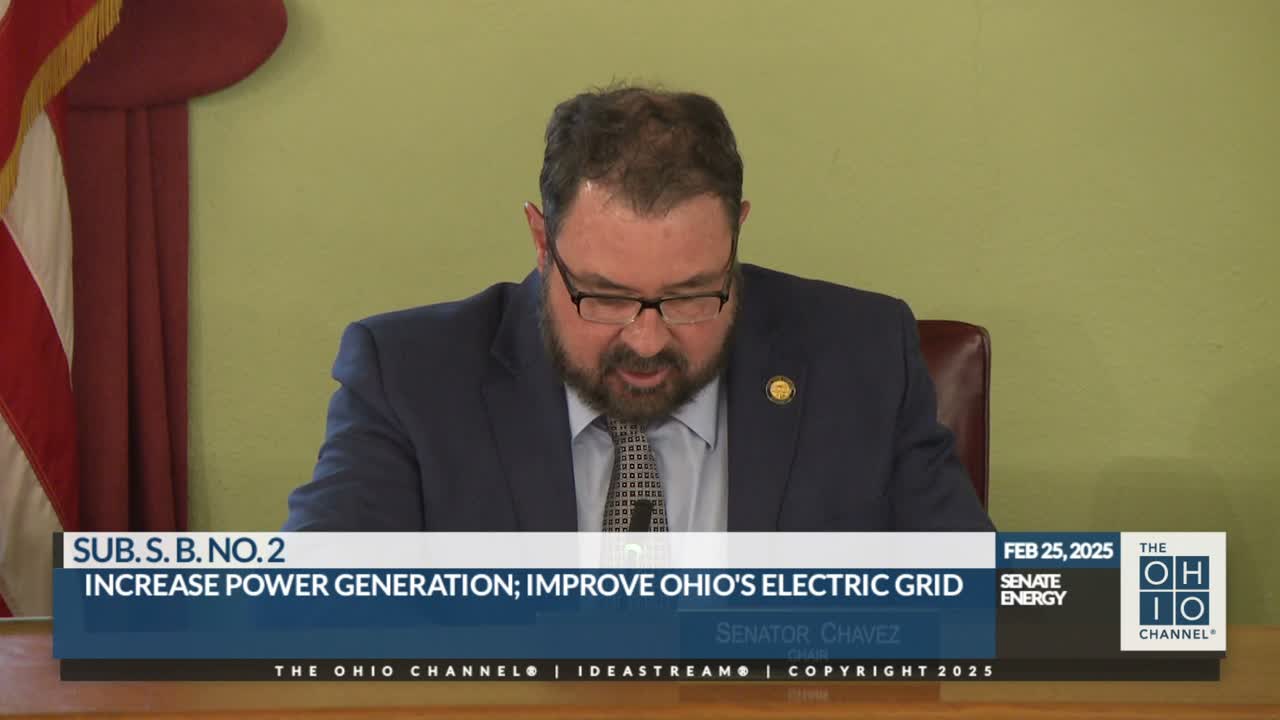
Kathy Becker, board president of Save Ohio Parks, urged the Senate Energy Committee to reconsider provisions of Substitute Senate Bill 2 that would repeal the solar generation fund and the legacy generation resource (LGR) rider without creating parallel protections for citizens and affected communities.
Becker told the committee that, in her understanding, Ohioans have paid about $600,000,000 related to OVEC and that the solar generation fund accrued about $60,000,000 of which roughly $10,000,000 has been spent. She argued that ending the solar fund while allowing continued recovery from other legacy mechanisms would be unfair unless unspent funds were refunded or redirected to build solar in Ohio.
Beyond funding, Becker criticized new timelines for the Ohio Power Siting Board as too short and said the bill lacks clear processes for spoken public comment and formal environmental review. She warned that expanded definitions of self-generation could enable large customers to build behind-the-meter fossil generation and, indirectly, encourage more fracking and infrastructure on state public lands.
Becker recommended including voluntary energy-efficiency programs, community solar or virtual net-metering for distressed lands in comprehensive legislation to meet reliability goals without increasing fossil generation. The committee recorded written testimony and concluded the hearing with the substitute as the working document; no legislative changes were adopted during the session.