Get Full Government Meeting Transcripts, Videos, & Alerts Forever!
Get email alerts on the Electricity Market Reform topic
No spam. Unsubscribe anytime.
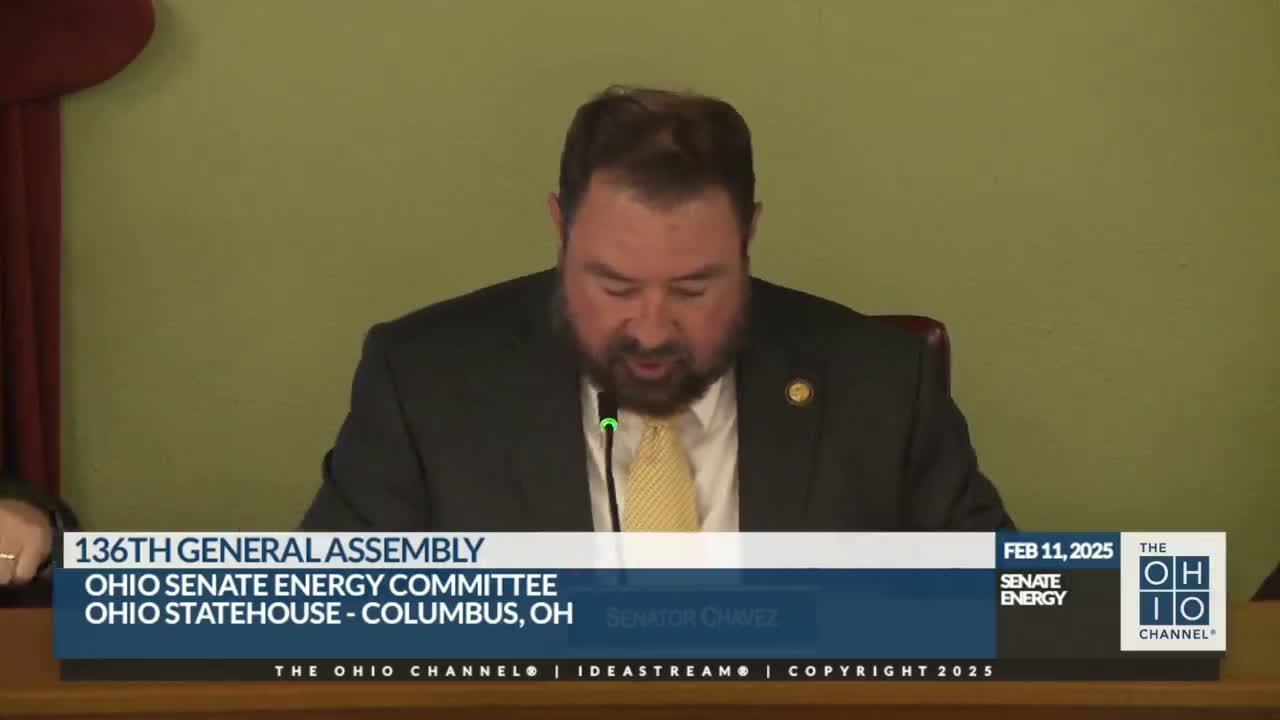
Senate Energy panel adopts substitute and hears sponsor testimony on SB2 to reshape Ohio electricity market
Summary
The Senate Energy Committee adopted a substitute for Senate Bill 2 as its working document and heard sponsor Senator Reineke describe a plan to create a competitive intrastate electricity market, remove certain subsidies and taxes, set rate-case timelines, and promote self-generation for large users.
Senator Reineke, sponsor of Senate Bill 2, moved and the Senate Energy Committee adopted the substitute bill 0333-1 as the working document, agreeing to the adoption without objection. The committee then heard Reineke’s sponsor testimony outlining a comprehensive plan to expand generation, increase competition, and place procedural limits on rate cases.
Reineke said the legislation is designed to “create a comprehensive, competitive electricity market, enhance grid reliability as our load growth demand increases, and keep energy affordable.” He framed the bill as a market-driven approach to spur new generation investment in Ohio to meet rising demand from industry and data centers.
The bill, as described by Reineke, would repeal Electric Security Plans (ESPs), require standard service offers to be market-rate, and prohibit distribution utilities from owning generation assets that were paid for by distribution customers or from bidding such assets into wholesale markets. Reineke also said the bill removes the tangible personal property (TPP) tax on new generation going forward while leaving existing TPP assessments in place.
On consumer costs and past subsidies, Reineke’s testimony stated that subsidies enacted under House Bill 6 “have added $670,000,000 to consumer bills” and that a utility solar fund “has collected $60,000,000 and has only spent $10,000,000 on five projects.” He said the bill would prohibit future ratepayer subsidization. Reineke offered to provide committee members with additional details and follow-up materials about the solar projects and the unspent funds.
The sponsor outlined procedural changes aimed at shortening regulatory timelines: he described a requirement that all electric distribution utilities file a rate case by 2030; that Public Utilities Commission of Ohio (PUCO) cases be completed within 275 days with discovery limited after 215 days; and that Ohio Power Siting Board cases be completed in 90 days. For designated priority investment area projects, he said the bill would create an expedited 45-day decision path at the siting board.
Reineke told the committee the bill clarifies and enables self-generation, including behind-the-meter baseload options, to allow very large users such as data centers to pursue private generation without ratepayer funding and (he said) to reduce reliance on lengthy PJM interconnection processes. He described incentives for priority investment areas—targeting brownfields and former coal sites—such as temporary tax relief on new generation and transmission in those areas.
Committee members questioned specifics. Senator Spinn asked for an update on the five solar projects and how the unspent $50 million would be handled; Reineke said he would provide that information. Spinn also suggested a recurring 48-month rate-case requirement rather than a blanket 2030 deadline; Reineke said 2030 was intended to ensure everyone has entered a review within the next five years and that he was open to alternatives. Senator Blackshear requested an estimate of annual savings from repealing provisions of House Bill 6; Reineke said he did not have a figure ready but would follow up.
Senator Timken asked why the bill eliminates the TPP tax on new generation; Reineke said the tax change is intended to promote new generation investment. Senator DeMoura questioned why repeal of OVEC-related charges is tied to the sunset of ESPs rather than immediate repeal; Reineke replied the phased approach seeks to avoid abrupt disruption and allow existing ESPs to conclude while preventing future ESPs.
The committee did not vote on final passage of SB2; the formal committee action recorded in this hearing was adoption of the substitute bill 0333-1 as the working document “without objection.” The sponsor said he would supply follow-up details requested by members. The committee adjourned afterward.
Sources: Sponsor testimony and questioning in the Senate Energy Committee hearing on SB2. Direct quotes and figures are attributed to Senator Reineke’s testimony as recorded in the hearing.