Get Full Government Meeting Transcripts, Videos, & Alerts Forever!
Get email alerts on the Deepfakes Name Image Likeness topic
No spam. Unsubscribe anytime.
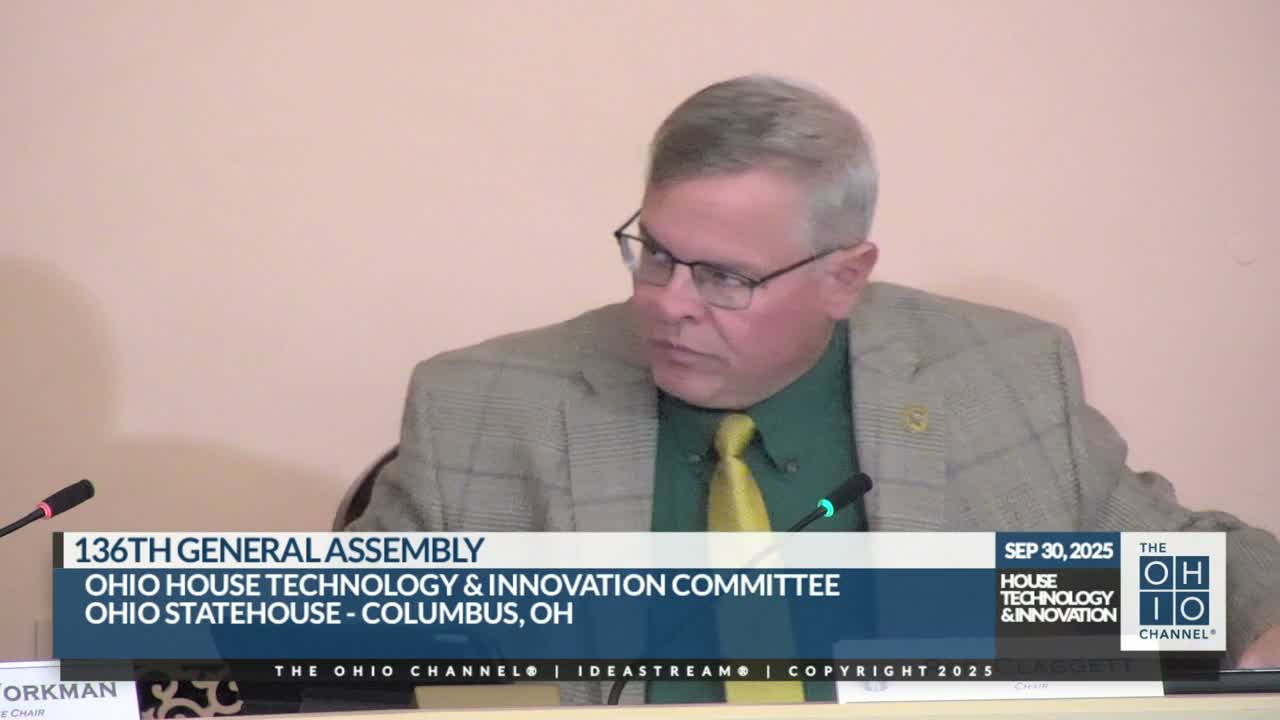
Committee hears third hearing on HB 185 to expand protections against deepfakes and unauthorized use of likeness
Summary
Sponsors told the House Technology and Innovation Committee that HB 185 would expand Ohio's right-of-publicity protections to cover unauthorized deepfakes and remove the commercial-purpose requirement while preserving First Amendment exceptions; sponsors plan an amendment to treat internet service providers like traditional media.
Sponsors of House Bill 185 told the House Technology and Innovation Committee the bill updates Ohio law to protect individuals against unauthorized deepfake audio and video and to broaden name, image and likeness protections beyond commercial uses.
"This bill makes important updates to Ohio's laws regarding the unauthorized use of an individual's persona and addresses the growing threat posed by an unauthorized deepfake recording," a sponsor said during opening testimony.
Sponsors said HB 185 would remove the commercial-purpose requirement so that ordinary Ohioans — not only celebrities — can pursue rights when their likeness is used without consent. They described "malicious deepfake recordings" as fabricated audio or video made to harm a person’s reputation, facilitate extortion, or mislead the public, and said the bill is written to rely on existing judicial precedent and First Amendment exceptions for newsworthy or political speech. Sponsors said they will offer an amendment to clarify that internet service providers are to be treated like other media outlets under the law.
Members asked detailed questions about the scope and prosecutorial thresholds. A committee member asked whether the bill would penalize ordinary people who unknowingly share a deepfake; sponsors answered the measure targets creators and those who "recklessly distribute" content and includes mens rea thresholds (willfully, knowingly, negligently, recklessly) to avoid sweeping in uninformed sharers. On remedies, sponsors said actual damages are uncapped while statutory damages remain capped, mirroring existing name-and-likeness law and aiding victims whose economic harm is difficult to quantify.
Vice Chair Workman asked about historical likenesses; sponsors said estate and historical-use protections in Ohio law remain intact. Representative DeBidreux pressed for a concrete line between mean or satirical content and malicious recordings; sponsors replied that malicious uses are defamatory, obscene, or extortionate and often tied to intent to harm.
The chair closed the third hearing with no formal vote.