Get Full Government Meeting Transcripts, Videos, & Alerts Forever!
Get email alerts on the Tac Workplan topic
No spam. Unsubscribe anytime.
Fairfax Transportation Advisory Commission outlines work plan focused on implementation, outreach and transit connectivity
Summary
The Fairfax Transportation Advisory Commission presented a work plan that emphasizes context‑sensitive implementation, outreach, transit network connectivity and piloting new technologies. Board members asked TAC to identify specific policy impediments and to work on community engagement.
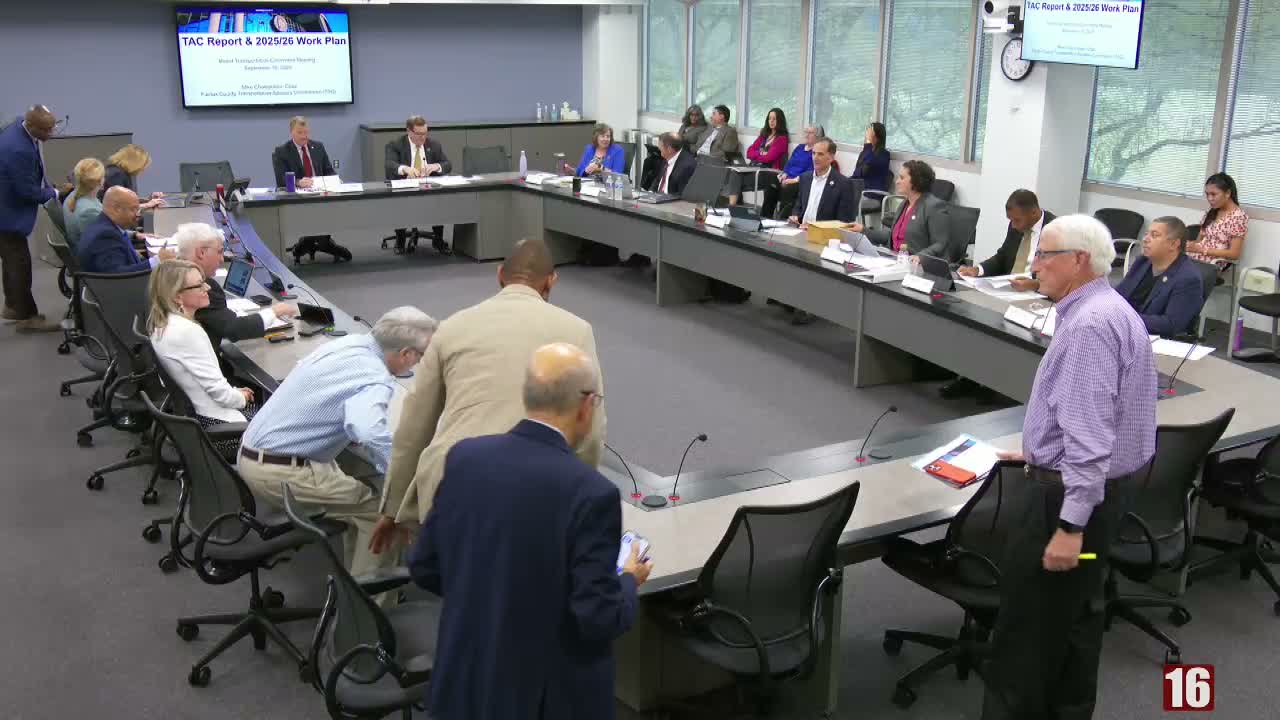
The Fairfax County Transportation Advisory Commission (TAC) presented its members, recent activities and a work plan to the Board of Supervisors Transportation Committee, positioning the commission as an advisory, solution‑focused body to help implement the county’s transportation element.
TAC chair Mike Champness introduced the group and said commissioners intend to focus on implementation and outreach rather than advocacy for single positions. The TAC presentation highlighted priorities including transit network landing and connectivity, micro‑transit and micro‑mobility, automated and autonomous vehicle considerations, context‑sensitive design and addressing policy barriers that can impede locally desired outcomes.
Champness said TAC’s role is to “propose solutions not to take positions,” and said the commission expects to work with county departments, stakeholder groups and the public to refine recommendations. He listed outreach partners and said commissioners plan to drill into specific issues such as transit‑oriented development, bus rapid transit, and updating transportation demand management practices.
Board response and requests: Supervisors welcomed TAC’s deeper role but asked it to identify specific policy impediments in the county policy plan that limit flexibility. Chairman McKay and other supervisors urged TAC to surface concrete examples of rules or procedures that slow delivery so the board can consider corrections. Several board members also requested more detail around pilot programs (autonomous vehicles, micro‑transit) and implementation steps to ensure recommendations translate into completed projects.
What comes next: TAC will continue focus area work, refine priorities and return with more detailed proposals and identified policy impediments that the board can act on. TAC commissioners and board members agreed on more proactive outreach to communities and increased coordination with county staff.