Get Full Government Meeting Transcripts, Videos, & Alerts Forever!
Get email alerts on the School Tax Relief Cap Credit topic
No spam. Unsubscribe anytime.
Committee approves dash‑6 of HB 186 to cap unvoted growth, add retroactive credits for 20‑mill‑floor properties
Summary
The committee accepted a substitute (dash‑6) to HB 186 that would cap unvoted tax growth for properties in 20‑mill‑floor school districts at the rate of inflation and create a retroactive credit calculated from 2022 increases; sponsors estimate nearly $500 million in credits next year and roughly $1.7 billion over three years, while opponents warned retroactivity and lack of state offsets could harm districts.
The House Ways and Means Committee voted to accept a dash‑6 substitute to House Bill 186, which would cap unvoted revenue increases tied to the 20‑mill floor at the rate of inflation and provide a retroactive credit for past spikes.
Vice Chair Thomas and Representative Hoops jointly described the substitute as a two‑part strategy: (1) limit future unvoted growth for 20‑mill‑floor properties to inflation, and (2) calculate a credit based on value increases since 2022 so affected taxpayers would see a direct credit on second‑half tax bills next year. Thomas said the dash‑6 treats all properties on the 20‑mill floor the same and estimated nearly $500 million in property‑tax savings next year, and roughly $1.7 billion over three years.
Members pressed sponsors on the dash‑6’s retroactive effect. Representative Glassburn and Ranking Member Troy warned that schools planned and spent based on projected revenue and said there was no state offset or hold‑harmless for districts; Troy asked whether retroactivity could damage districts’ budget plans or bond ratings. Sponsors argued the change addresses homeowners who experienced unexpected spikes and that the bill does not claw back past expenditures but reduces future increases and adds credits on future bills.
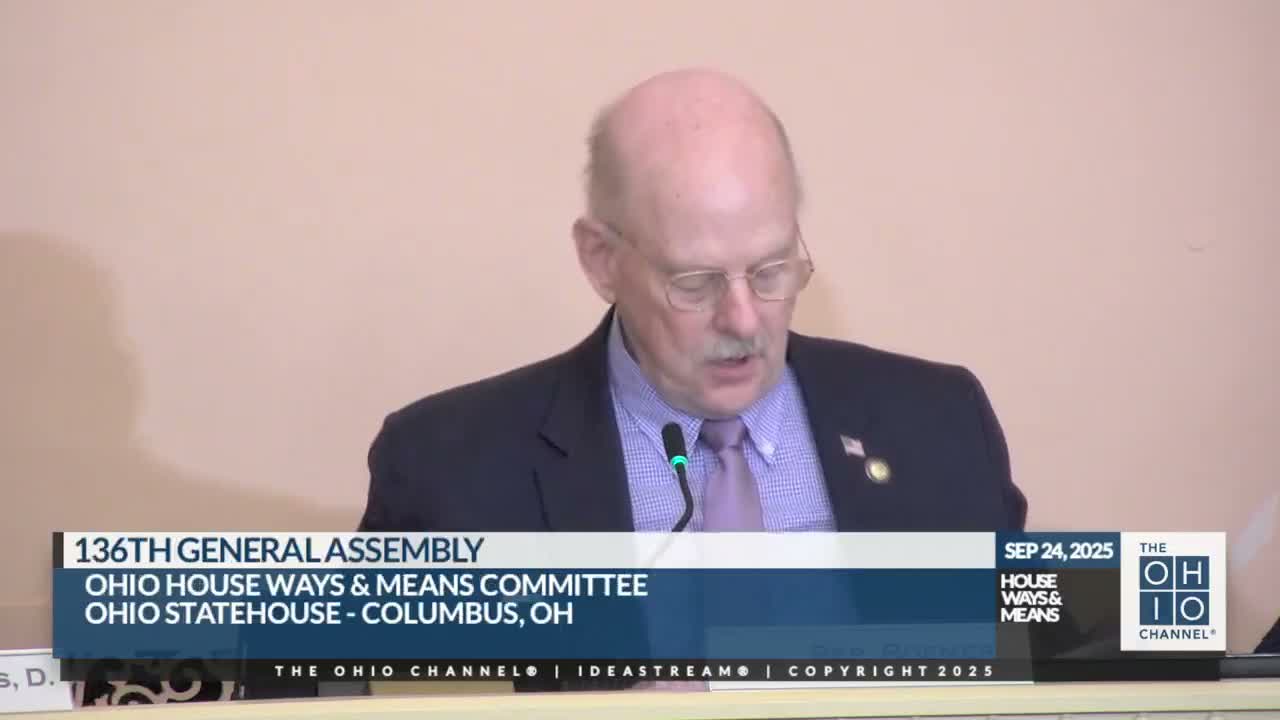
The committee registered formal objections to adopting the substitute by unanimous consent, prompting a roll call. The committee then recorded a roll‑call vote and the chair announced the subbill passed by a vote of 7 to 2. Several members asked for continued work on complementary solutions—circuit breakers, homestead expansions, or targeted relief—while sponsors urged a mix of immediate homeowner relief and longer‑term structural reform.