Get Full Government Meeting Transcripts, Videos, & Alerts Forever!
Get email alerts on the School Millage Policy topic
No spam. Unsubscribe anytime.
House accepts substitute to HB 129 limiting school inside‑millage shifts without voter approval
Summary
The committee accepted a substitute to House Bill 129 to prevent schools from shifting inside millage into other funds in ways that increase revenue without voter approval, and to count certain levies toward the 20‑mill guaranteed floor; sponsors said the change targets unvoted tax spikes.
The House Ways and Means Committee accepted a substitute for House Bill 129, a measure aimed at restricting how school districts reallocate inside millage and at preventing unvoted spikes tied to the 20‑mill floor.
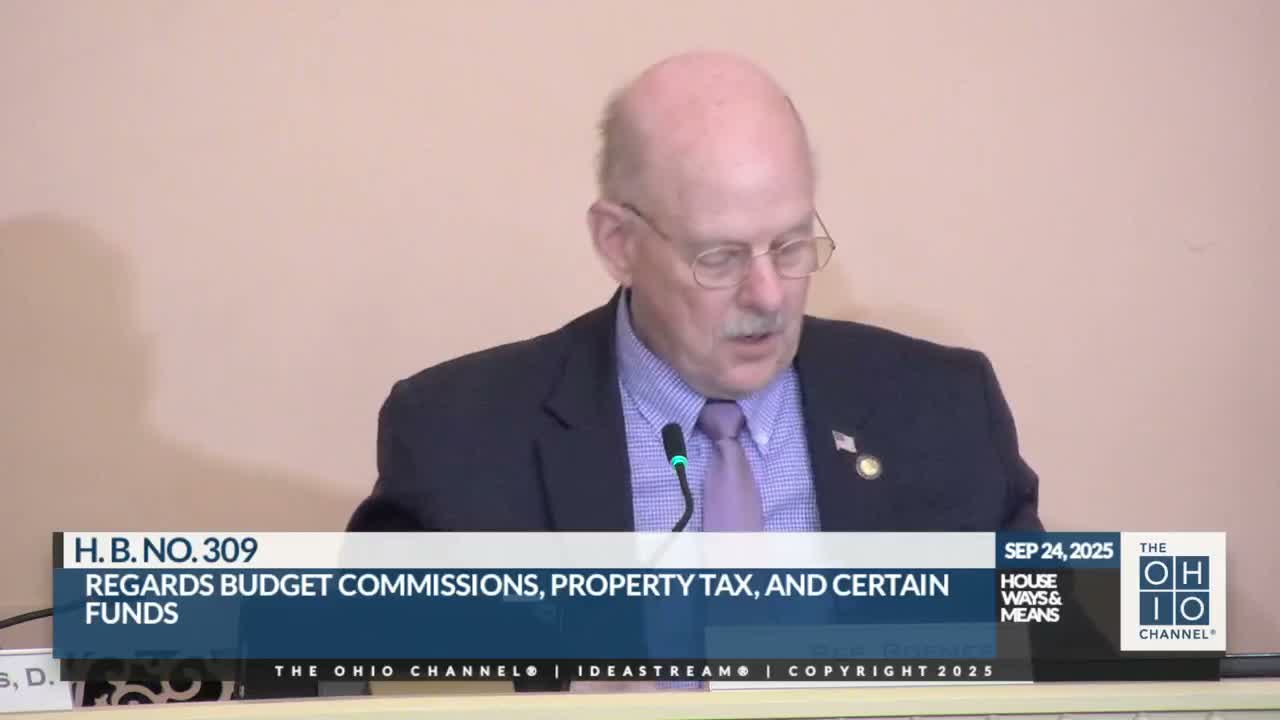
Vice Chair Thomas explained that the substitute reflects budgeted language: it would treat voter‑approved levies as counting toward the schools’ guaranteed floor and would prohibit schools from shifting inside millage into other funds to generate additional revenue without voter approval. Thomas cited four districts in Tuscarawas County as examples where districts are seeking to reallocate roughly 4.5 mills from general to other levies.
Representative Glassman and others pressed sponsors for numbers on the state’s fiscal exposure and how the change would affect state property‑tax‑relief expenditures. Thomas said the intent is not to cut current school revenue; rather, HB 129 removes the unvoted spike that occurs when a district is on the 20‑mill floor. He told the committee that while there may be a future loss of revenue for some districts, they would keep current revenue levels and voters retain the ability to seek additional revenue by ballot.
Debate turned to distributional effects: Ranking Member Troy noted estimated school revenue losses of roughly $89 million (FY26), $114 million (FY27) and $127 million (FY28) for impacted districts and argued that wealthier property owners may benefit more than lower‑income homeowners. Sponsors responded that the bill targets spikes that have driven the recent homeowner burden and that other bills in the package address different pieces of the problem.
With no in‑person testimony and after questions from members, Chairman Romer declared the substitute accepted and closed the fourth hearing on HB 129.