Get Full Government Meeting Transcripts, Videos, & Alerts Forever!
Get email alerts on the Pensions STRS topic
No spam. Unsubscribe anytime.
STRS reports $97 billion in assets and a roughly $4 billion negative cash flow; COLA tradeoffs stressed
Summary
Aaron Hood, interim executive director of the State Teachers Retirement System, told the committee STRS holds about $97 billion in assets but runs an estimated $4 billion negative cash flow that makes recurring COLAs actuarially costly; he urged careful legislative tools and noted internal management of 70% of assets.
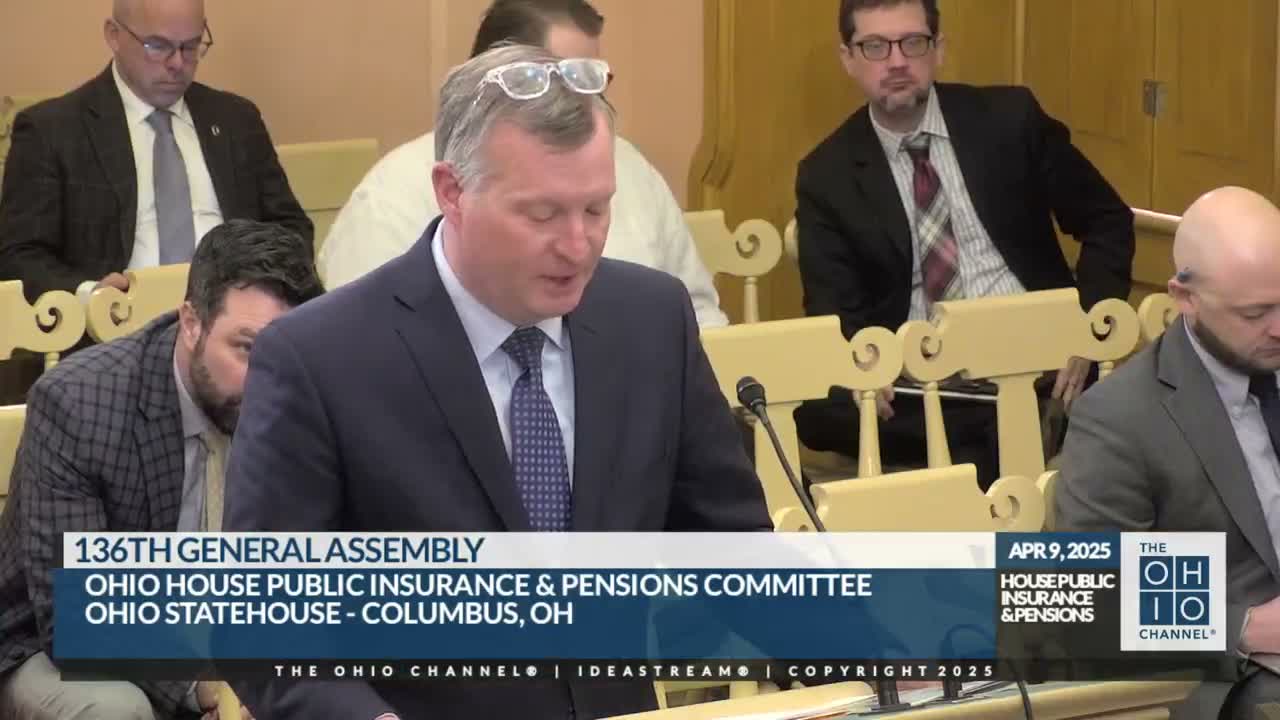
Aaron Hood, interim executive director of the State Teachers Retirement System, briefed the House Public Insurance and Pensions Committee on STRS’ finances and demographic pressures. Hood said STRS had approximately $97,000,000,000 in assets as of June 30, 2024 and paid roughly $8 billion in benefits in fiscal 2024 to about 157,000 recipients; he added the system faces an estimated $4 billion negative cash flow that must be made up by investment returns.
Hood described STRS’ investment approach — roughly 70% internally managed and 30% externally — which the system estimates saves in the low‑hundreds of millions of dollars annually. He said STRS has delivered top‑decile returns over five‑, ten‑, and twenty‑year periods but cautioned that the negative cash flow makes the plan very sensitive to market performance: "we start at negative 4.6" relative to assumed returns and must earn target returns just to tread water.
On COLA, Hood explained that recurring, ongoing COLAs that restore purchasing power carry very large actuarial liabilities for a plan already underfunded (he gave examples such as a hypothetical 1% recurring COLA representing multibillion‑dollar liabilities). He described the system’s use of a sustainable benefit process (SPP) to determine annual COLA provisions and said targeting COLA by cohort or retirement period is constrained by existing statute and administration.
Committee members raised questions about member outreach and town halls; Hood said reception is mixed and that retirees are understandably vocal about COLA. He also answered questions about recent governance concerns and a pending legal matter tied to a proposed investment strategy: Hood declined to comment on ongoing litigation but said there is no appetite on the board for that investment approach and that relevant filings are public.
Hood emphasized demographic pressures — falling active‑to‑retiree ratios and increasing longevity — and concluded that while some targeted, one‑time supplemental payments are possible administratively, long‑term recurring COLAs are unlikely without major funding changes.