Get Full Government Meeting Transcripts, Videos, & Alerts Forever!
Get email alerts on the Courthouse Security topic
No spam. Unsubscribe anytime.
Judges’ Group Opposes Bill Letting Guns into Buildings with Courtrooms, Citing Safety and Ambiguities
Summary
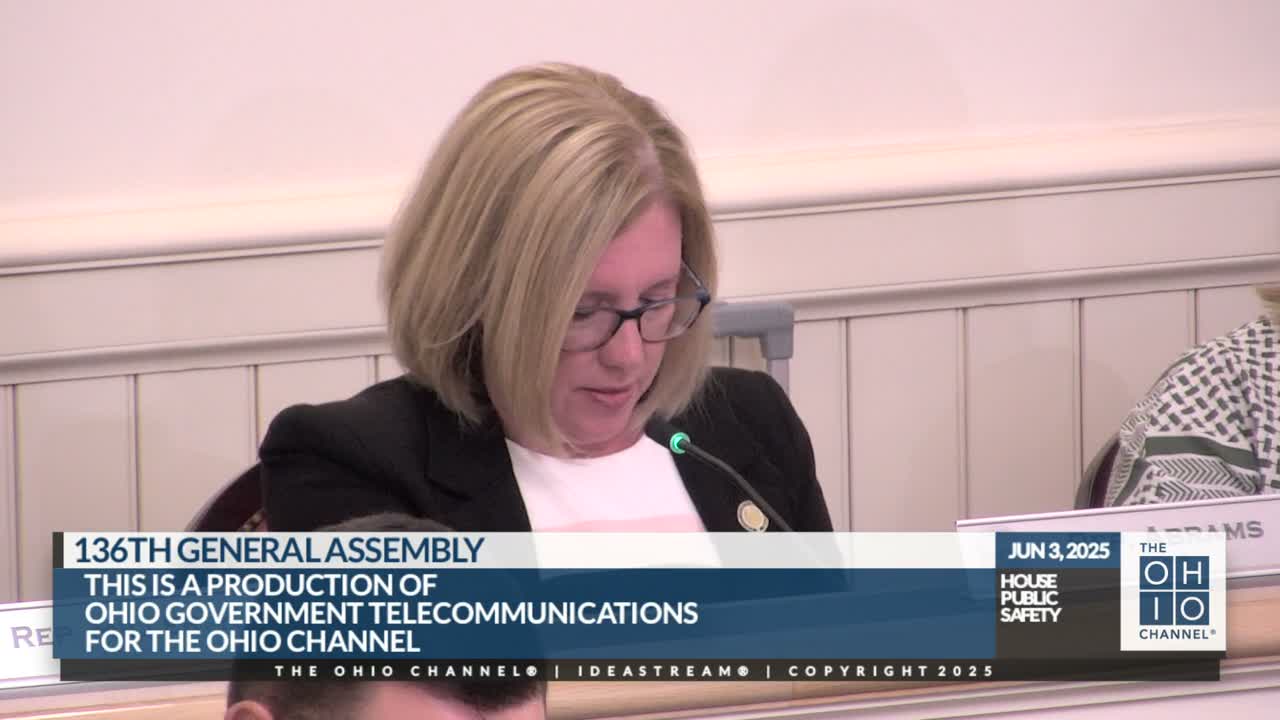
Judge Tyrone Yates, speaking for the Ohio Judicial Conference, testified in opposition to House Bill 68, saying the bill’s undefined terms and 'in operation' standard would create enforcement ambiguity and could expand weapons access in multi-use county courthouses.
The Ohio Judicial Conference told the House Public Safety Committee it opposes House Bill 68, arguing the measure would expand access to deadly weapons in and around court facilities and that the bill’s definitions are legally ambiguous and impractical to enforce.
Judge Tyrone Yates, a Hamilton County Municipal Court judge and board member of the Association of Municipal and County Judges of Ohio, told the committee courts are "places where emotions can run very high," pointing to proceedings such as criminal sentencing and custody disputes. He cited a 2017 ambush-style shooting of a judge in Jefferson County to illustrate the potential risk if weapons were allowed in buildings that contain courtrooms.
Yates raised two principal objections to HB 68’s language: first, the bill does not define "courthouse," which could be read to include county buildings that house both courtrooms and unrelated county offices; second, the bill’s exception allowing handguns when the court and clerk’s office are "not in operation" is vague because courts accept electronic filings and staff may work irregular hours. "How is a person attempting to enter a building to know if the offices are or are not in operation?" he asked.
He argued the law should not base culpability on factors outside an individual’s knowledge, and warned that allowing weapons after hours could enable a person to hide a weapon in a building and retrieve it later. The Judicial Conference asked lawmakers to retain the current prohibition on weapons in facilities containing a courtroom.
Members pressed Yates on security differences between large and small counties, bailiff training and whether courts track courthouse shootings statewide. Yates said larger counties typically have formal security protocols and armed criminal bailiffs, while smaller and rural counties may be less formal and therefore more vulnerable.
No formal action on HB 68 occurred during the hearing; Yates offered to have legislative counsel Joshua Williams provide follow-up answers to technical questions.