Get Full Government Meeting Transcripts, Videos, & Alerts Forever!
Get email alerts on the Dangerous Dog Law topic
No spam. Unsubscribe anytime.
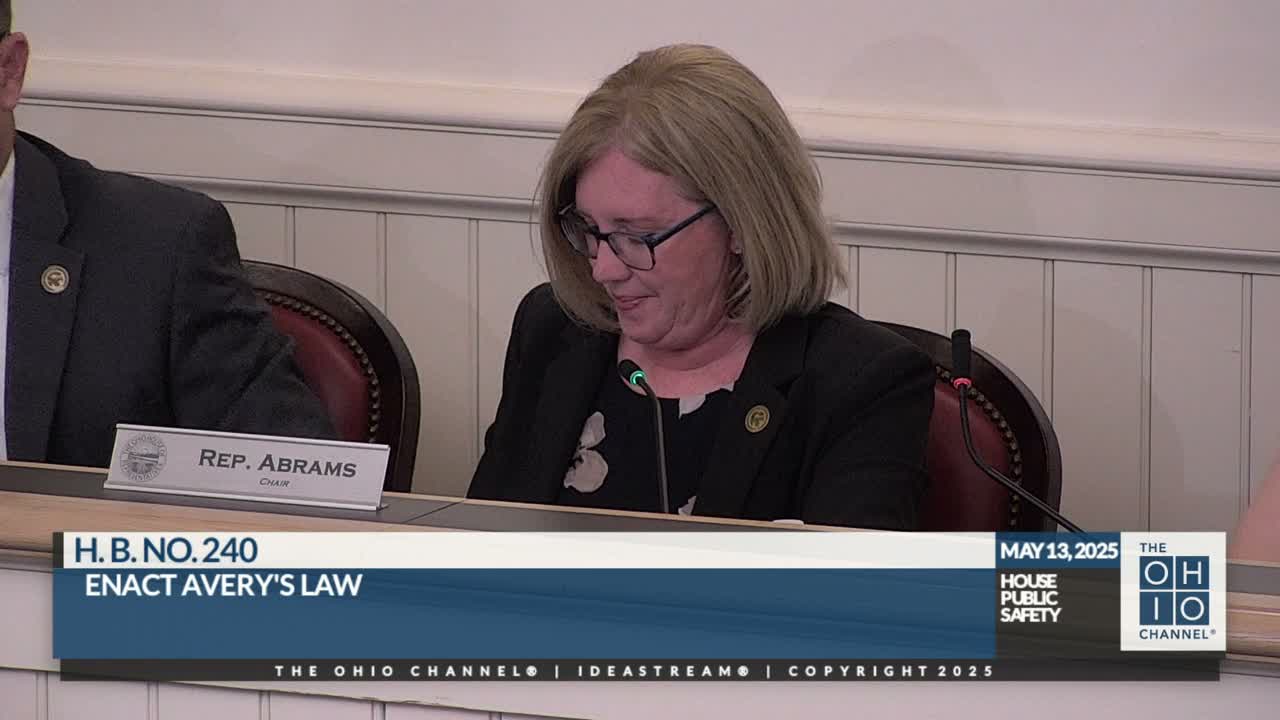
Committee hears multiple bills to tighten Ohio’s dangerous-dog laws after severe attacks
Summary
Sponsors presented three related bills (House Bills 240, 241 and 247) proposing broader definitions of dangerous/vicious dogs, mandatory reporting, stricter containment rules, a $100,000 minimum liability requirement, 10‑day quarantine/impound periods, and increased penalties; members raised concerns about shelter capacity and funding.
Lawmakers in the House Public Safety Committee heard sponsor and proponent testimony on a cluster of bills intended to strengthen Ohio’s dangerous‑dog laws following high-profile attacks.
Representative Meredith Lawson Rowe, sponsor of House Bill 240 (branded in testimony as “Avery’s Law”), recounted the case of an 11‑year‑old child who suffered severe facial injuries in an unrestrained‑dog attack and said the bill would expand definitions of dangerous, nuisance and vicious dogs to include animals that attack or seriously injure companion animals, require veterinarians and health-care providers to report attacks within 24 hours, and require dogs found dangerous to be properly contained. Lawson Rowe also said the bill would set a $100,000 minimum insurance requirement for owners of dangerous dogs and extend prohibitions on ownership by people convicted of certain violent felonies from three to five years.
Representative Thomas (joint sponsor) summarized House Bill 241, which would require a 10‑day impound/quarantine period for dogs that attack or kill a person while an investigation is conducted, allow local authorities and law enforcement to seize dogs after severe attacks, and require a probable‑cause hearing within 10 days to determine whether a dog should be euthanized. Representative Thomas said the bill aims to close legal loopholes that allow dogs to remain in the home during quarantine and to provide due process at hearings.
Vice Chair Kevin Miller introduced House Bill 247, drafted with input from Licking County dog warden and the Ohio County Dog Wardens Association. Miller said HB247 focuses on unprovoked attacks and would authorize immediate seizure by local dog wardens when a victim is killed or seriously injured, trigger a probable‑cause hearing within 10 days, and increase penalties for negligent owners when prior warnings exist.
Committee members repeatedly raised implementation concerns: Representative Plummer and others said many county shelters lack the capacity to hold seized dogs and asked whether there would be state funding or local cost-sharing for quarantines and impounds. Representative Brent asked whether increased penalties duplicate existing Ohio Revised Code authority and questioned collateral consequences for people on probation; sponsors said penalties respond to gaps in current law and that amendments and collaboration among sponsors could streamline overlapping provisions among the bills.
Sponsors emphasized the bills are aimed at negligent owners and unprovoked attacks, not responsible owners or specific breeds. Members encouraged the sponsors to consolidate language across the four related proposals to produce a comprehensive approach. Several members said they are willing to work with sponsors on amendments, and advocates and county officials said they would continue to provide technical feedback.
What’s next: Sponsors said they expect to work with colleagues and stakeholders to combine and refine the bills before further committee action.