Get Full Government Meeting Transcripts, Videos, & Alerts Forever!
Get email alerts on the Public Safety Alerts topic
No spam. Unsubscribe anytime.
Committee hears sponsors propose escaped‑convict alert program to add public notifications for felony escapes
Summary
House Bill 23 would create an Escaped Convict Alert Program (ECAP) enabling regional alerts for escaped felons convicted of or charged with felonies. Sponsors said ECAP would modernize statutory notification requirements to include broadcast and text alerts while protecting broadcasters acting in good faith.
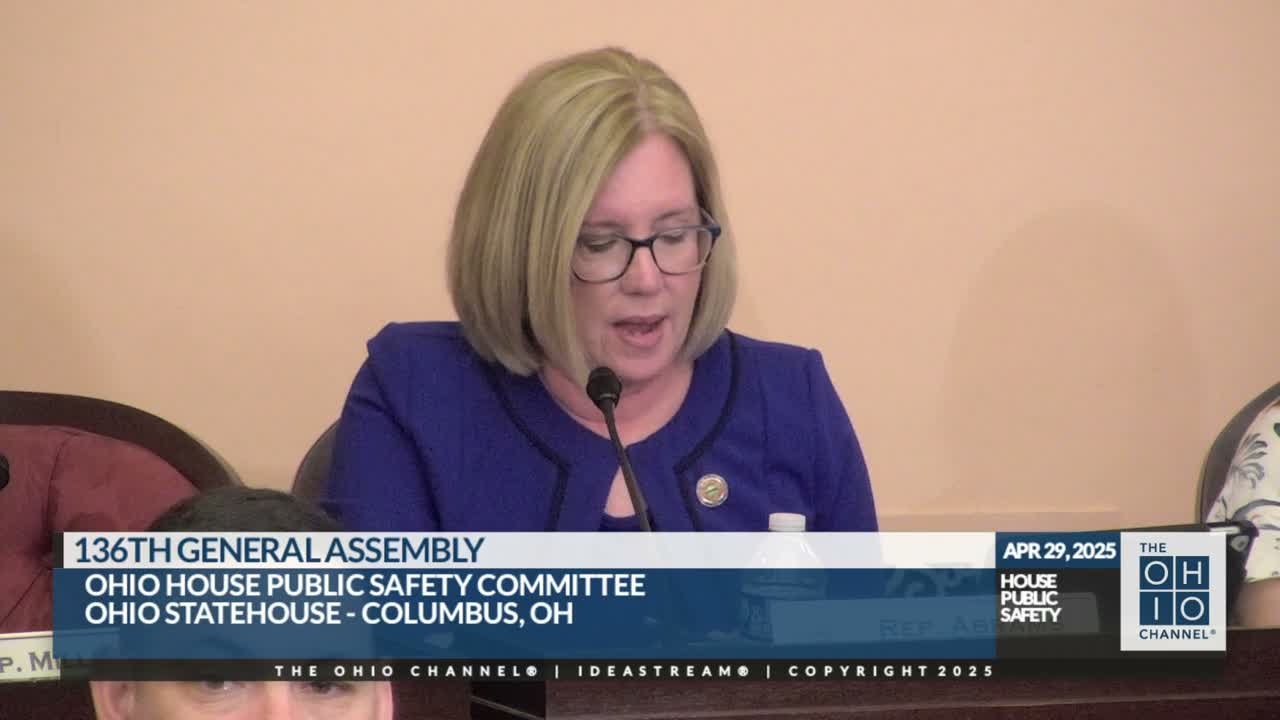
Representatives Romer and Williams presented House Bill 23 to create an Escaped Convict Alert Program (ECAP) allowing law enforcement to issue targeted regional alerts when a person convicted of, pleaded guilty to, or charged with a felony escapes custody.
Representative Romer described a personal episode that motivated the bill—receiving an alert about an escaped felon on his street—and said the measure seeks to sync existing statutory telephone/written notification duties with current alert technologies (like Amber Alert or county emergency-notification systems). Representative Williams walked the committee through the bill's structure: it authorizes discretionary regional alerts, allows local adaptations, grants liability protections to broadcasters acting in good faith, and clarifies that the federal Emergency Alert System would not be used unless federal law permits.
Members asked for clarification on funding and operational mechanics: who will pay for alert infrastructure, whether county emergency-management agencies would relay alerts, and how to guard against incorrect or misleading notifications. Sponsors said costs should be minimal because the proposal relies on existing county alert systems and that liability protections were included to encourage broadcaster participation. Committee members referenced existing county alert models (for example, Hamilton County's HC Alert) and requested confirmation on how sheriff or jail notifications would link into local systems.
The committee did not vote; sponsors said they would follow up with implementation details and confirm operational logistics with county emergency-management agencies.