Get Full Government Meeting Transcripts, Videos, & Alerts Forever!
Get email alerts on the Dangerous Dog Legislation topic
No spam. Unsubscribe anytime.
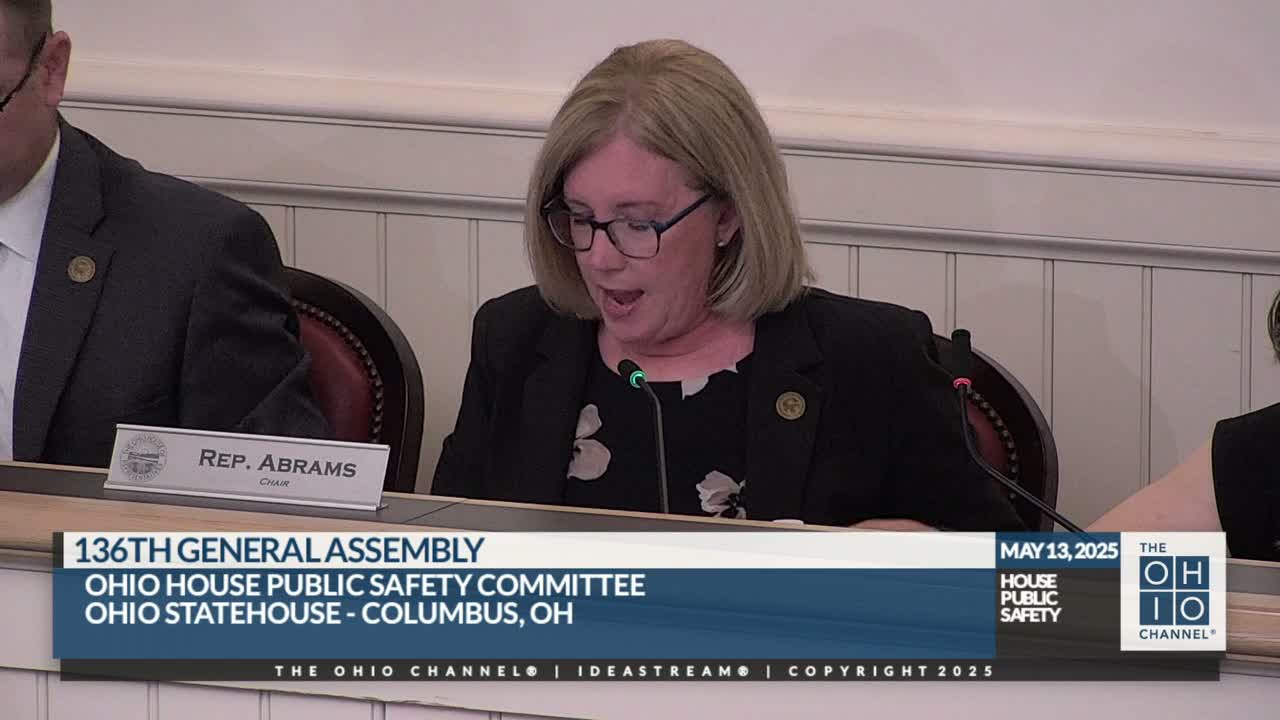
Committee considers three bills to tighten Ohio dangerous-dog laws after high-profile attacks
Summary
Sponsors described complementary bills (HB240 'Avery's Law,' HB241 and HB247) to expand definitions of dangerous dogs, require faster reporting and quarantine, increase owner liability and fines, and give local wardens and courts new removal and probable-cause procedures.
The House Public Safety Committee held first hearings on three related bills aimed at tightening Ohio’s dangerous-dog laws.
House Bill 240 (branded "Avery's Law") was presented by Representative Meredith Lawson Rowe. She described a severe attack on an 11-year-old, Avery Russell, and said HB240 would broaden the statutory definitions of "dangerous," "nuisance" and "vicious" dogs to include attacks on other companion animals; mandate that a health-care provider, veterinarian or owner report a dog bite or attack within 24 hours of discovering it; require that a dog designated as dangerous be contained in a locked, top-covered enclosure or tethered while on the owner's property (not simply left in an open fenced yard); set a $100,000 minimum insurance requirement for owners of dangerous dogs; extend post-conviction ownership bans from three to five years for certain felony offenders; increase fines and permit judges to order humane destruction in the most severe cases.
Representative Thomas and other members pressed sponsors on scope and unintended collateral effects — for example, whether owners who are felons or on probation would face increased collateral sanctions and how the laws would treat attack victims who were on another person’s property. Representative Thomas and other sponsors said the bills include probable-cause hearings or due-process steps to determine whether an attack was provoked or unprovoked before a final disposition (including euthanasia) would be ordered.
House Bill 241 would create a 10-day impound/quarantine period for dogs that attack a person while authorities investigate and would require that owners cover quarantine costs. Representative Thomas said local wardens and law enforcement should have tools to remove dogs quickly from communities when there is an unprovoked attack, followed by a court hearing during the 10-day period.
House Bill 247 — introduced by Vice Chair Kevin Miller with input from the Ohio County Dog Wardens Association — would allow immediate seizure by a local dog warden after an attack that caused death or serious injury, trigger a probable-cause hearing within 10 days, and, if probable cause is found that the attack was unprovoked, allow euthanasia. The bill raises penalties for owners who fail to control already-designated dangerous or vicious dogs and seeks to modernize and clarify Chapter 955 of the Ohio Revised Code, according to sponsors.
Committee members raised capacity and funding concerns for shelters (noted by Representative Plummer and others) and asked whether cities or counties would need new line items to cover quarantine/impound costs and foster arrangements. Sponsors said those operational and funding details could be addressed in committee and through amendment as the bills move forward. Several members encouraged sponsors to collaborate to produce a single comprehensive bill that reconciles differences among the proposals.
No votes were taken on any of the three dangerous-dog bills during the hearings.