Get Full Government Meeting Transcripts, Videos, & Alerts Forever!
Get email alerts on the Policing Quotas topic
No spam. Unsubscribe anytime.
Public-safety committee hears broad support for banning ticket and arrest quotas
Summary
Lawmakers and law-enforcement witnesses told the House Public Safety Committee that bills banning ticket- and arrest-based quotas would protect officer discretion and public trust; sponsors said the measures would ban quotas as a basis for discipline, create an Attorney General reporting mechanism, and do not prevent traffic-safety assignments.
The House Public Safety Committee heard hours of proponent testimony on measures to ban ticket and arrest quotas, with sponsors and law-enforcement witnesses saying the bills are intended to protect officers’ discretion and restore public trust.
Senator Tom Patton, the sponsor of Senate Bill 114, told the committee the measure “prohibits law enforcement agencies from using tickets or arrest quotas as the basis for evaluation, compensation, or discipline,” and that it would create a reporting system allowing officers to complain to the attorney general’s office, which the bill would require to investigate each report. Patton said the bill “would not prohibit police chiefs from assigning officers to traffic units to monitor traffic safety” but instead targets “using ticket quotas as the basis of evaluation or compensation.”
Proponents included Chief Robert Butler, president of the Ohio Association of Chiefs of Police, who urged passage to protect fairness and officer well-being, and multiple retired and current officers who described quota-driven workplace pressure. Officer Leonard Mazzola described a 2018–2019 episode in Independence in which his department implemented a performance standard he said functioned as a quota. Mazzola testified the standard mandated “each officer to write 10 tickets per month with a constant 90‑day rolling assessment period,” led to disciplinary proceedings, and ultimately contributed to his resignation; he later prevailed in a federal settlement (Mazzola v. Tagliati) in June 2022.
Research and policy testimony also supported the prohibition. Alan Smith of the R Street Institute summarized academic findings that eliminating quota-style metrics often improves the quality of traffic stops and recommended the attorney general as the enforcement authority. Community advocates, including Emily Cole of Ohio Families Unite for Political Action and Change, said the change would reduce unnecessary contact between officers and residents and strengthen community policing.
Committee members probed how the bills would operate in practice. Representative Brent asked why the bill has stalled in past sessions despite unanimous committee-level support; Patton and other witnesses pointed to timing and evolving law-enforcement support. Ranking member Thomas and others described how quotas sometimes appear as monthly evaluation averages rather than explicit written quotas; sponsors said the bills are written to bar use of ticket or arrest numbers as a basis for evaluation, discipline or pay.
Several witnesses listed potential harms they associate with quota-like performance standards, including incentivizing unnecessary stops, creating incentives to emphasize revenue over public safety, and degrading public trust. Supporters said those harms would be addressed without preventing legitimate traffic-enforcement assignments.
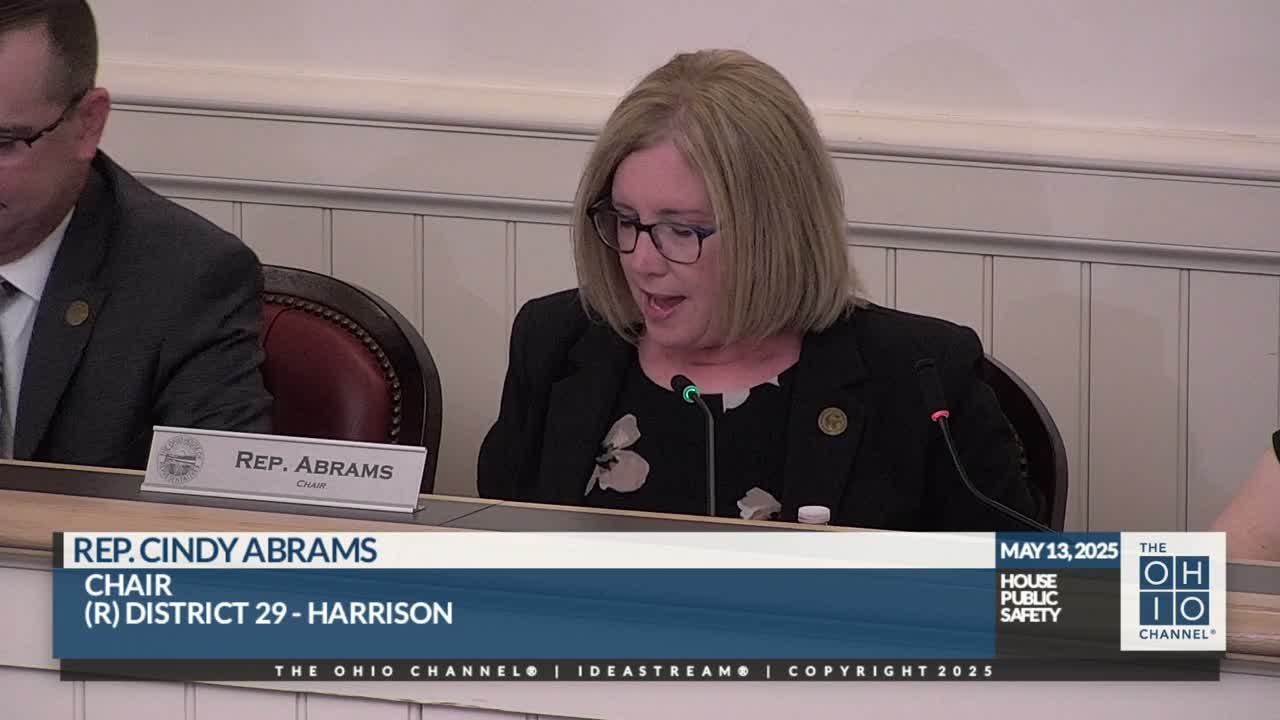
The chair said it was her intention to move the quota bill out of committee; no final committee action on the quota bills occurred during the hearing.
What’s next: The bills will remain under committee consideration; sponsors signaled they are prepared to work with members on clarifying language and to move the measures forward for further votes.