
Teachers and support staff press board over pay as union signals continued negotiations
Get AI-powered insights, summaries, and transcripts
Subscribe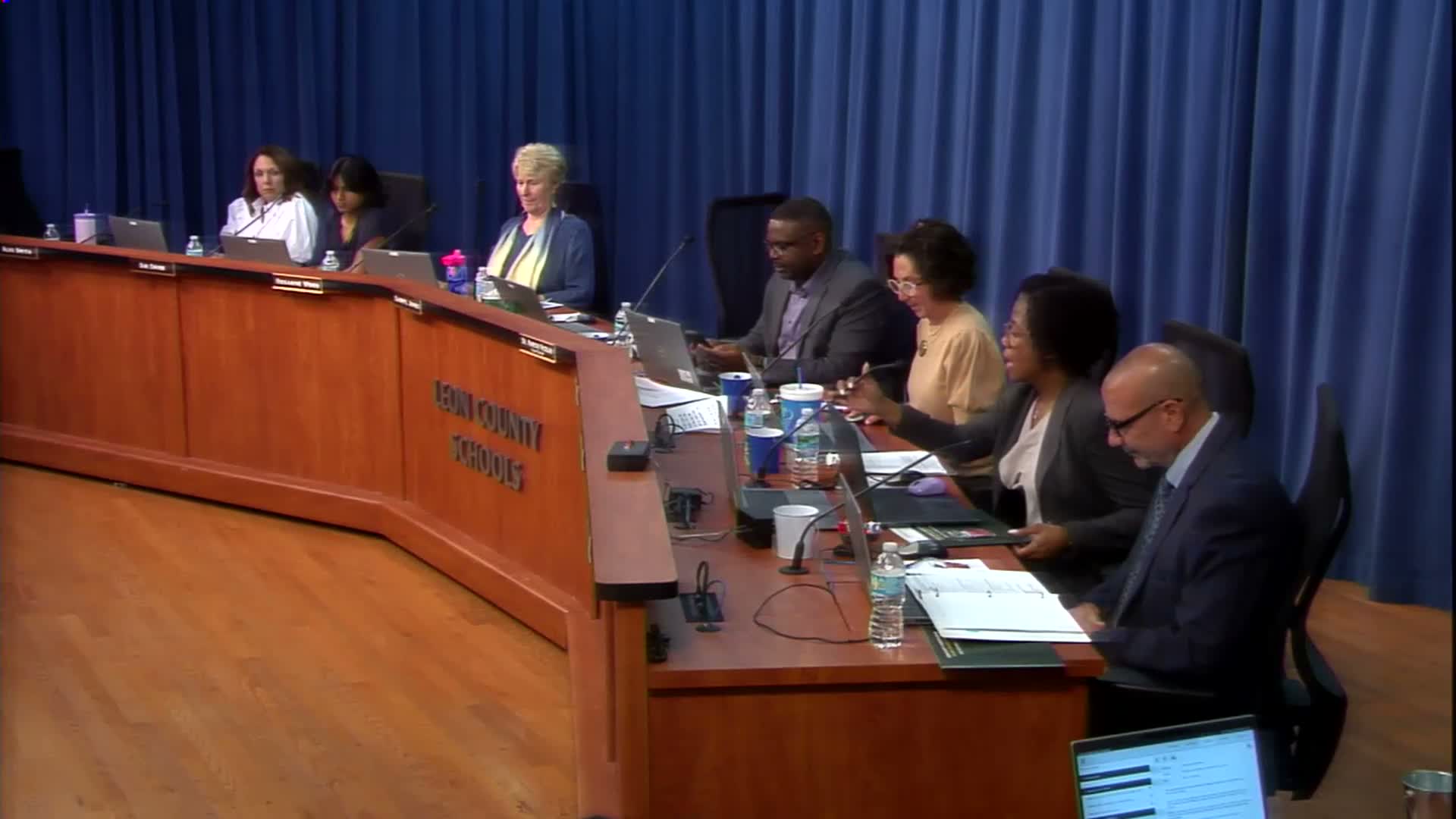
Summary
Multiple public commenters told the Leon County School Board that proposed compensation changes fall short, and union representatives said a state-funded $40-per-month allocation was not accepted by the bargaining unit; the superintendent said the district—s financial position limits local action.
Several employees and union representatives urged the Leon County School Board on Sept. 23 to provide meaningful salary increases for teachers and support staff, saying current proposals funded at the state level are insufficient.
Valencia Hargret, representing support staff concerns, told the board she was told at bargaining there would be "no salary increase for any of our support staff" and said the district faces 32 support-staff vacancies that strain operations. "We are losing support staff weekly because they cannot survive in this economy," she said.
Teachers and school employees described hardship and a choice to consider leaving: Sarah Flammer, a speech-language pathologist, said she spent part of the summer working out of state and noted higher pay elsewhere. "The salary offer of around $40 a month tells me that we are not valued as educators," she said. "Love doesn't pay the bills."
Scott Mazer, speaking for the Leon Classroom Teachers Association bargaining unit, said the state-allocated $44 (rounded in public comments to $40) is not local money and that the bargaining unit has largely rejected the offer, with a reported ballot return showing 70% participation and 98.7% saying the unit should keep fighting for higher pay. "$0 of the district general fund has been offered to any of the bargaining units," he said, and urged the board and community to distinguish state allocations from local funding choices.
Superintendent Hannah responded that, given the district—s current financial position and statewide budget pressures, making additional recurring salary commitments would be irresponsible at this time. "But just given our financial position, it would be irresponsible at this time," she told the board, while emphasizing continuing conversations with the legislature and possible local funding options, including a discussion of millage and half-penny sales tax alternatives.
Brett Shively later provided a bargaining update documenting past offers, timelines and communications with the Department of Education and confirmed an active schedule of bargaining sessions.
Next steps: The district and bargaining unit were scheduled to continue negotiations at upcoming sessions; board members signaled interest in exploring both state-legislative remedies and potential local revenue measures as contingencies.